~も (mo)
Also, too
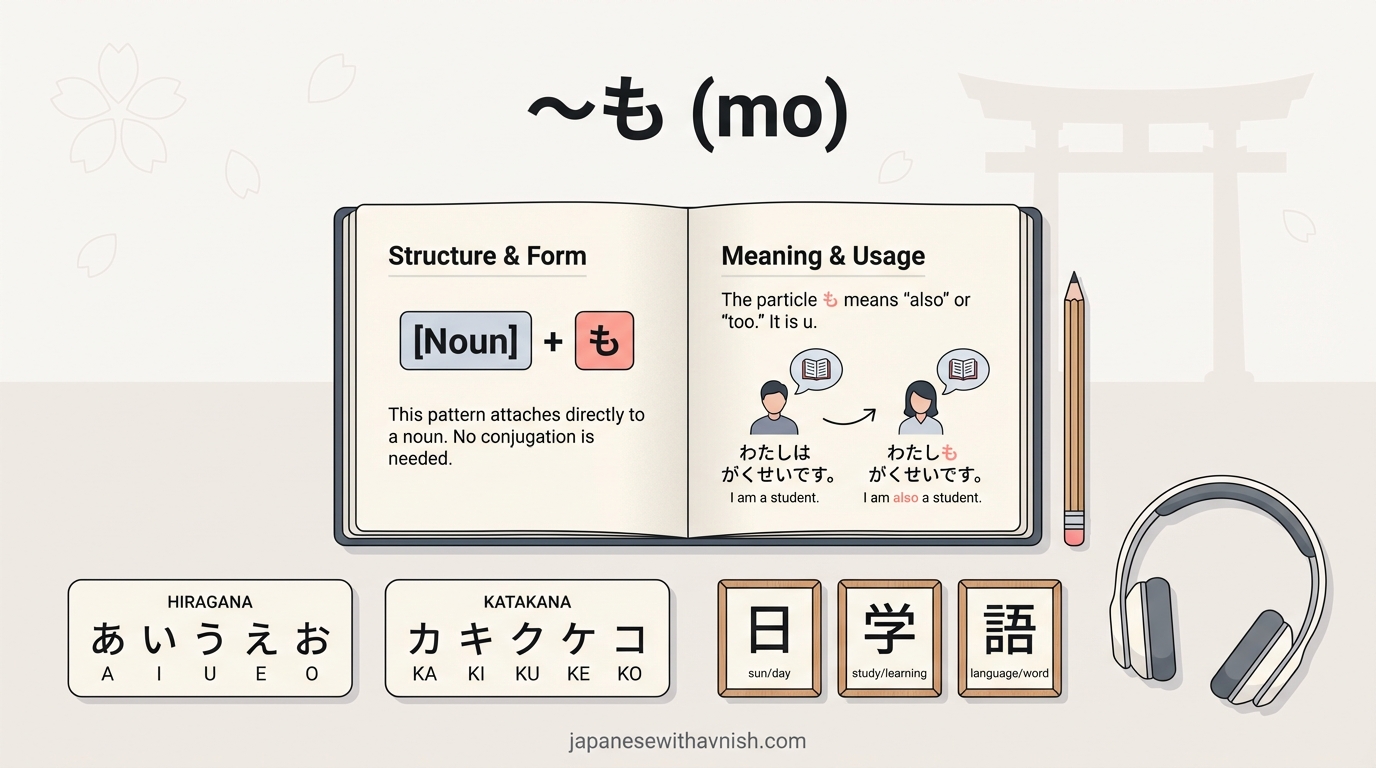
[NOUN] も
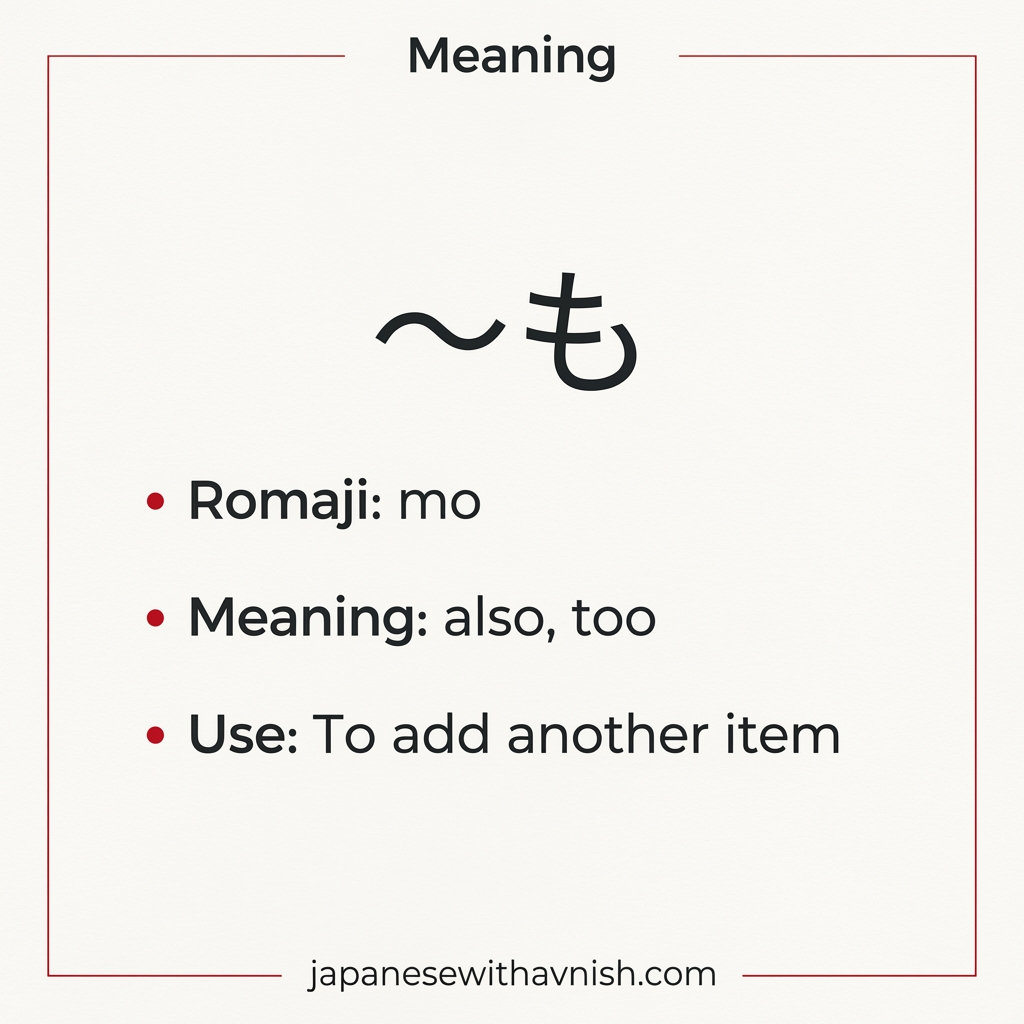
Meaning
- Japanese: ~も
- Romaji: ~mo
- Meaning (simple English): also, too
- When you use it: You use it to add another item to a list or to say that something is the same as what was just mentioned.
Simple Explanation
- The particle も attaches directly to a noun. It replaces particles like は or が.
- Core structure: [Person] も [Thing] です。
- Example: わたしは学生です。 (I am a student.) → 山田さんも学生です。 (Yamada-san is also a student.)
Mnemonic / Memory Trick
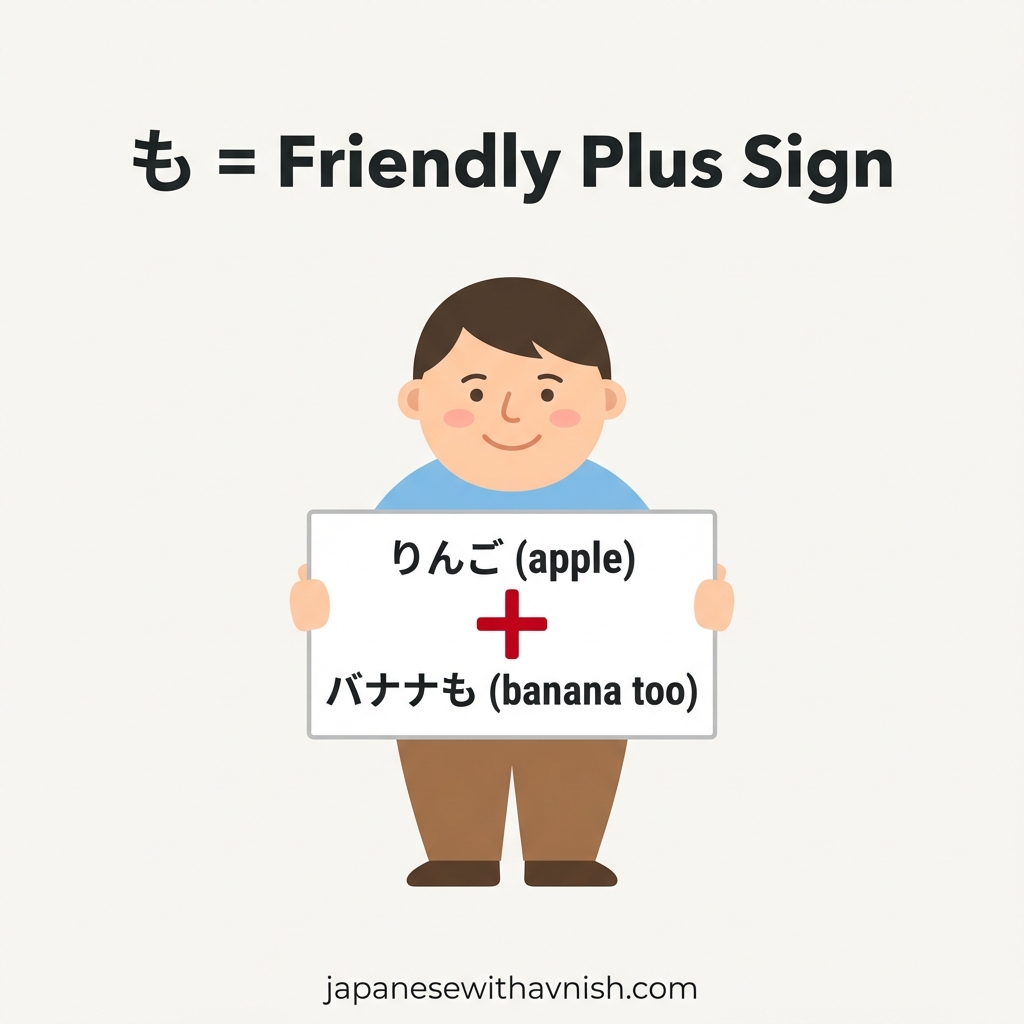
Think of も as a friendly plus sign (+). When you see it, it means you are adding something more to the conversation, just like adding another item to your shopping list.
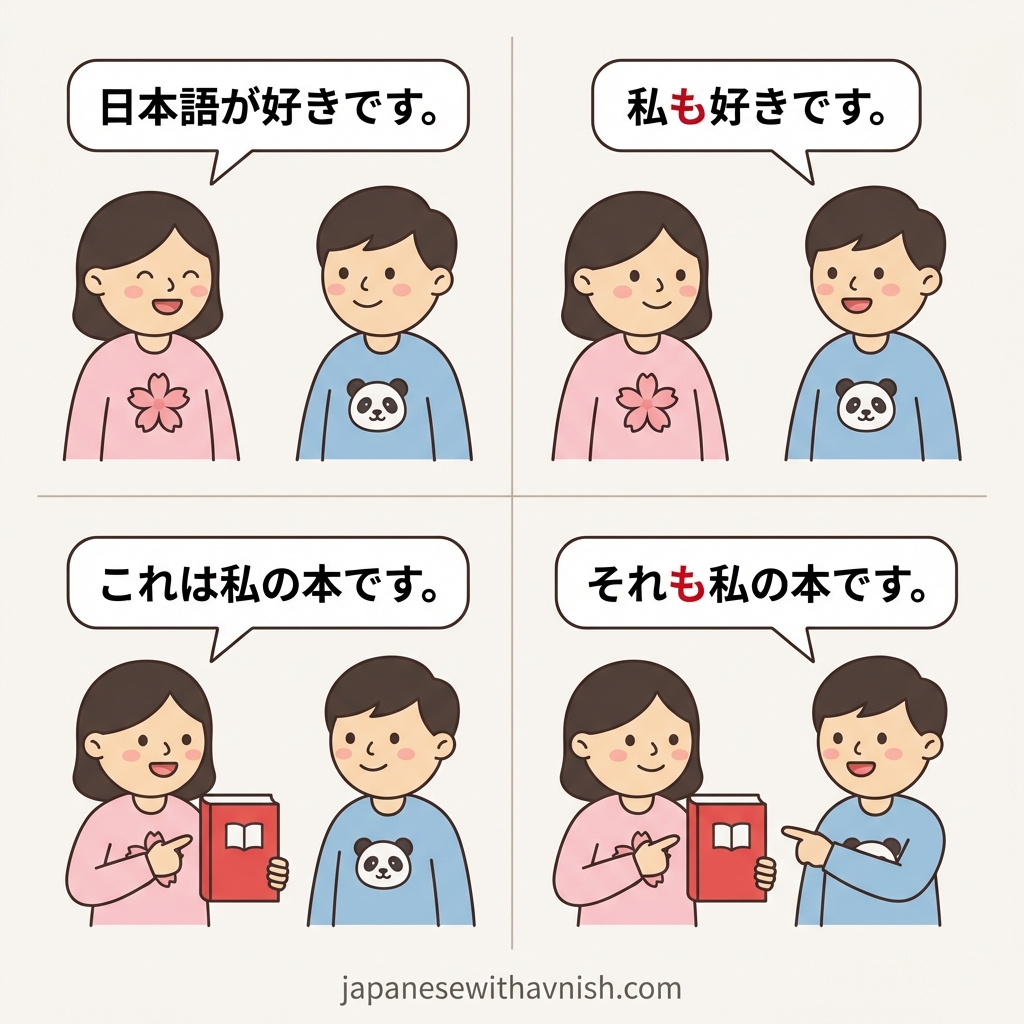
Mini Conversation (Cartoon Style)
Sakura 🌸
日本語が好きです。
Nihongo ga suki desu.
I like Japanese.
Kenji 🐼
私も好きです。
Watashi mo suki desu.
I like it too.
Sakura 🌸
これは私の本です。
Kore wa watashi no hon desu.
This is my book.
Kenji 🐼
それも私の本です。
Sore mo watashi no hon desu.
That is also my book.
Common Beginner Mistake
- ❌ Incorrect: 私もは学生です。
- ✔ Correct: 私も学生です。
- Explanation: The particle も replaces は or が. You do not use them together. Just use も by itself after the noun.
Practice Exercise
- Translate to Japanese: "That is also a cat."
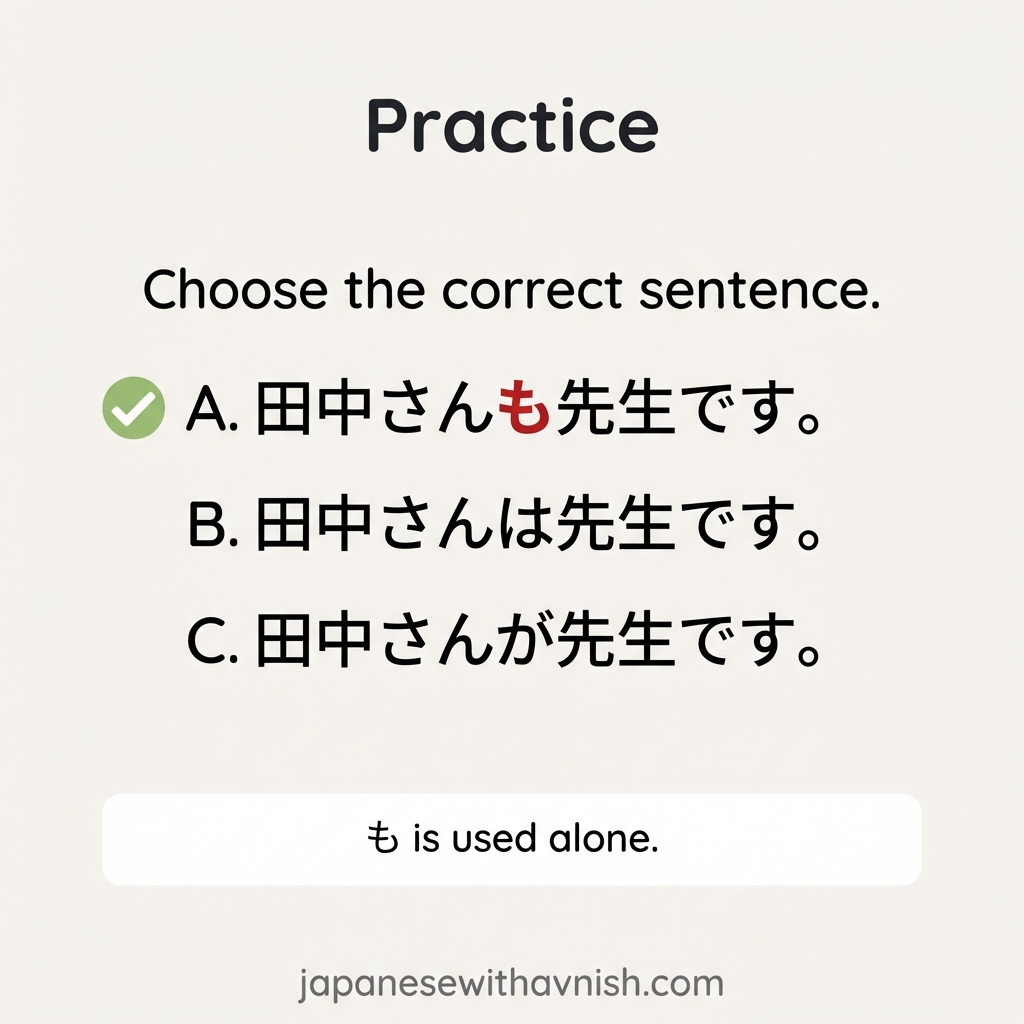
- Choose the correct sentence:
A) 田中さんも先生です。
B) 田中さんはも先生です。
C) 田中さんもは先生です。
Correct Answer: A
Explanation: Option A is correct because も is used alone after the name. Options B and C incorrectly combine は and も.
Study Tip
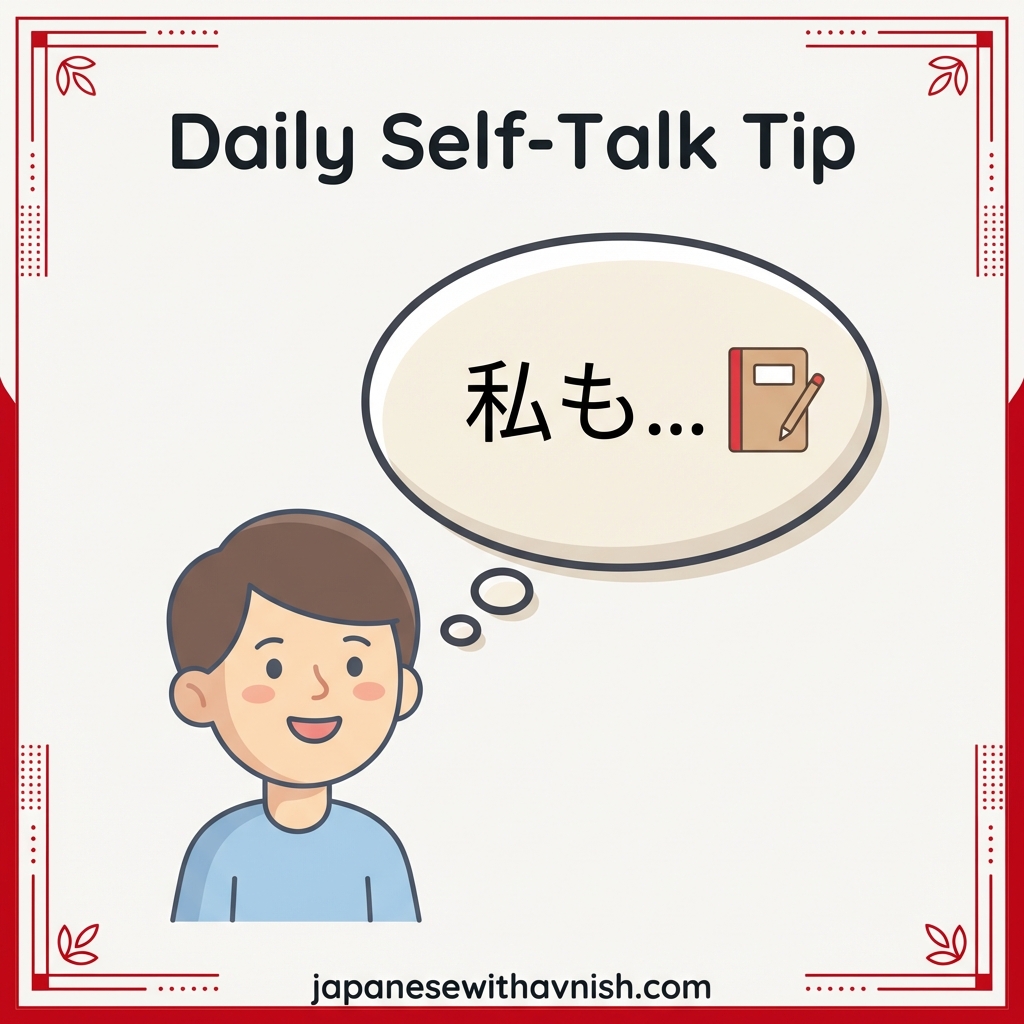
Try to use も in your daily self-talk. When you say "I am..." in Japanese, ask yourself, "Who else is...?" and practice making the sentence with も.
Example Sentences (4–6)
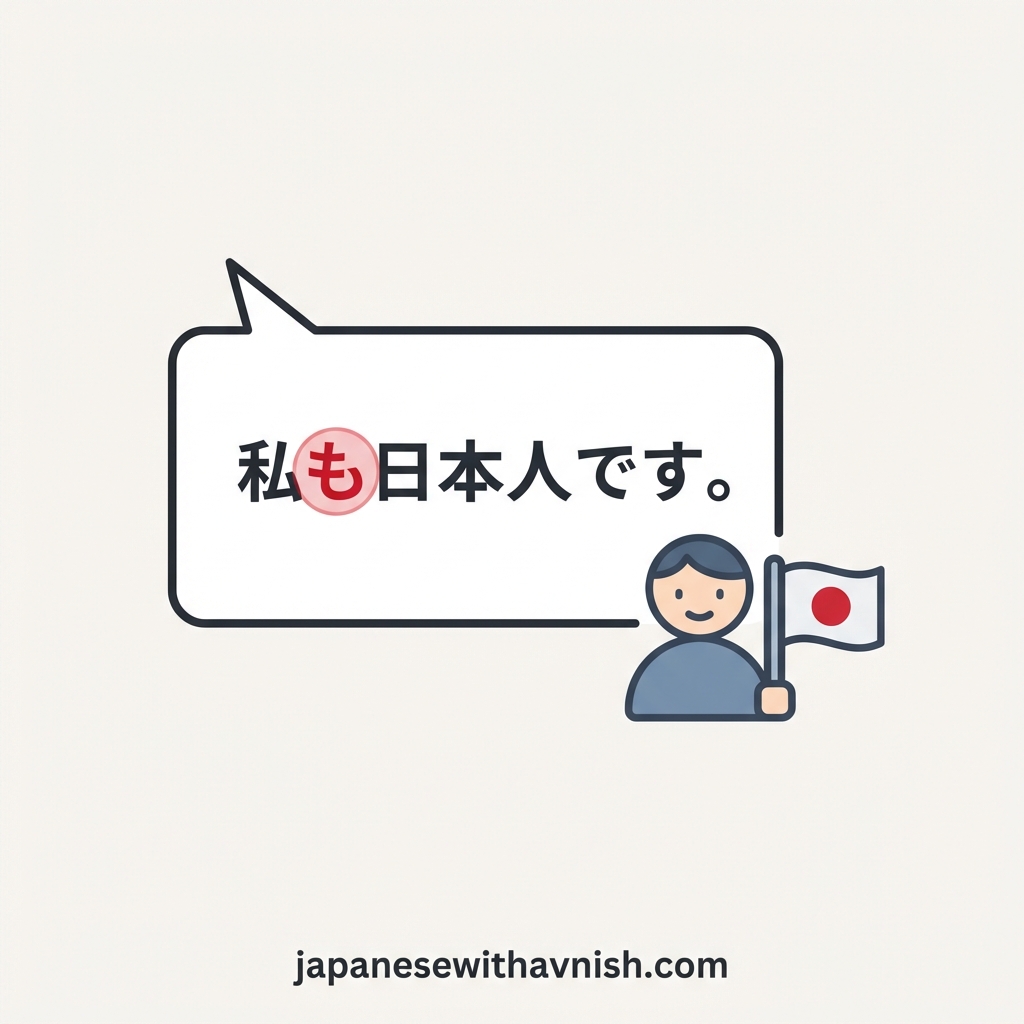
Japanese:
私も日本人です。
Romaji:
Watashi mo Nihonjin desu.
English:
I am also Japanese.
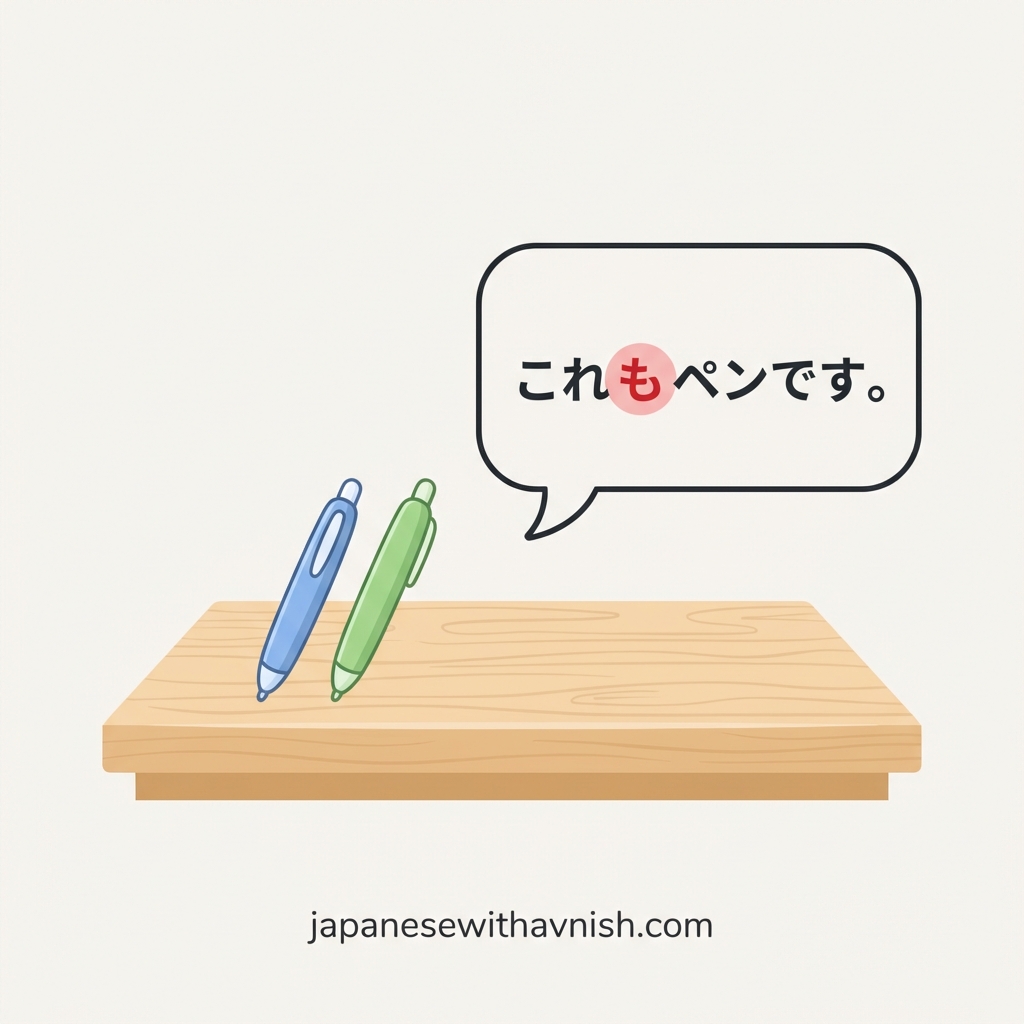
Japanese:
これもペンです。
Romaji:
Kore mo pen desu.
English:
This is also a pen.
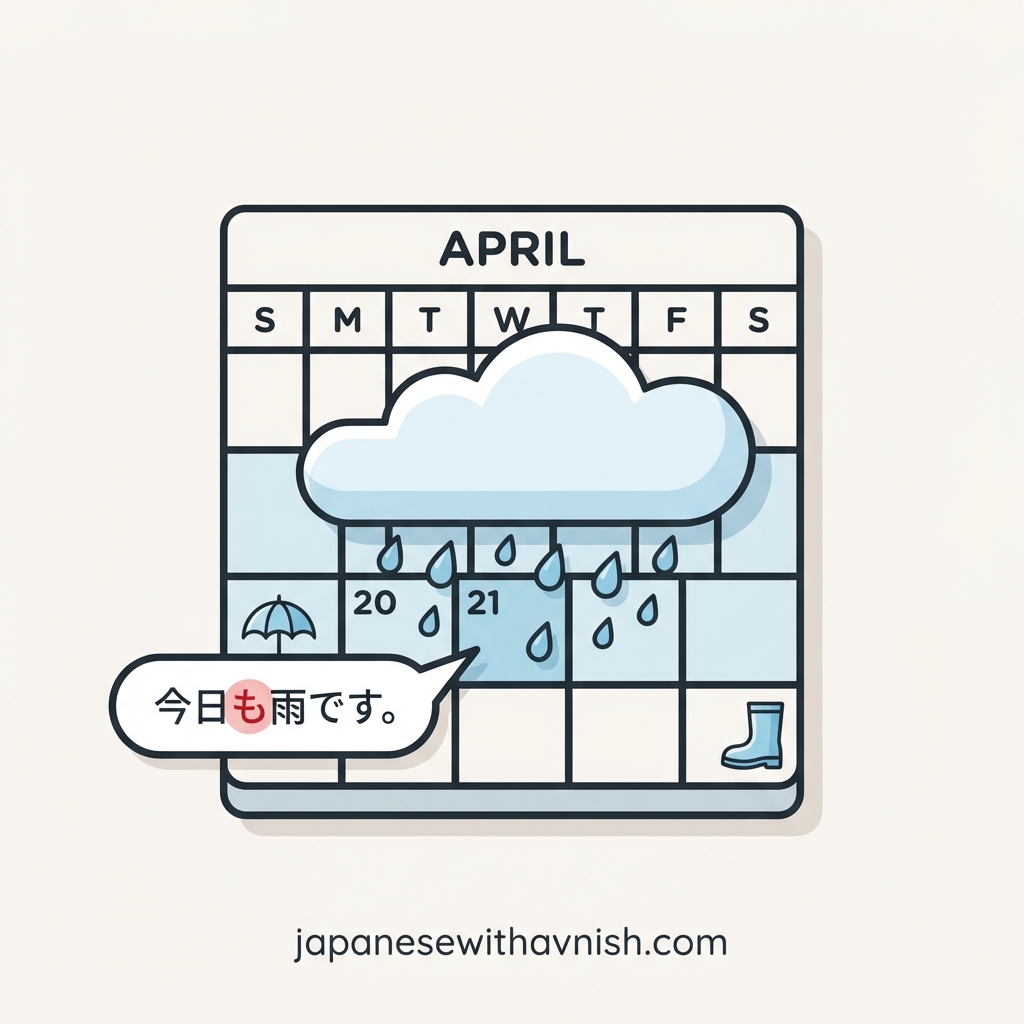
Japanese:
今日も雨です。
Romaji:
Kyō mo ame desu.
English:
It is also rainy today.
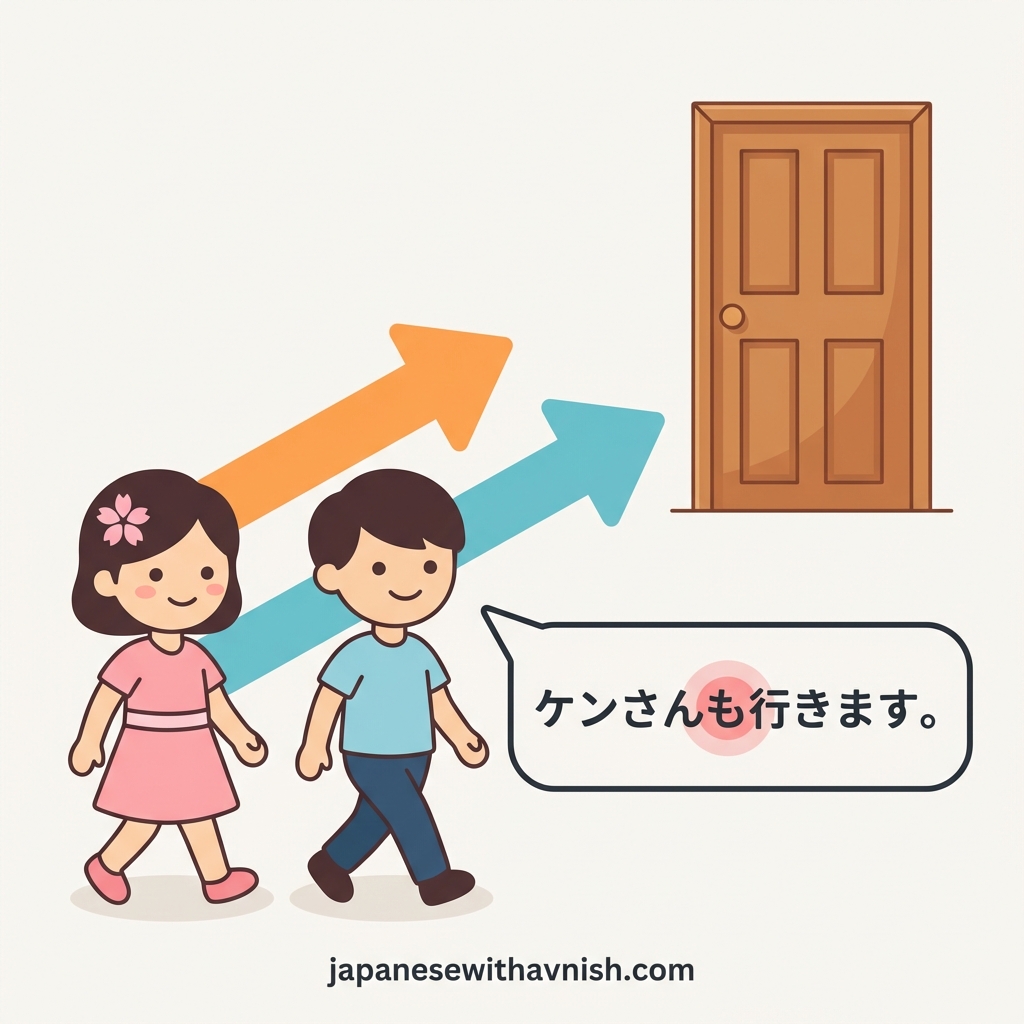
Japanese:
ケンさんも行きます。
Romaji:
Ken-san mo ikimasu.
English:
Ken is also going.
Examples
What should you do next?
Recommended next lessons
〜を皮切りに | N1 Grammar
# 〜を皮切りに - Structure: N + を皮切りに - JLPT level: N1 ## Example 東京での発表を皮切りに、その教材は全国に広まった。 Starting with the presentation in…
Read →〜を余儀なくされる | N1 Grammar
# 〜を余儀なくされる - Structure: N + を余儀なくされる - JLPT level: N1 ## Example 台風の影響で、試験の延期を余儀なくされた。 Because of the typhoon, they wer…
Read →〜にかたくない | N1 Grammar
# 〜にかたくない - Structure: V dictionary/N + にかたくない - JLPT level: N1 ## Example 初めて海外で働く不安は想像にかたくない。 It is not hard to imagin…
Read →〜をおいて他にない | N1 Grammar
# 〜をおいて他にない - Structure: N + をおいて他にない - JLPT level: N1 ## Example この問題を解決できる人は彼をおいて他にない。 There is no one other than him…
Read →〜に至るまで | N1 Grammar
# 〜に至るまで - Structure: N + に至るまで - JLPT level: N1 ## Example 資料の表紙から脚注に至るまで、細かく確認した。 I checked everything carefully, from…
Read →〜んがために | N1 Grammar
# 〜んがために - Structure: Vない stem + んがために; する → せんがために - JLPT level: N1 ## Example 新しい技術を完成させんがために、研究者たちは夜遅くまで実験を続けた。 In or…
Read →Comments
Add a comment
Recommended bundles for you
Structured study materials to accelerate your JLPT journey.