~は~にあります (wa ni arimasu)
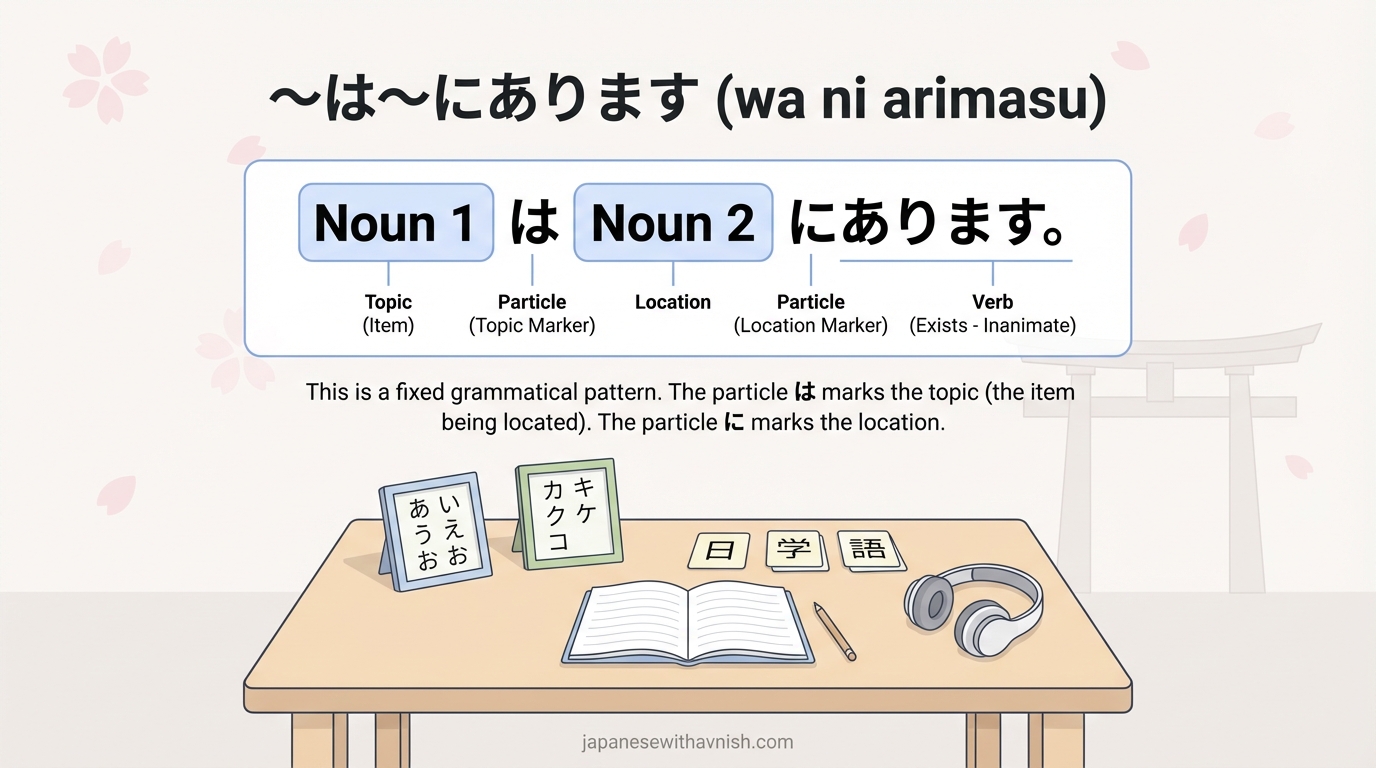
A is located in/at B
[OBJECT] は [LOCATION] に あります
Meaning
- Japanese: ~は~にあります
- Romaji: ~wa ~ni arimasu
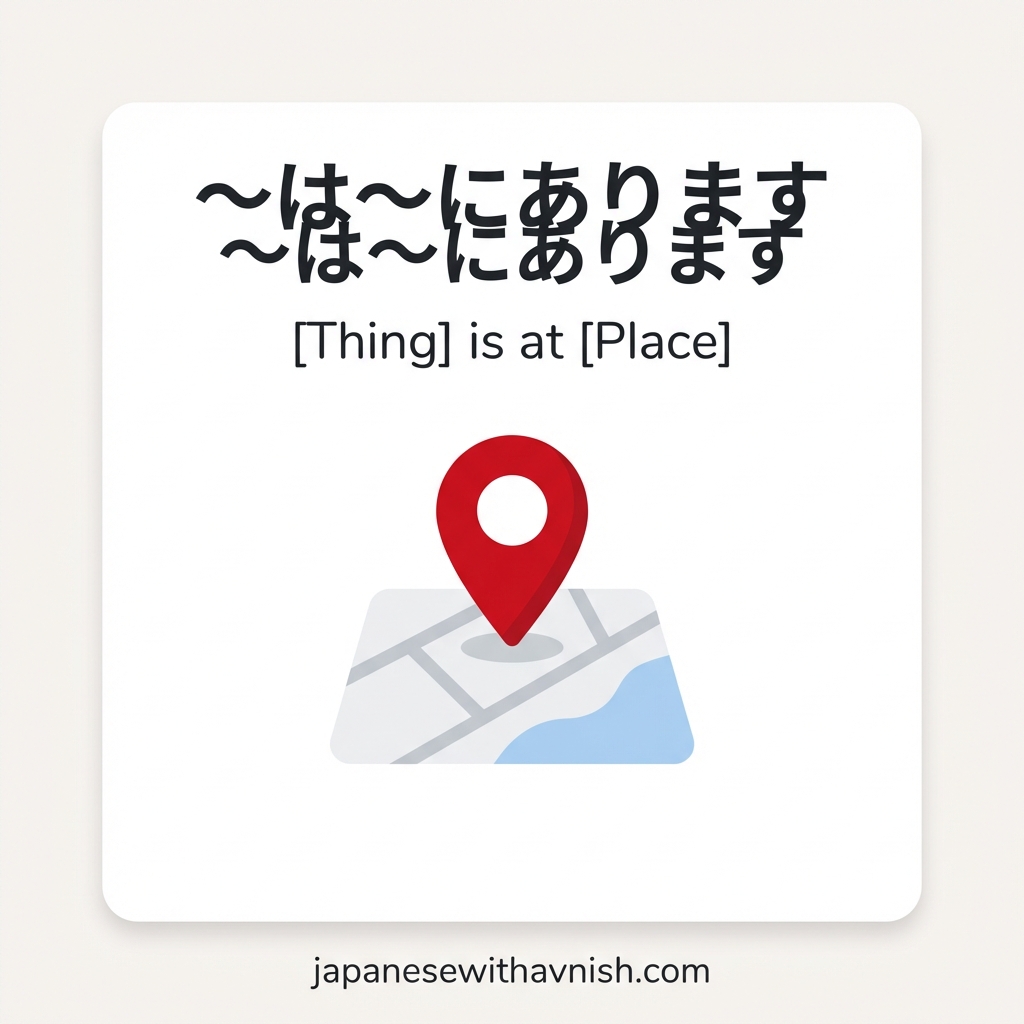
- Meaning (simple English): [Thing] is at/in [Place].
- When you use it (1 sentence): Use it to state the location of a non-living thing.
Simple Explanation
- This pattern tells you where something is. The particle は (wa) marks the thing you are talking about. The particle に (ni) marks the place where it is. The verb あります (arimasu) means "exists" or "is located" for things.
- Core structure: [Thing] は [Place] に あります。
- Example slot: ほん は つくえ に あります。 (The book is on the desk.)
Mnemonic / Memory Trick
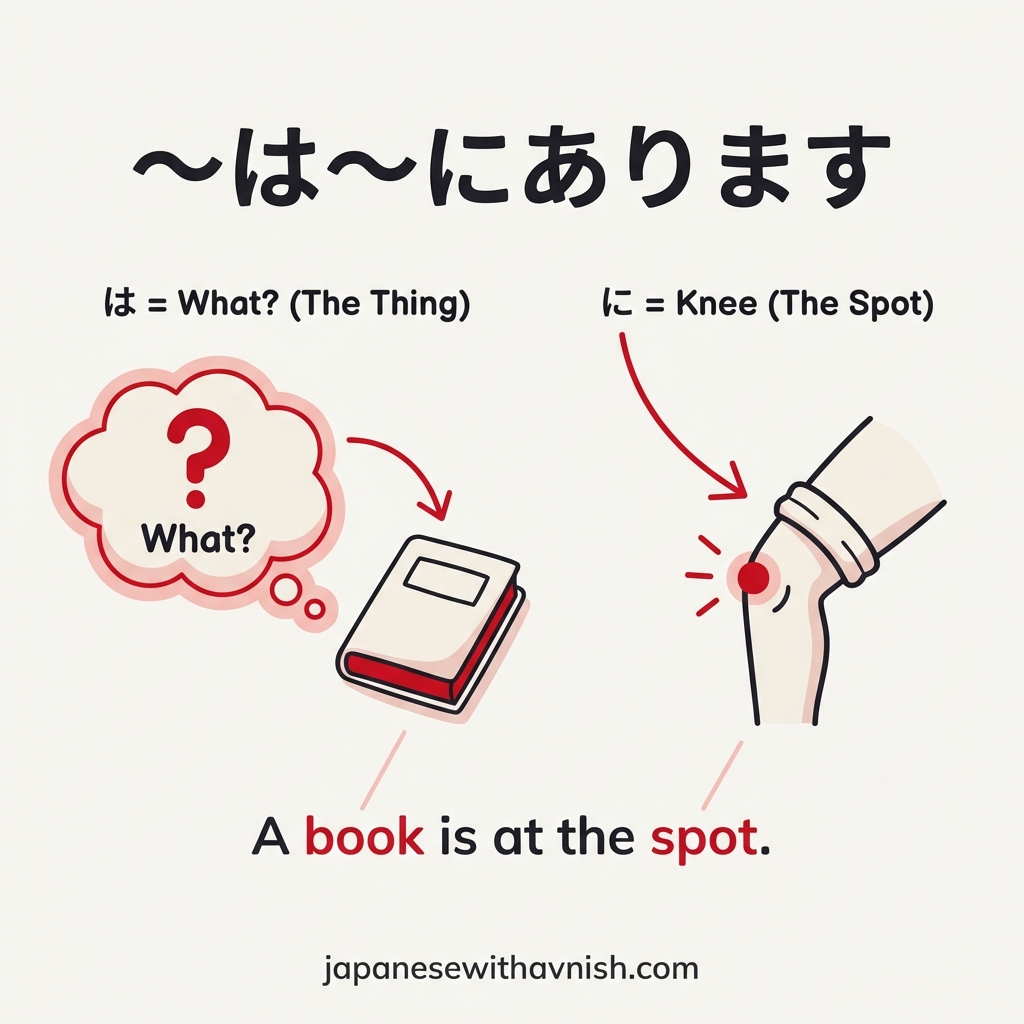
- Imagine a wa (は) sound like "What?" pointing at the thing. Then, a ni (に) sound like "knee" pointing down at the spot. So, "What? (The thing) is on the knee (the spot)."
Mini Conversation (Cartoon Style)
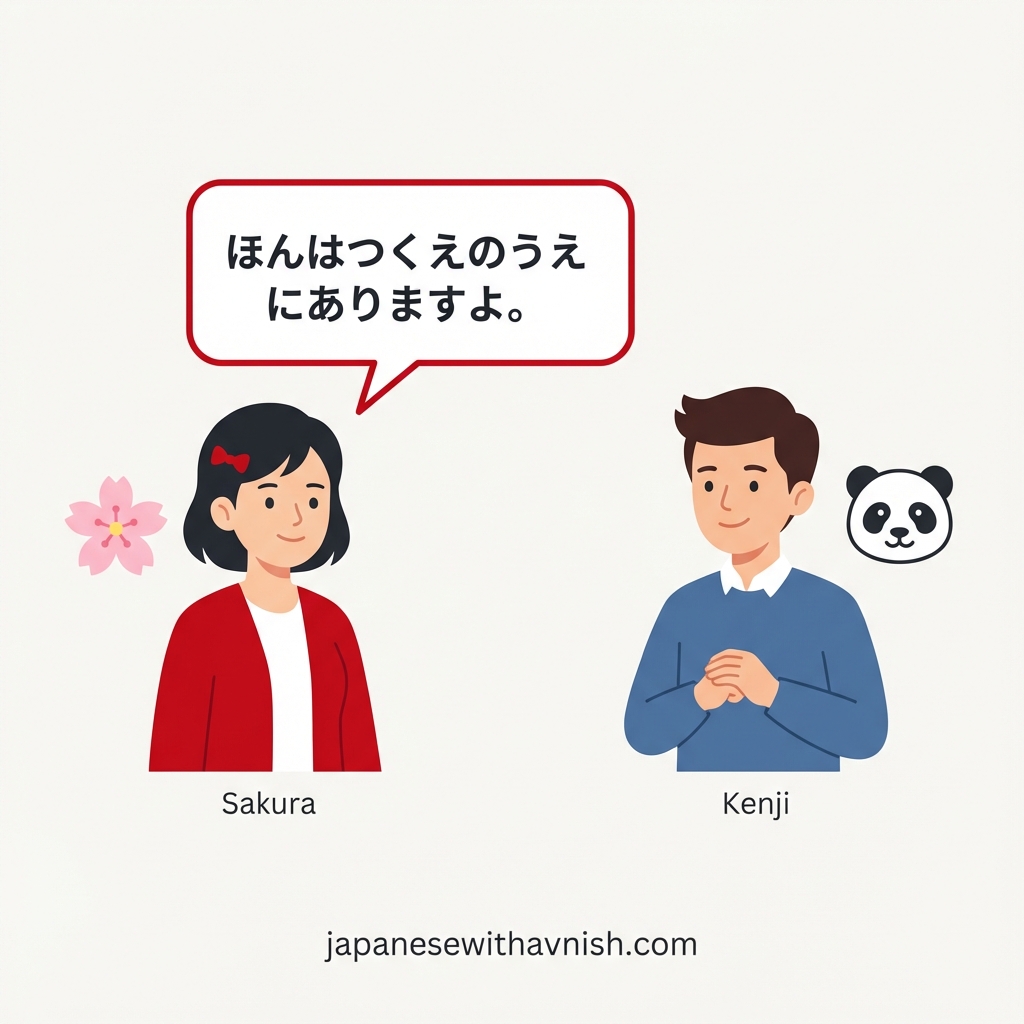
Sakura 🌸: けんじさん、わたしのほんはどこですか。
Romaji: Kenji-san, watashi no hon wa doko desu ka.
English: Kenji, where is my book?
Kenji 🐼: ほんはつくえのうえにありますよ。
Romaji: Hon wa tsukue no ue ni arimasu yo.
English: The book is on the desk.
Sakura 🌸: あ、ありがとう!じゃあ、かぎは?
Romaji: A, arigatou! Jaa, kagi wa?
English: Ah, thank you! Then, what about the key?
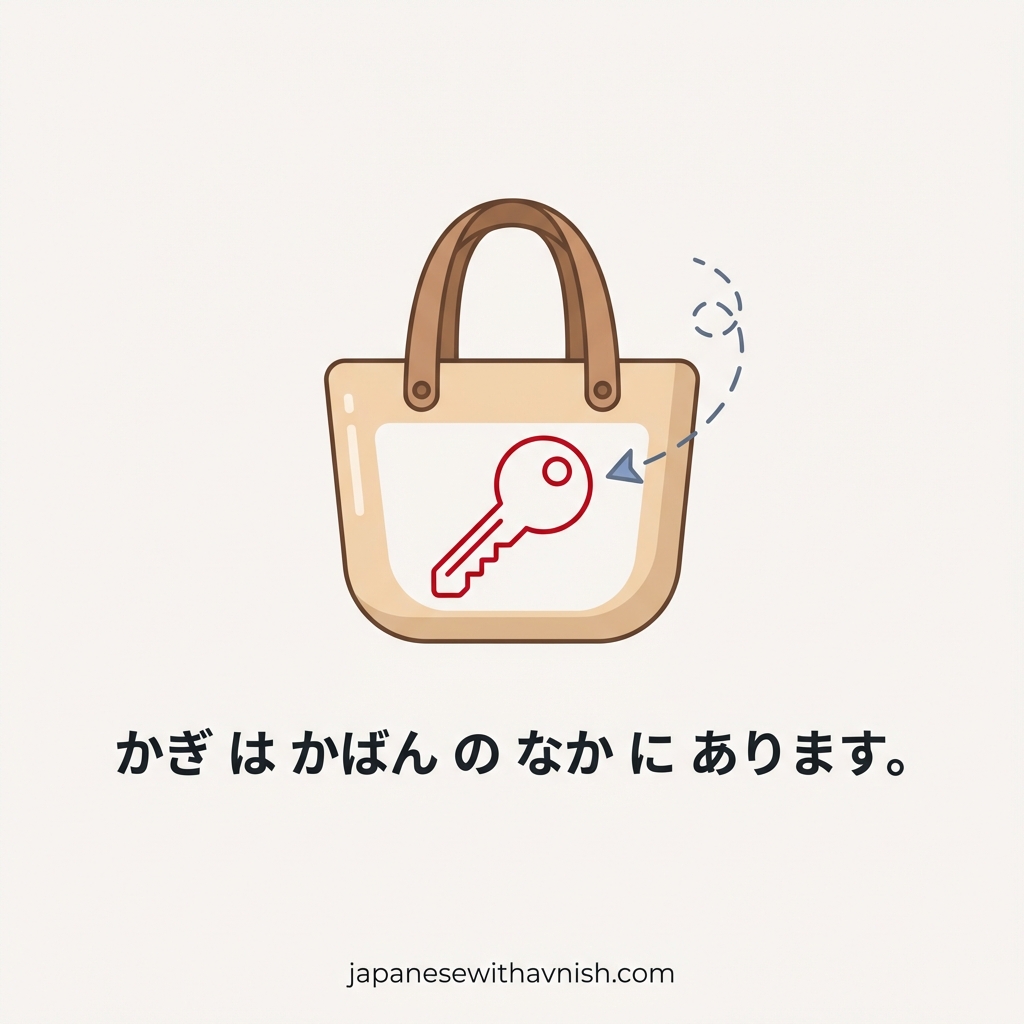
Kenji 🐼: かぎはかばんのなかにあります。
Romaji: Kagi wa kaban no naka ni arimasu.
English: The key is inside the bag.
Common Beginner Mistake
- Mistake: Using あります for people or animals.
❌ Incorrect: ともだち は がっこう に あります。
✔ Correct: ともだち は がっこう に います。 - Explanation: Use あります (arimasu) only for non-living things. For people and animals, you must use います (imasu).
Practice Exercise
-
Translate to Japanese: "The bag is under the table."
(Hint: under = した) -
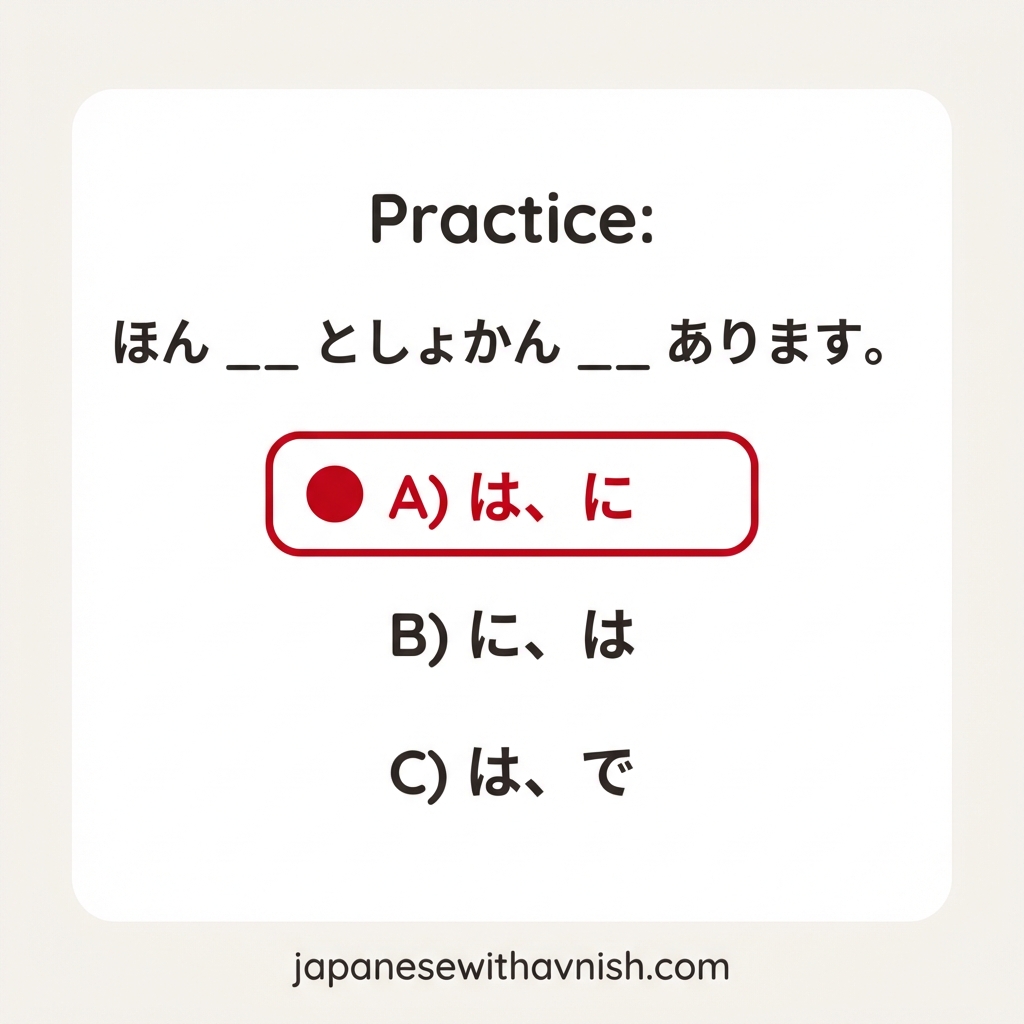
Multiple Choice: Choose the correct particle.
ほん __ としょかん __ あります。
A) は、に
B) に、は
C) は、で
Correct answer: A) は、に
Explanation: The first particle marks the topic (book), so it's は. The second particle marks the location (library), so it's に.
Study Tip
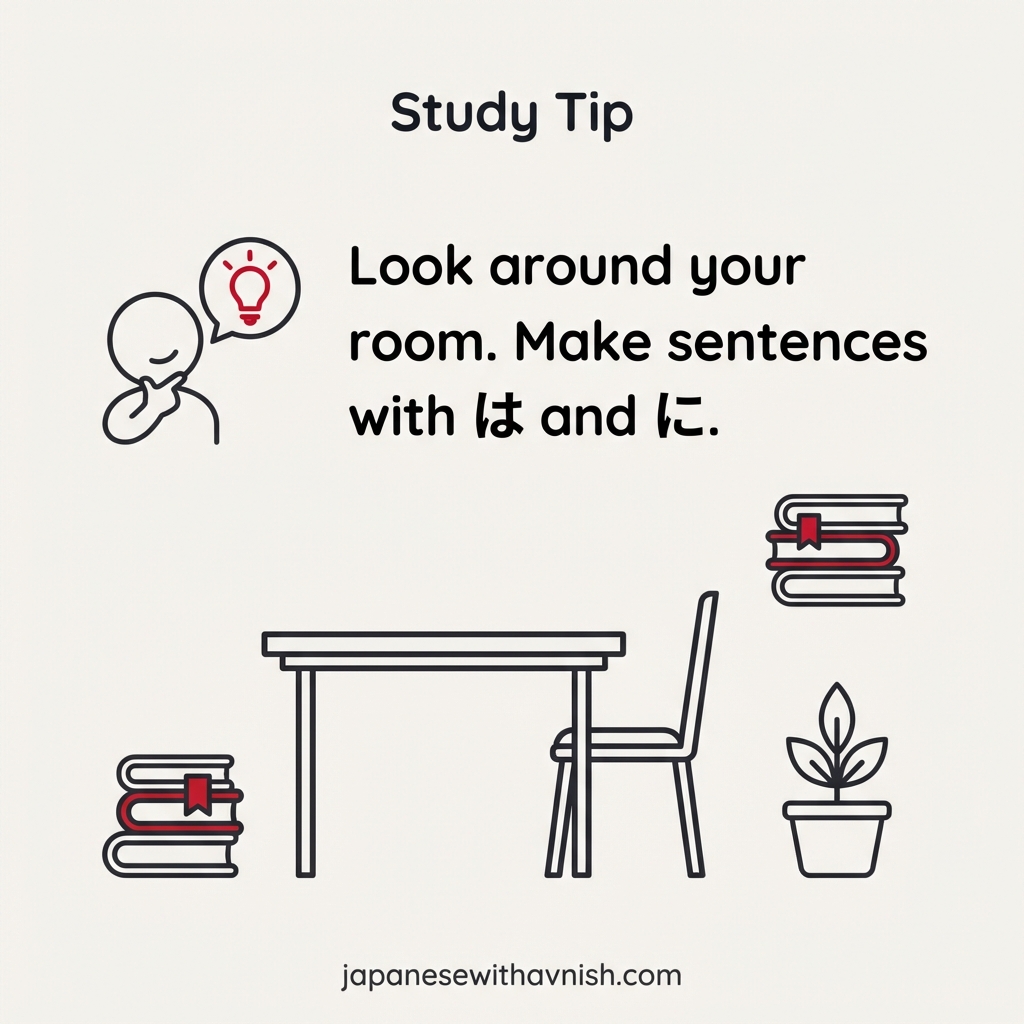
- Practice by looking around your room and making simple sentences about where things are, using は and に.
Example Sentences (4–6)
Japanese:
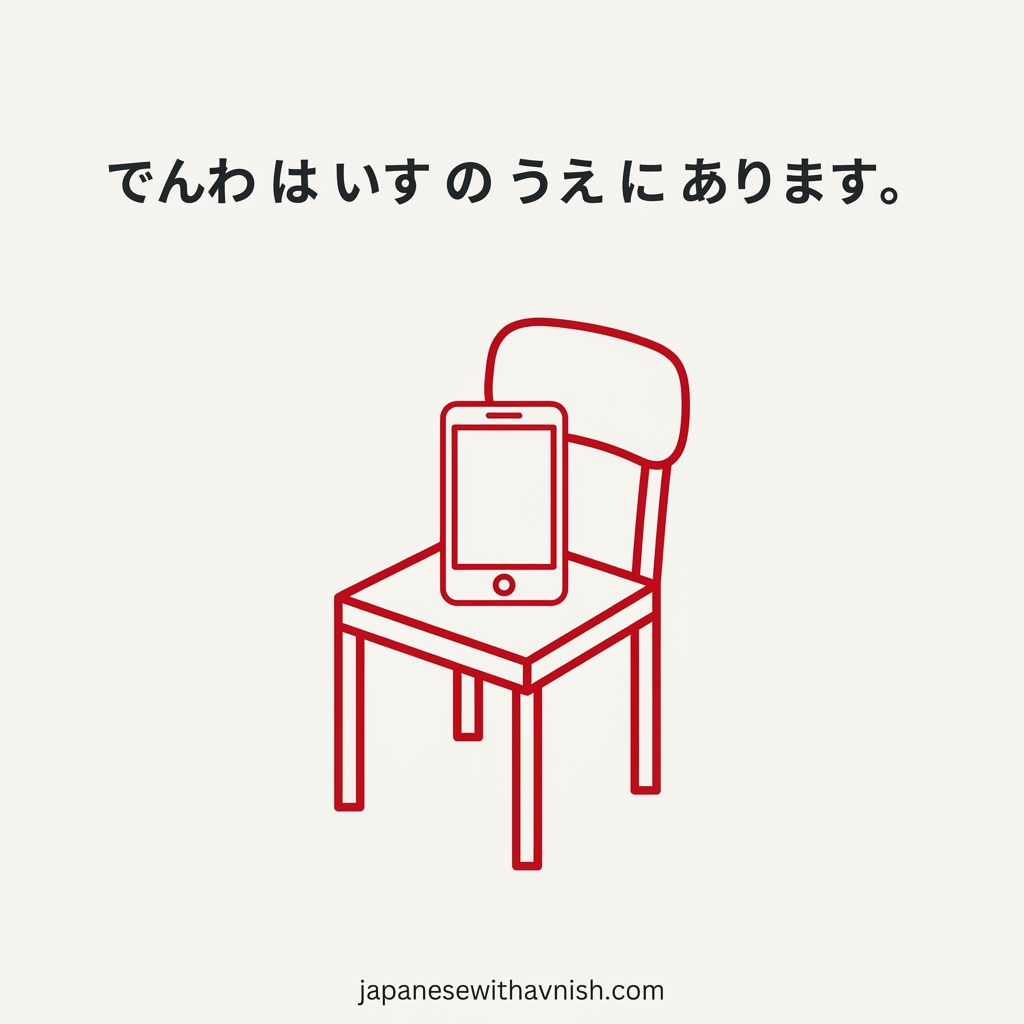
でんわ は いす の うえ に あります。
Romaji:
Denwa wa isu no ue ni arimasu.
English:
The phone is on the chair.
Japanese:
かぎ は かばん の なか に あります。
Romaji:
Kagi wa kaban no naka ni arimasu.
English:
The key is inside the bag.
Japanese:
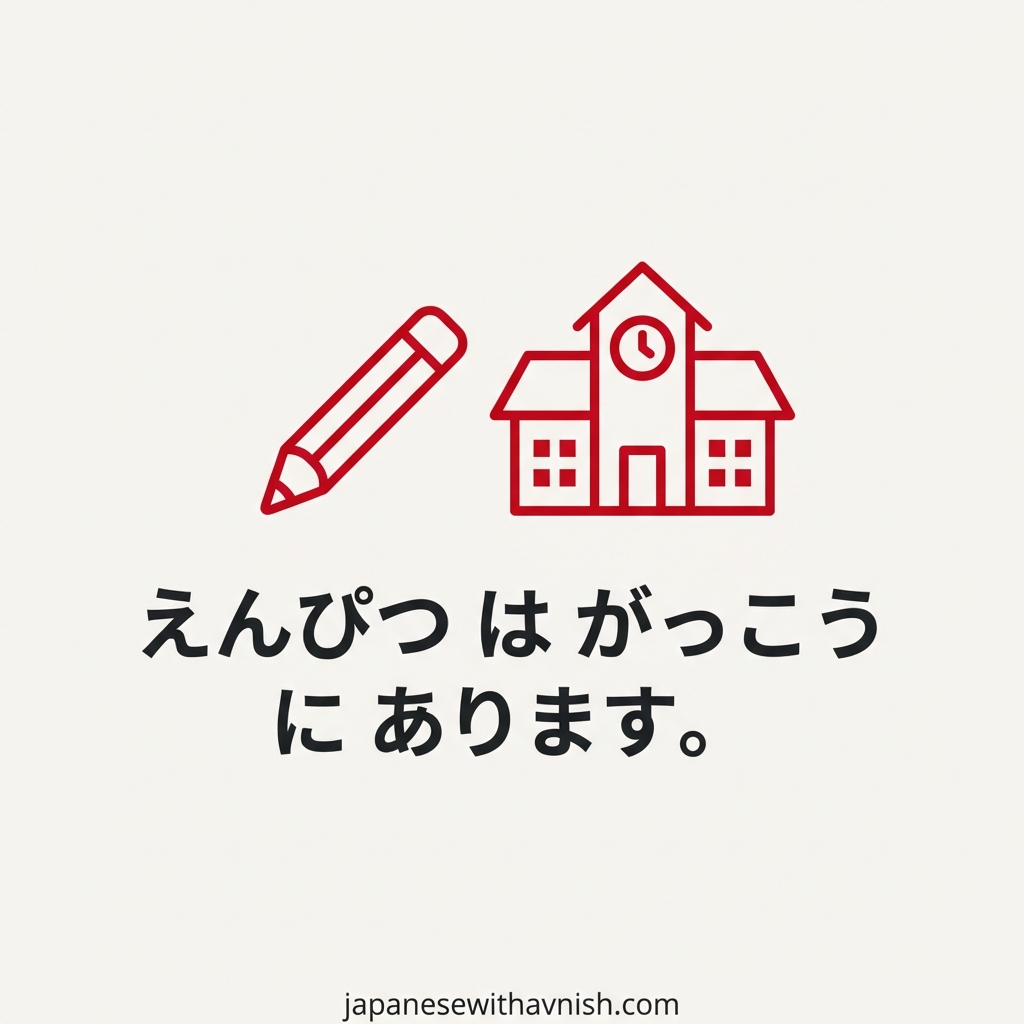
えんぴつ は がっこう に あります。
Romaji:
Enpitsu wa gakkou ni arimasu.
English:
The pencil is at school.
Japanese:
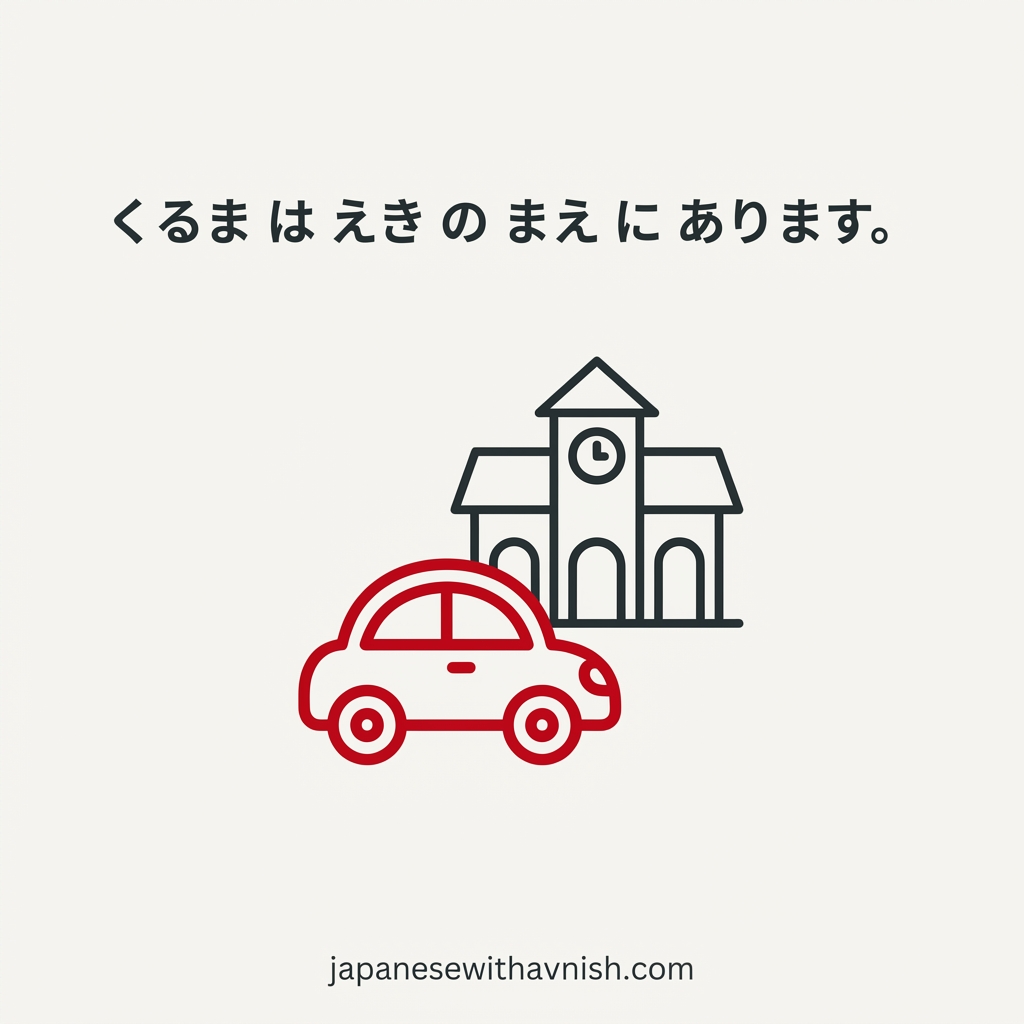
くるま は えき の まえ に あります。
Romaji:
Kuruma wa eki no mae ni arimasu.
English:
The car is in front of the station.
Examples
What should you do next?
Recommended next lessons
〜を皮切りに | N1 Grammar
# 〜を皮切りに - Structure: N + を皮切りに - JLPT level: N1 ## Example 東京での発表を皮切りに、その教材は全国に広まった。 Starting with the presentation in…
Read →〜を余儀なくされる | N1 Grammar
# 〜を余儀なくされる - Structure: N + を余儀なくされる - JLPT level: N1 ## Example 台風の影響で、試験の延期を余儀なくされた。 Because of the typhoon, they wer…
Read →〜にかたくない | N1 Grammar
# 〜にかたくない - Structure: V dictionary/N + にかたくない - JLPT level: N1 ## Example 初めて海外で働く不安は想像にかたくない。 It is not hard to imagin…
Read →〜をおいて他にない | N1 Grammar
# 〜をおいて他にない - Structure: N + をおいて他にない - JLPT level: N1 ## Example この問題を解決できる人は彼をおいて他にない。 There is no one other than him…
Read →〜に至るまで | N1 Grammar
# 〜に至るまで - Structure: N + に至るまで - JLPT level: N1 ## Example 資料の表紙から脚注に至るまで、細かく確認した。 I checked everything carefully, from…
Read →〜んがために | N1 Grammar
# 〜んがために - Structure: Vない stem + んがために; する → せんがために - JLPT level: N1 ## Example 新しい技術を完成させんがために、研究者たちは夜遅くまで実験を続けた。 In or…
Read →Comments
Add a comment
Recommended bundles for you
Structured study materials to accelerate your JLPT journey.