In the Classroom
教室で (In the Classroom)
Scene/Context
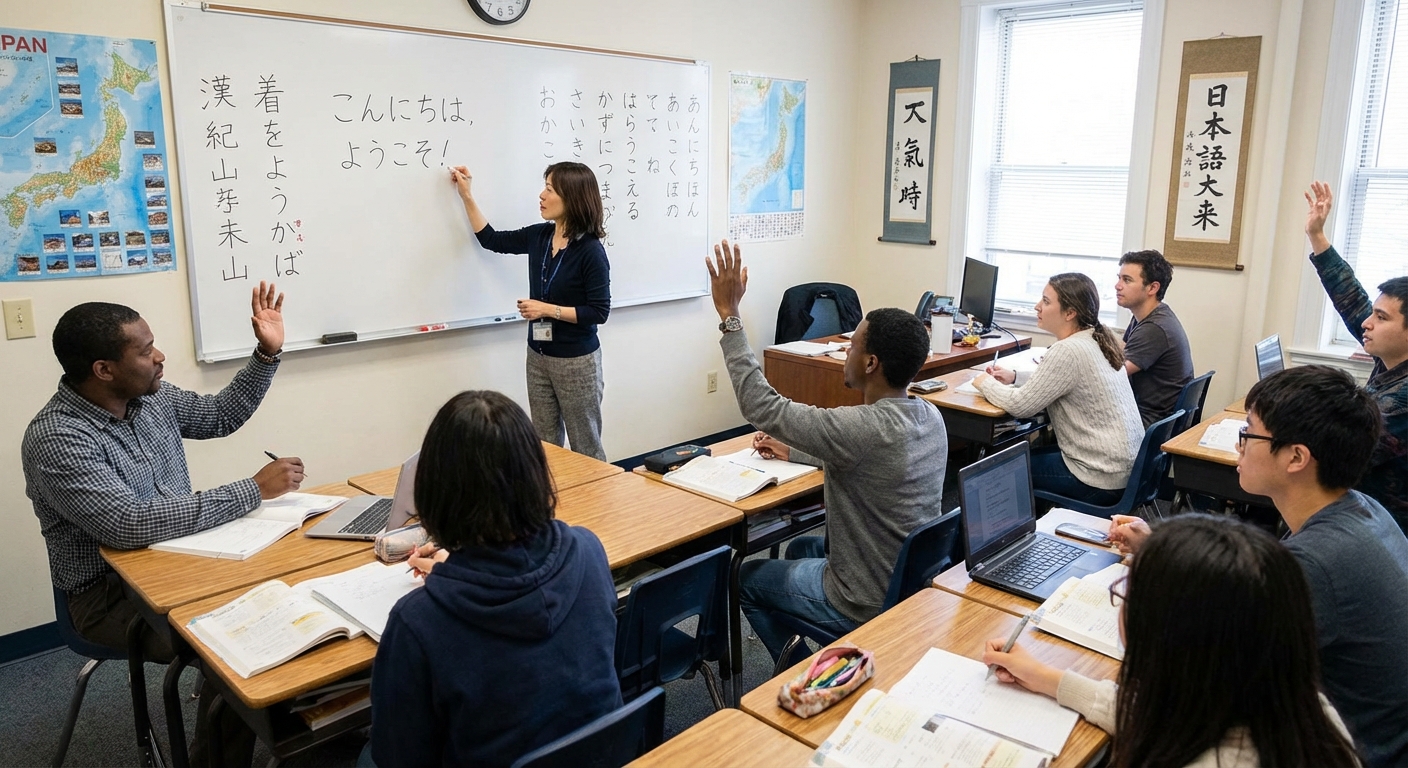
This is a typical morning in a Japanese language classroom. The teacher, たなか先生 (Tanaka-sensei), is giving simple instructions for the day's first activity. Students listen and ask basic questions to clarify what they need to do.
Dialogue
たなか先生: みなさん、おはようございます。きょうの じゅぎょうを はじめます。まず、ノートと えんぴつを だしてください。けいたいでんわは かばんの なかに いれてください。
学生A: 先生、ペンでも いいですか。
たなか先生: はい、ペンでも いいですよ。つぎに、きょうは かんじの テストが あります。テストは じゅうごふんです。しつもんが ありますか。
学生B: テストは なんじから ですか。
たなか先生: テストは じゅうじはんから です。いまから れんしゅうを しましょう。ほんの ごじゅうページを あけてください。
学生C: ごじゅういちページですか。
たなか先生: いいえ、ごじゅうページです。では、はじめましょう。
Comprehension Questions
-
たなか先生は、まず何を出すように言いましたか。
a) 本とペン
b) ノートとえんぴつ
c) けいたいでんわ -
今日のテストは何分ですか。
a) 5分
b) 10分
c) 15分 -
学生Cは何ページを聞きましたか。
a) 50ページ
b) 51ページ
c) 15ページ -
テストは何時からですか。(短い文で答えてください)
Answer Key with Explanations
-
b) ノートとえんぴつ
- Explanation: The teacher's first instruction is, "First, please take out your notebook and pencil." (まず、ノートとえんぴつを だしてください。)
-
c) 15分
- Explanation: The teacher says, "The test is 15 minutes." (テストは じゅうごふんです。)
-
b) 51ページ
- Explanation: Student C asks, "Is it page 51?" (ごじゅういちページですか。) to confirm the page number.
-
じゅうじはんから です。
- Explanation: The teacher answers Student B's question clearly: "The test is from 10:30." (テストは じゅうじはんから です。)
Vocabulary Spotlight
- だす: to take out, to hand in
- じゅうごふん 【15分】: fifteen minutes
- なんじ 【何時】: what time
- ページ: page
- あける: to open (a book to a page)
Listening Tip
Focus on the Question Words (疑問詞 - Gimonshi).
In N5 listening, key information often follows question words like 何 (what), 何時 (what time), どこ (where), だれ (who), and いくら (how much). When you hear one of these words, listen carefully to the sentence that comes next, as it will likely contain the answer to a comprehension question. In this dialogue, 何時 and 何分 were directly linked to the answers.
A teacher gives simple instructions and students ask basic questions about a lesson or activity.
Key phrases / dialogue
What should you do next?
Recommended next lessons
Listening practice: The M, Y, R, W, and N rows (complete 46 Hiragana)
Listening practice for: The M, Y, R, W, and N rows (complete 46 Hiragana)
Read →Listening practice: Self-introduction
Listening practice for: Self-introduction
Read →Listening practice: Hiragana か-row
Listening practice for: Hiragana か-row
Read →Listening practice: The T, N, and H rows (and exceptions)
Listening practice for: The T, N, and H rows (and exceptions)
Read →Listening practice: Spatial locations (の, うえ, した, なか, そと, となり)
Listening practice for: Spatial locations (の, うえ, した, なか, そと, となり)
Read →Listening practice: Hiragana あ-row
Listening practice for: Hiragana あ-row
Read →Comments
Add a comment
Recommended bundles for you
Structured study materials to accelerate your JLPT journey.