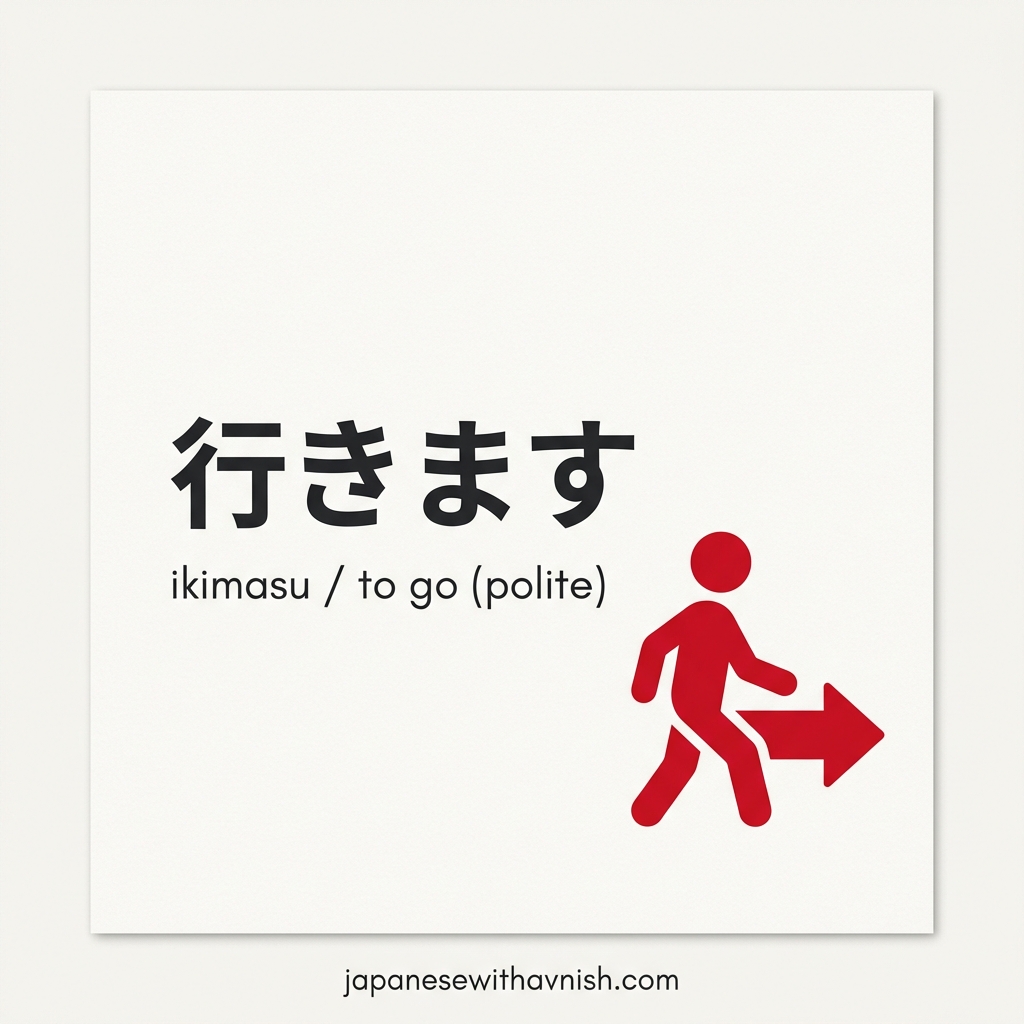
行きます

To go
Meaning
Japanese: 行きます
Romaji: ikimasu
Meaning: to go (polite present/future form)
Part of speech: Verb (Group I, 五段動詞)
Nuance / when to use: Used to politely state that you or someone will go somewhere, or to ask if someone will go.
Simple Explanation
- This is the polite form of the verb 行く (iku). It is used in most daily conversations.
- A common pattern is: [Person/Thing] は [Place] に 行きます。
- The ます-form (行きます) is polite; the dictionary form (行く) is plain/casual.
Mnemonic / Memory Trick
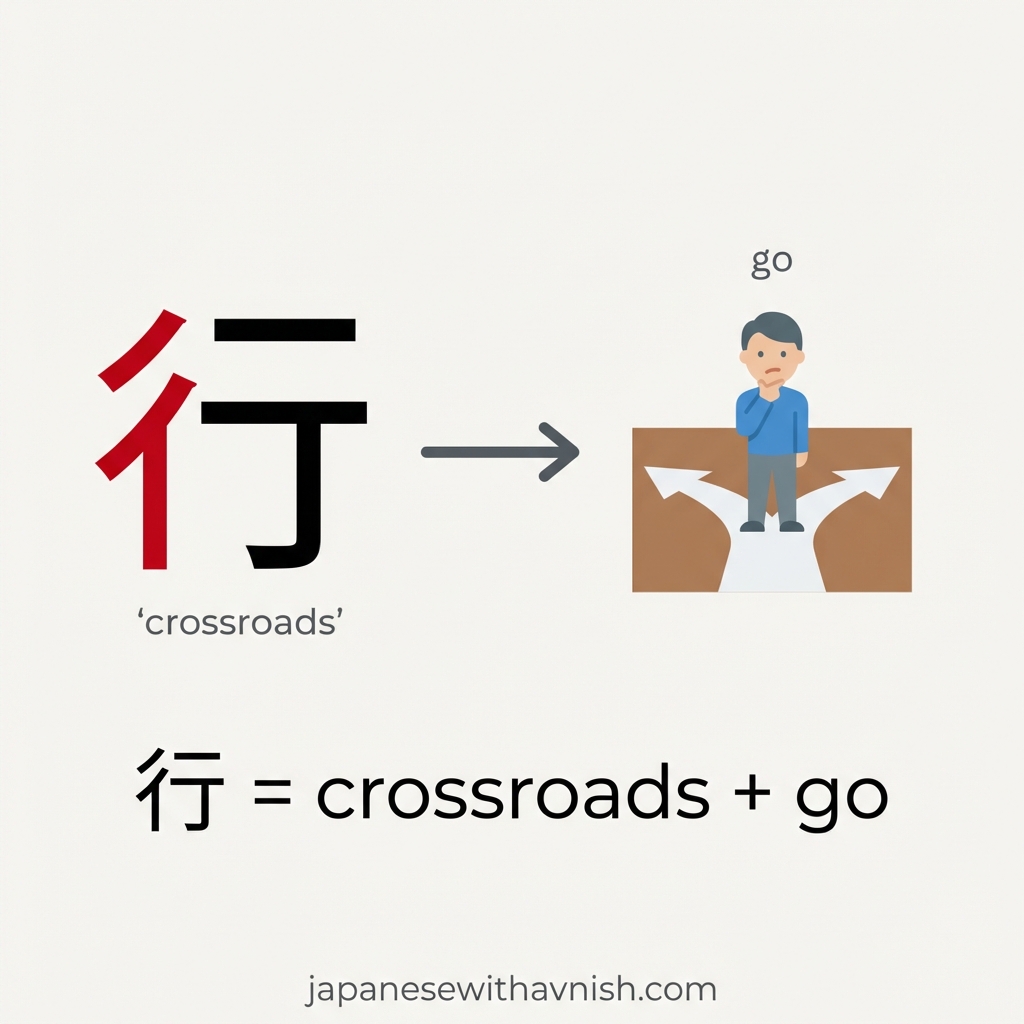
- Imagine the kanji 行 looks like a person at a crossroads (彳) deciding which way to go. The ます ending sounds like "must," so think, "I must go."
- Visualize a polite person at a train station saying, "Ikimasu!" as they board a train.
Mini Conversation (Cartoon Style)
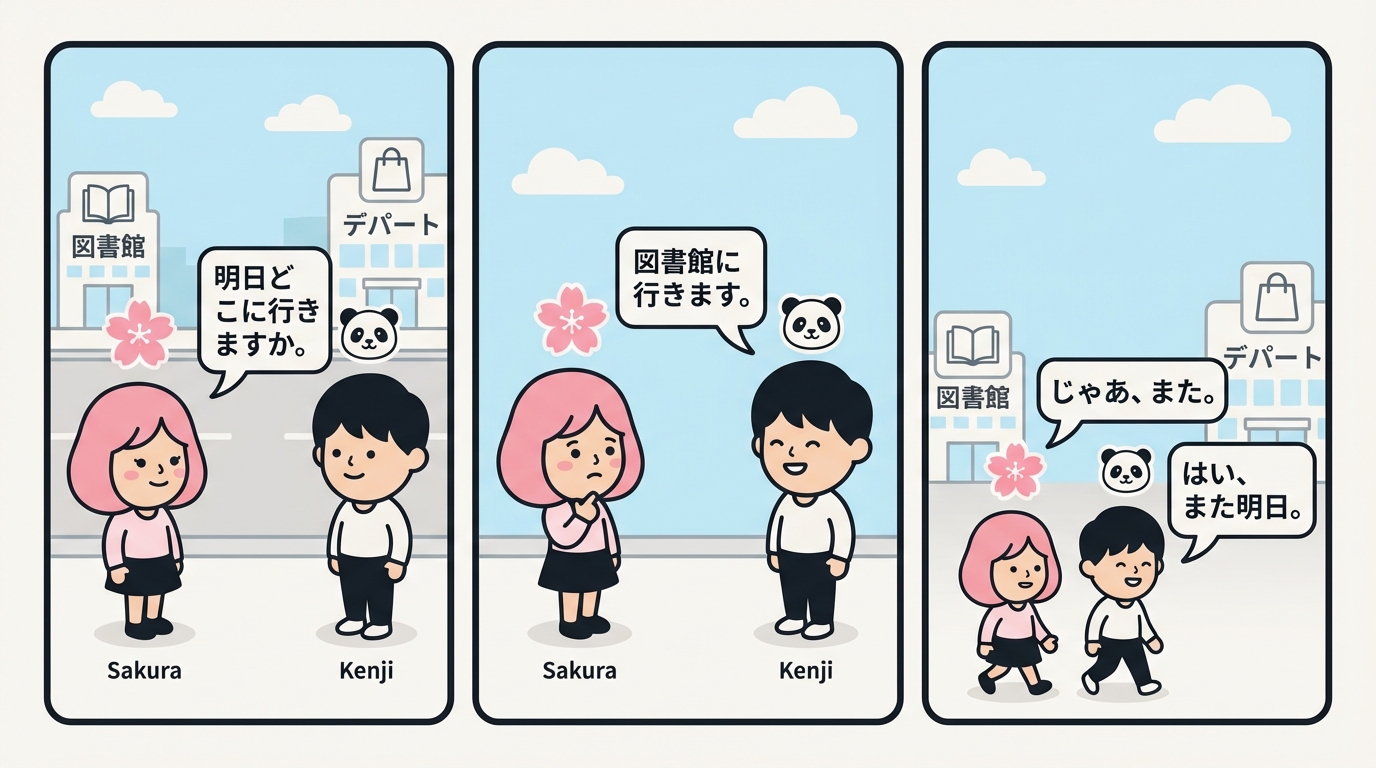
Sakura 🌸: ケンジさん、明日どこに行きますか。
Kenji 🐼: 図書館に行きます。本を借ります。
Sakura 🌸: そうですか。私はデパートに行きます。
Kenji 🐼: いいですね。何時に帰りますか。
Sakura 🌸: 5時ごろ帰ります。
Romaji:
Sakura: Kenji-san, ashita doko ni ikimasu ka.
Kenji: Toshokan ni ikimasu. Hon o karimasu.
Sakura: Sō desu ka. Watashi wa depāto ni ikimasu.
Kenji: Ii desu ne. Nan-ji ni kaerimasu ka.
Sakura: Go-ji goro kaerimasu.
English:
Sakura: Kenji, where are you going tomorrow?
Kenji: I'm going to the library. I will borrow a book.
Sakura: I see. I'm going to the department store.
Kenji: That's nice. What time will you return?
Sakura: I will return around 5 o'clock.
Common Beginner Mistake
- Using the particle を instead of に for the destination.
❌ Incorrect: 学校を行きます。
✔ Correct: 学校に行きます。 - Explanation: The destination (where you go to) is marked with the particle に, not を. The particle を marks the direct object of a verb.
Practice Exercise
-
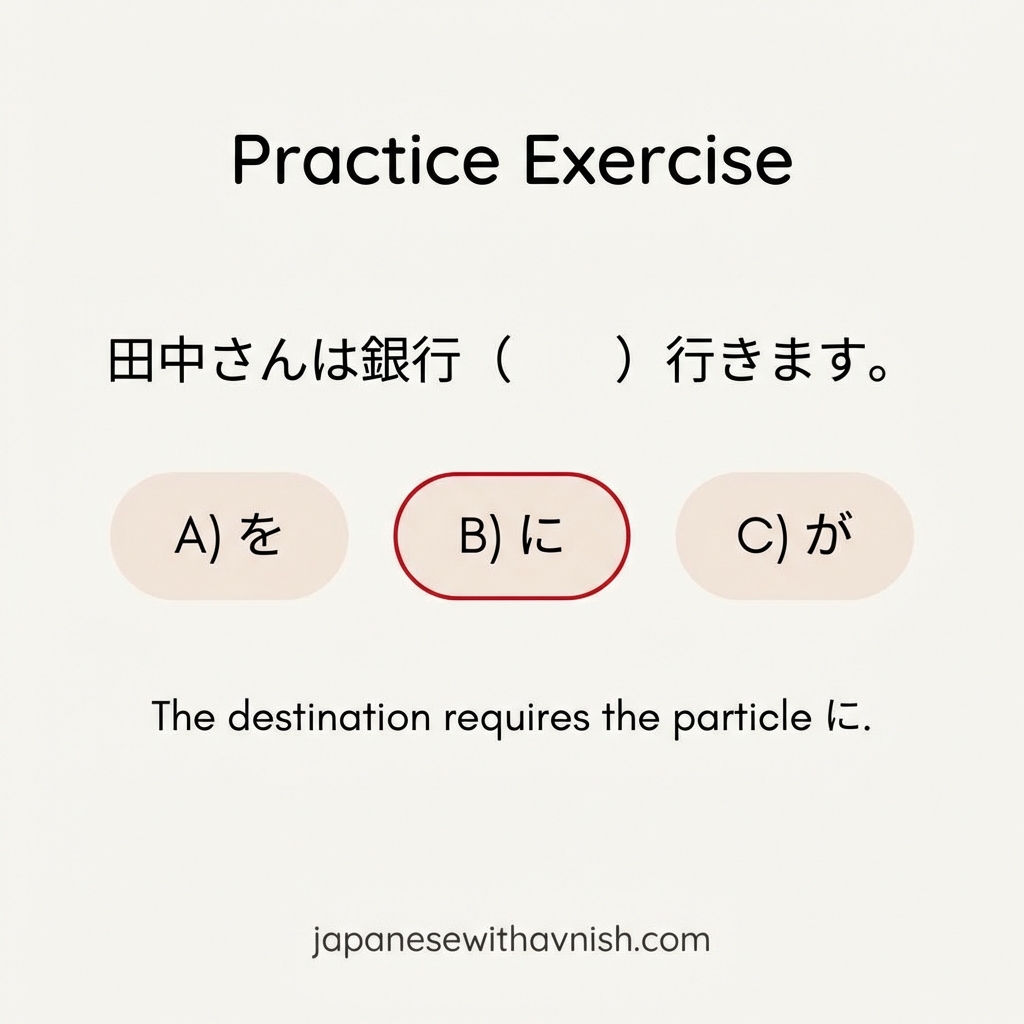
Choose the correct particle to complete the sentence.
田中さんは銀行( )行きます。
A) を
B) に
C) が
Answer: B) に
Explanation: The destination (bank) requires the particle に. -
Convert the following sentence to the polite present/future form.
彼は家へ行く。 (Kare wa ie e iku.)
Answer: 彼は家へ行きます。 (Kare wa ie e ikimasu.)
Explanation: Replace the dictionary form 行く with its polite ます-form, 行きます.
Study Tip
- Practice by saying where you will go today or tomorrow using the pattern "[Place] に 行きます" out loud.
Example Sentences (4–6)
Japanese:
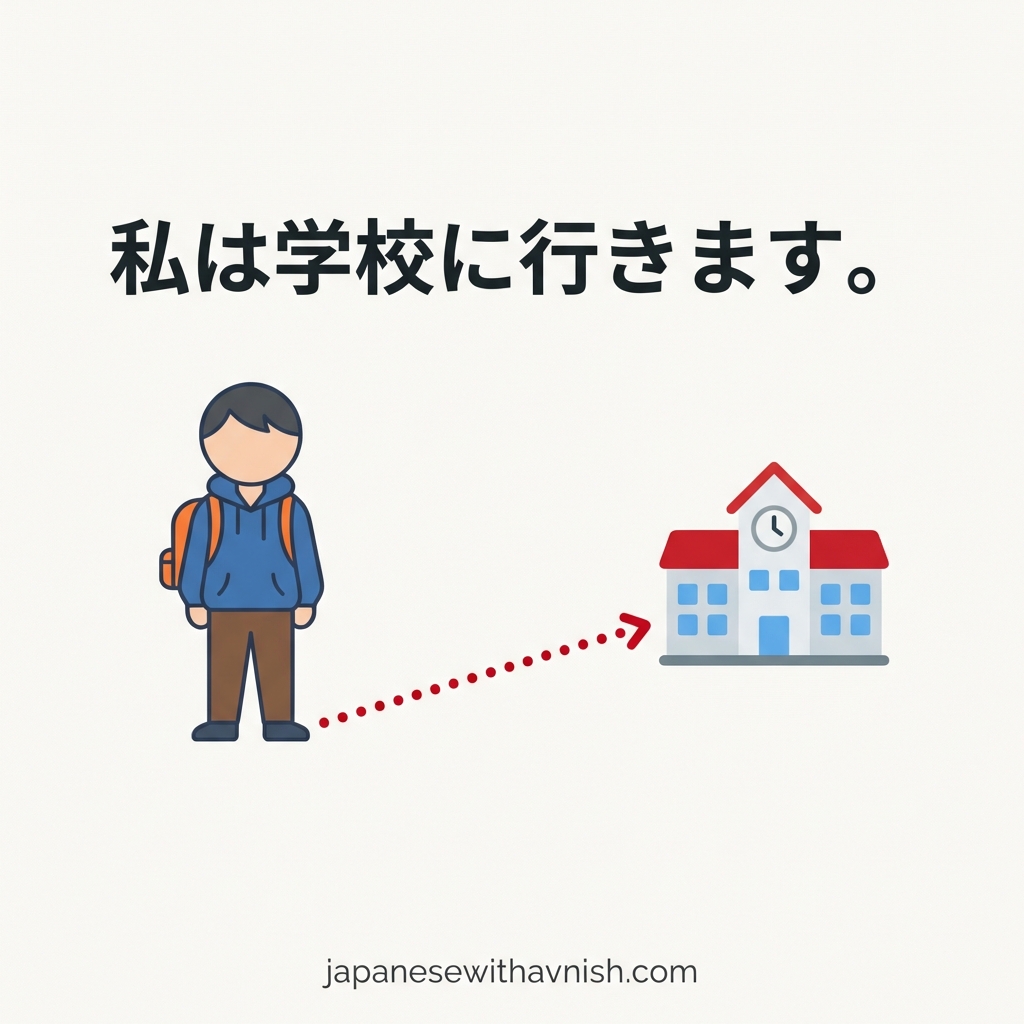
私は学校に行きます。
Romaji:
Watashi wa gakkō ni ikimasu.
English:
I go to school.
Japanese:
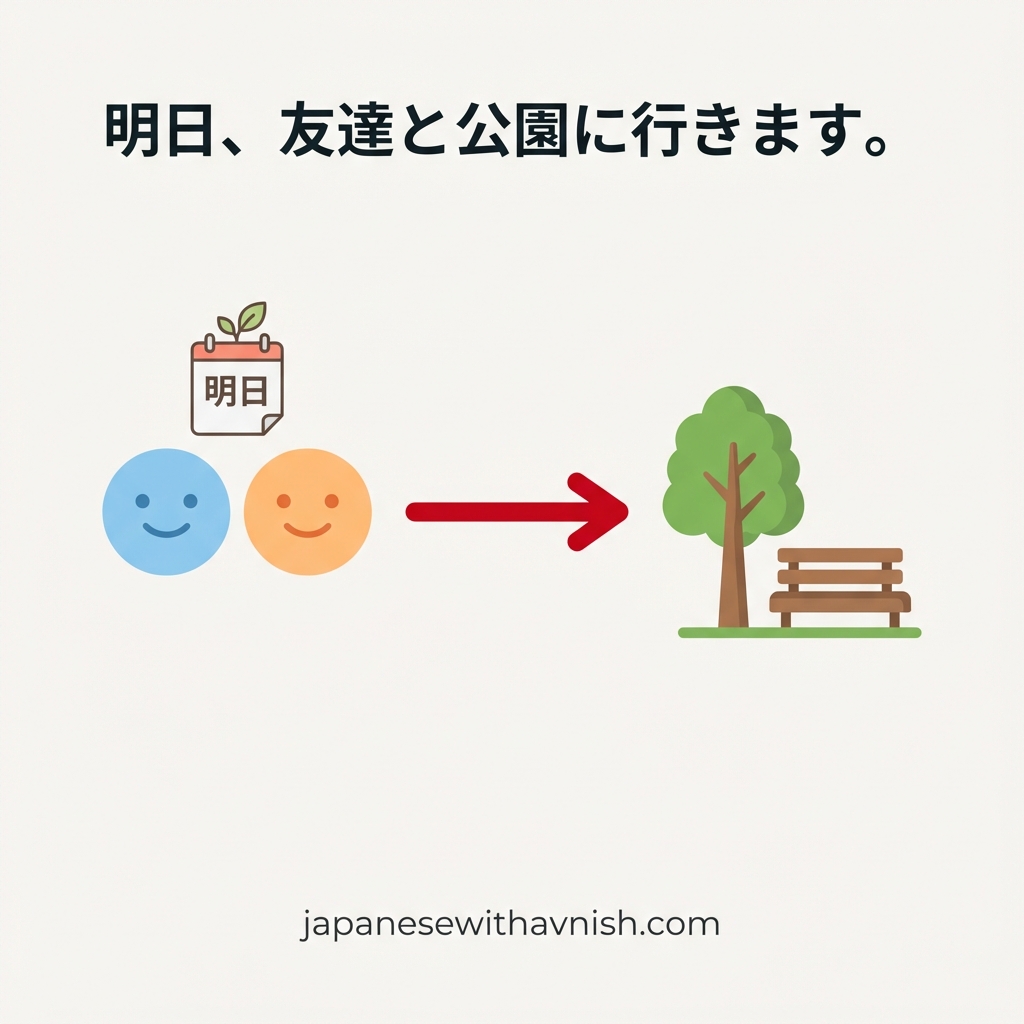
明日、友達と公園に行きます。
Romaji:
Ashita, tomodachi to kōen ni ikimasu.
English:
Tomorrow, I will go to the park with a friend.
Japanese:
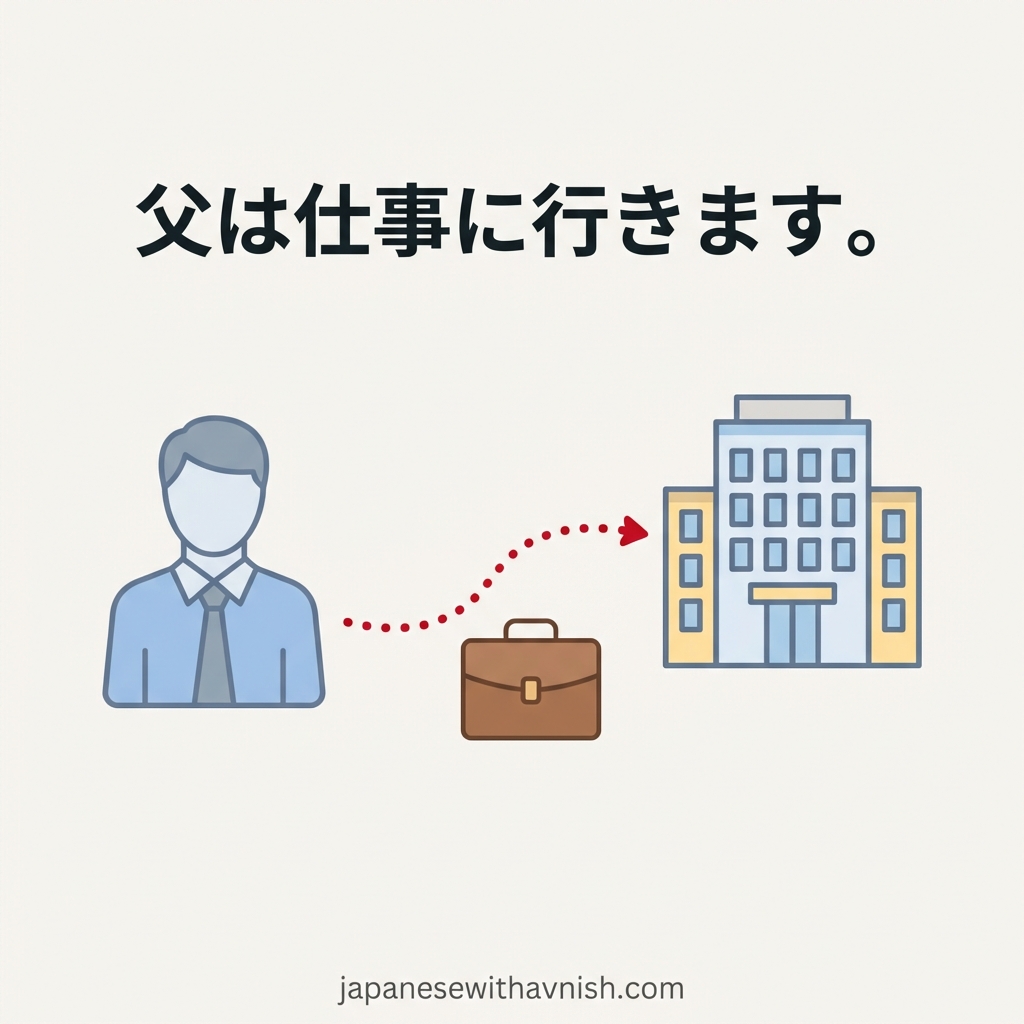
父は仕事に行きます。
Romaji:
Chichi wa shigoto ni ikimasu.
English:
My father goes to work.
Japanese:
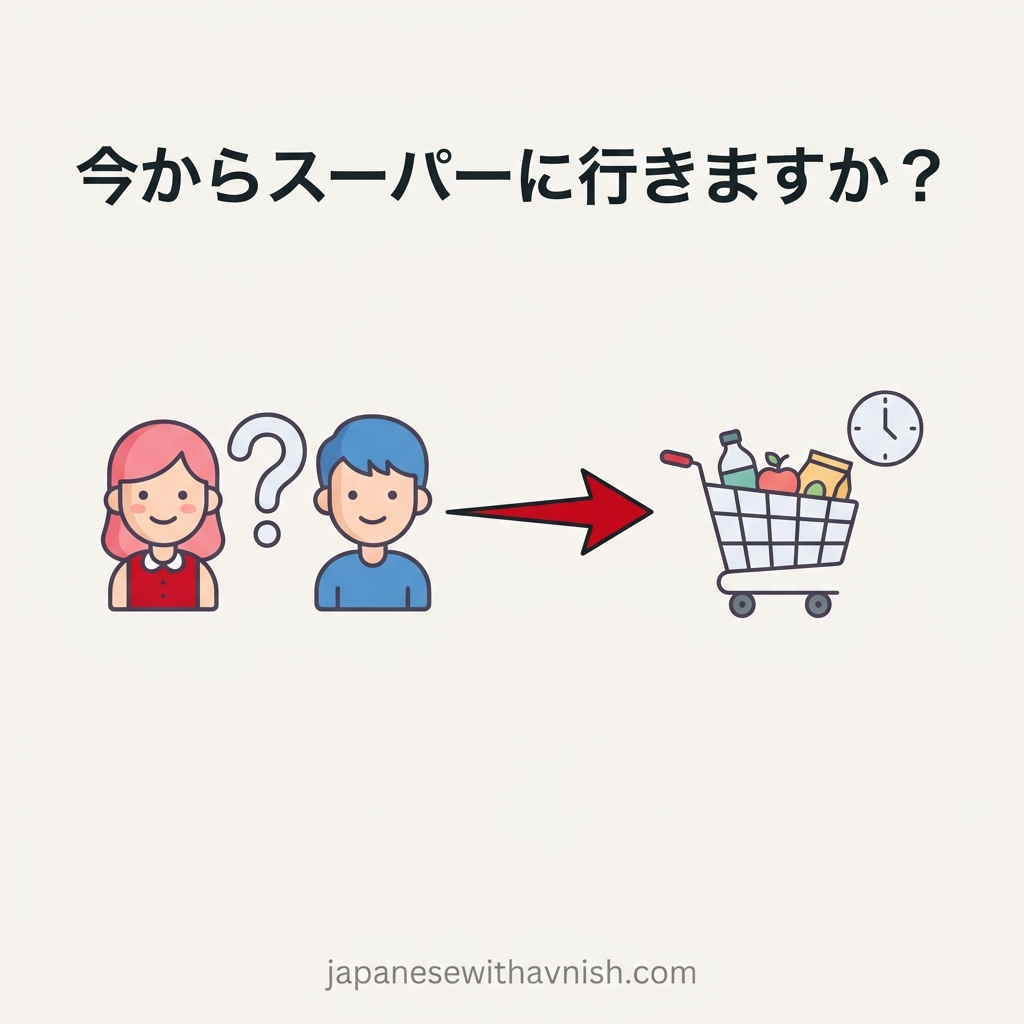
今からスーパーに行きますか?
Romaji:
Ima kara sūpā ni ikimasu ka?
English:
Shall we go to the supermarket from now?
Examples
What should you do next?
Recommended next lessons
苦労 (くろう)
# 苦労 - Reading: くろう - Meaning: hardship; struggle - JLPT level: N1 Use this word as an anchor for the related N1 grammar…
Read →唯一 (ゆいいつ)
# 唯一 - Reading: ゆいいつ - Meaning: only; sole - JLPT level: N1 Use this word as an anchor for the related N1 grammar lesson…
Read →成功 (せいこう)
# 成功 - Reading: せいこう - Meaning: success - JLPT level: N1 Use this word as an anchor for the related N1 grammar lesson.
Read →状況 (じょうきょう)
# 状況 - Reading: じょうきょう - Meaning: situation; circumstances - JLPT level: N1 Use this word as an anchor for the related N…
Read →専門家 (せんもんか)
# 専門家 - Reading: せんもんか - Meaning: specialist; expert - JLPT level: N1 Use this word as an anchor for the related N1 gram…
Read →革新 (かくしん)
# 革新 - Reading: かくしん - Meaning: innovation - JLPT level: N1 Use this word as an anchor for the related N1 grammar lesson…
Read →Comments
Add a comment
Recommended bundles for you
Structured study materials to accelerate your JLPT journey.