こんにちは
Hello / Good afternoon
Meaning
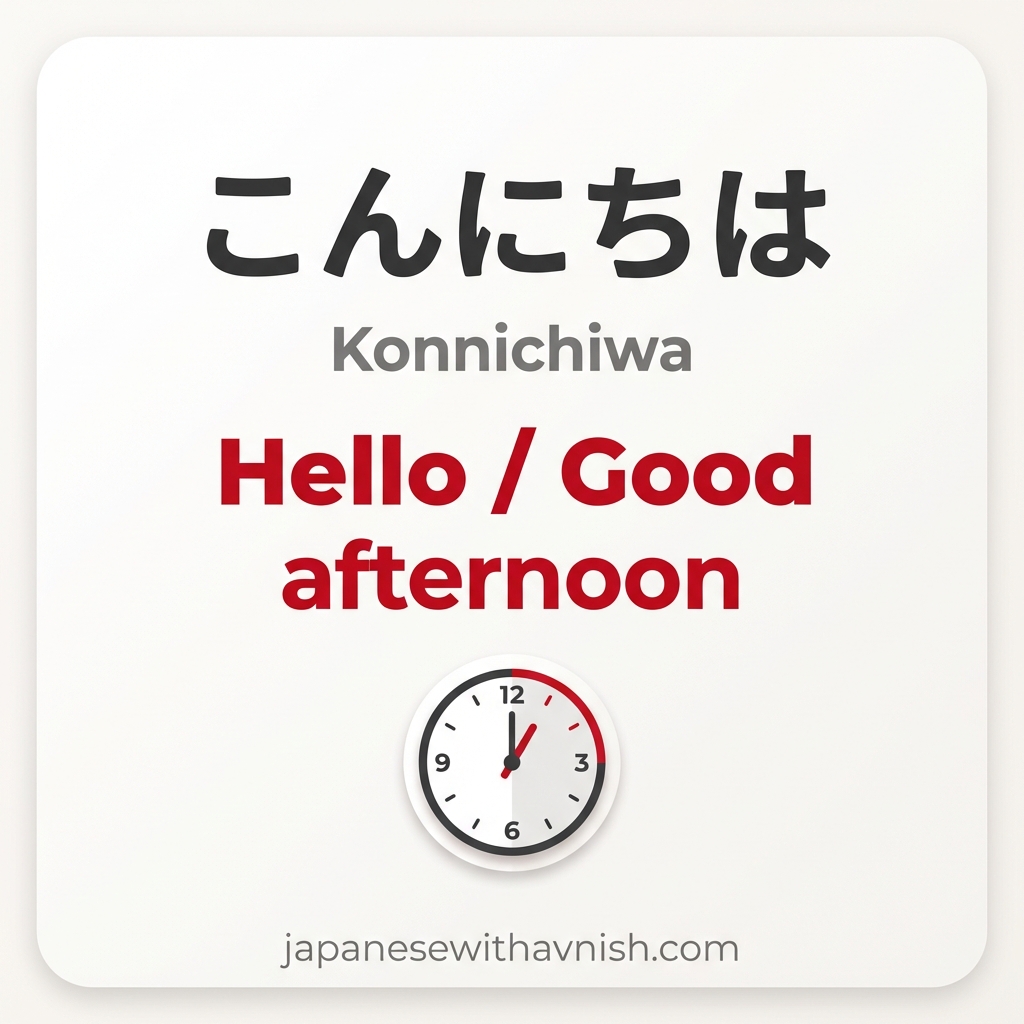
Japanese: こんにちは
Romaji: Konnichiwa
Meaning: Hello / Good afternoon
Part of speech: Greeting (interjection)
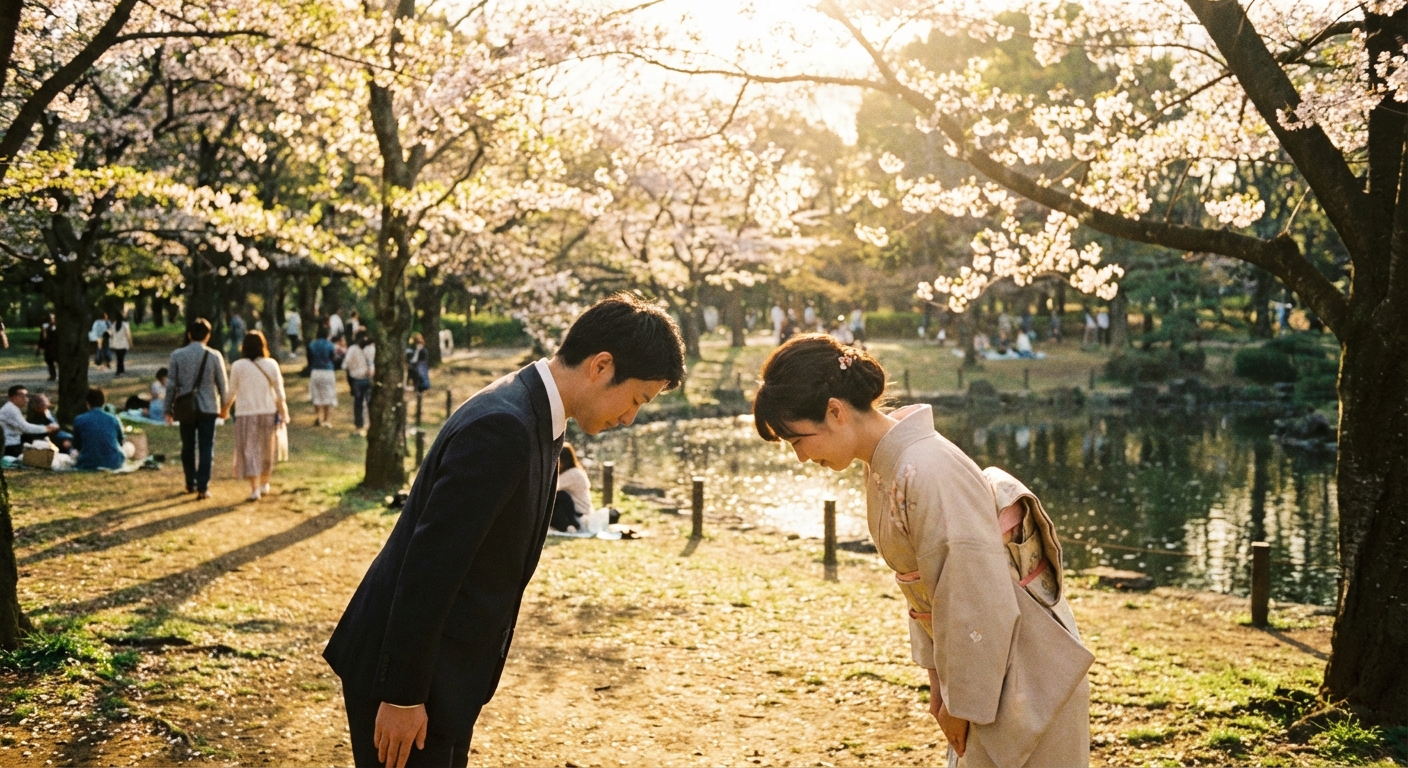
Nuance / when to use (1 sentence): A standard daytime greeting used from around late morning until early evening.
Simple Explanation
- This is the most common way to say "hello" during the day. It's a polite greeting suitable for most situations.
- Simple pattern: こんにちは。 (Konnichiwa.)
- It is a polite, fixed expression and does not change form.
Mnemonic / Memory Trick
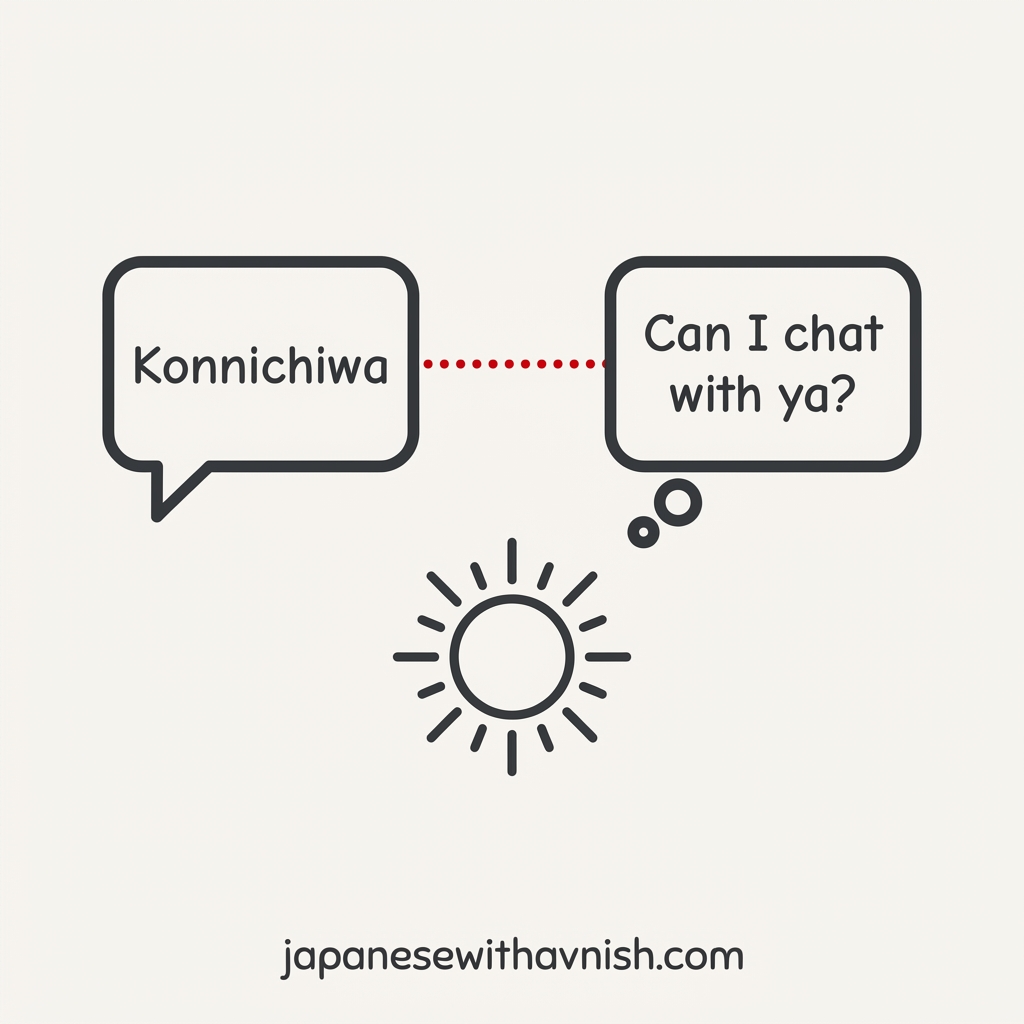
- Think of the sound: "Konnichiwa" sounds like "Can I chat with ya?" Imagine someone politely asking to chat with you in the afternoon.
- Remember the は (wa) is pronounced 'wa' when used as a particle, even though the character is normally 'ha'.
Mini Conversation (Cartoon Style)
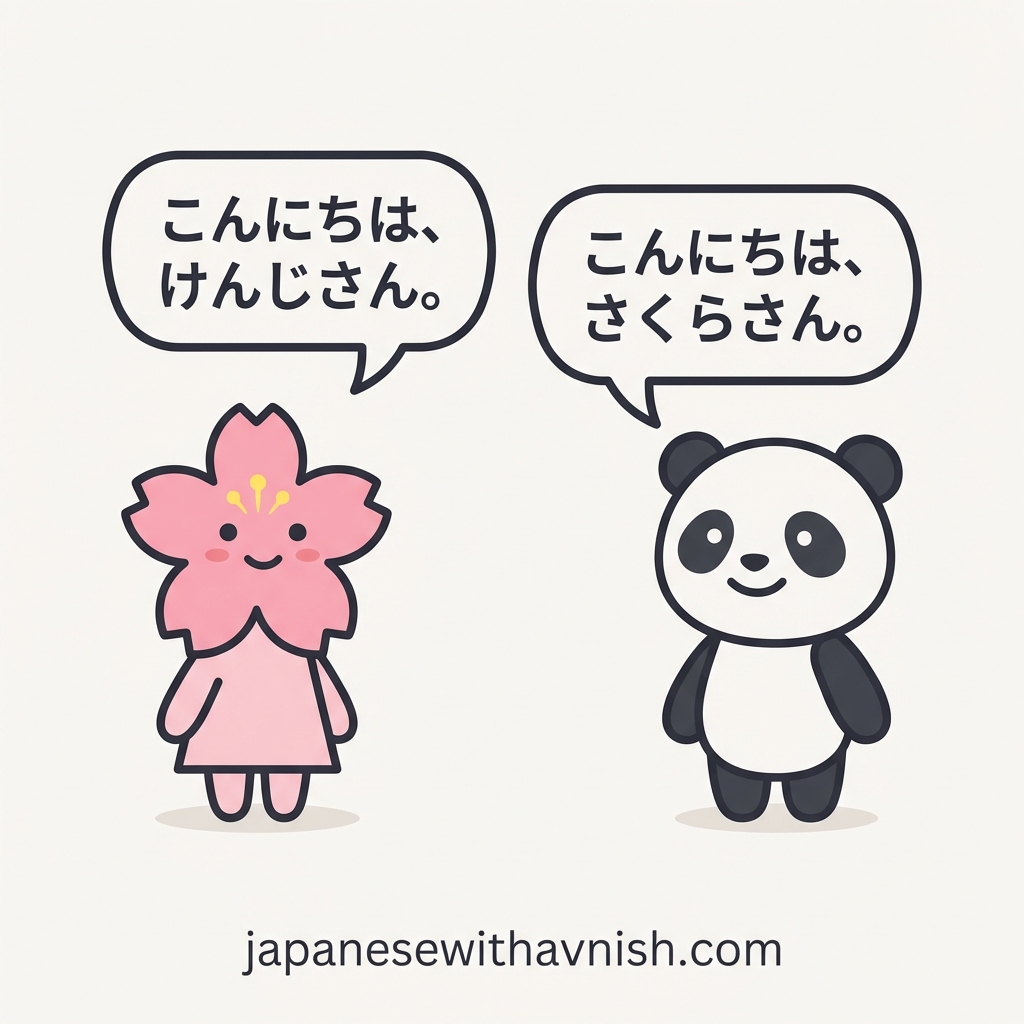
Sakura 🌸
こんにちは、けんじさん。
Konnichiwa, Kenji-san.
Hello, Kenji.
Kenji 🐼
こんにちは、さくらさん。
Konnichiwa, Sakura-san.
Hello, Sakura.
Sakura 🌸
おげんきですか。
Ogenki desu ka.
How are you?
Kenji 🐼
はい、げんきです。
Hai, genki desu.
Yes, I'm fine.
Common Beginner Mistake
- A common mistake is writing the final character incorrectly because of its pronunciation.
❌ Incorrect (Japanese): こんにちわ
✔ Correct (Japanese): こんにちは - The greeting is written with the character は (ha) but pronounced 'wa'. This is a historical grammatical particle that became a fixed part of the greeting.
Practice Exercise
Task 1: Choose the correct greeting for the situation.
It is 2:00 PM. You meet your teacher, Tanaka-sensei. What do you say?
A) こんばんは (Konbanwa)
B) おはよう (Ohayou)
C) こんにちは (Konnichiwa)
Answer: C) こんにちは (Konnichiwa)
Explanation: こんにちは is the correct daytime greeting. おはよう is for morning, and こんばんは is for evening.
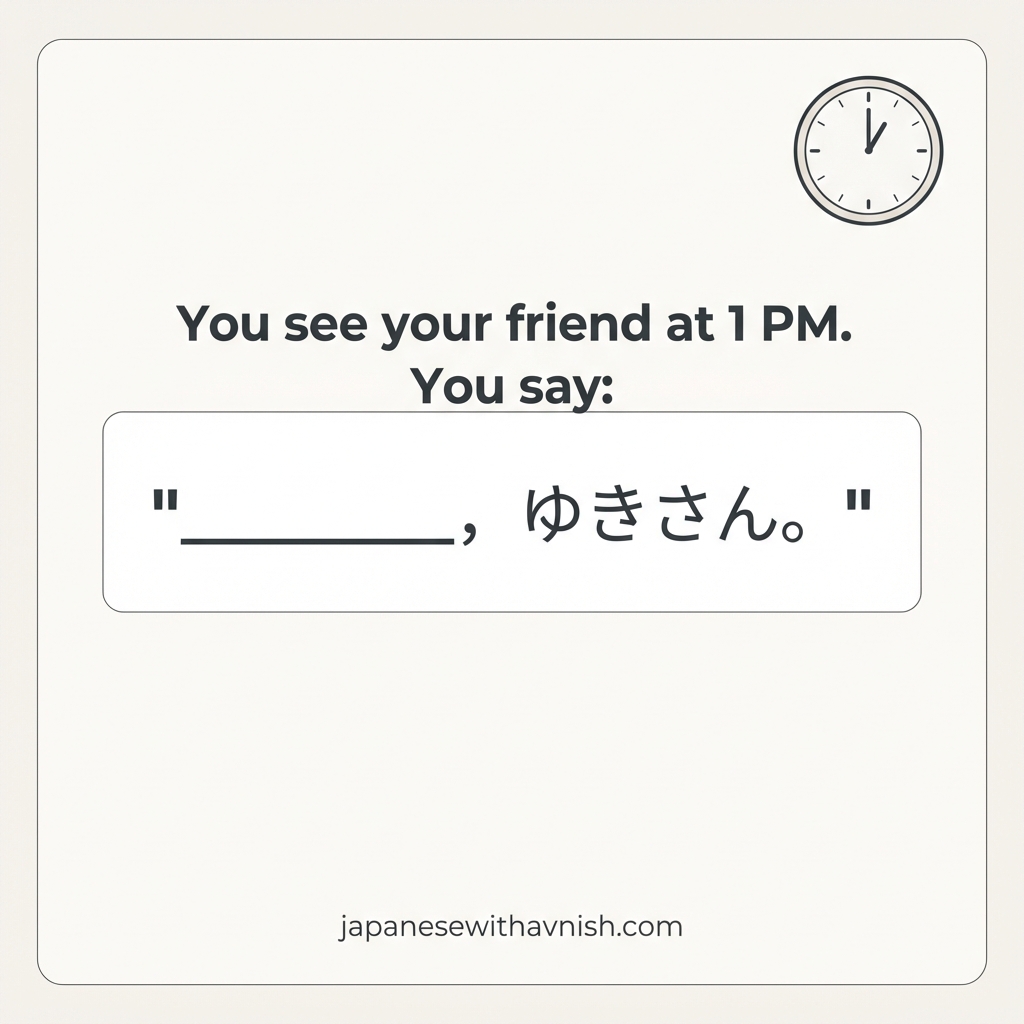
Task 2: Fill in the blank.
You see your friend at 1 PM. You say: "______, ゆきさん。"
Study Tip
- Practice saying こんにちは out loud every day when you start your Japanese study session to build muscle memory for the correct pronunciation.
Example Sentences (4–6)
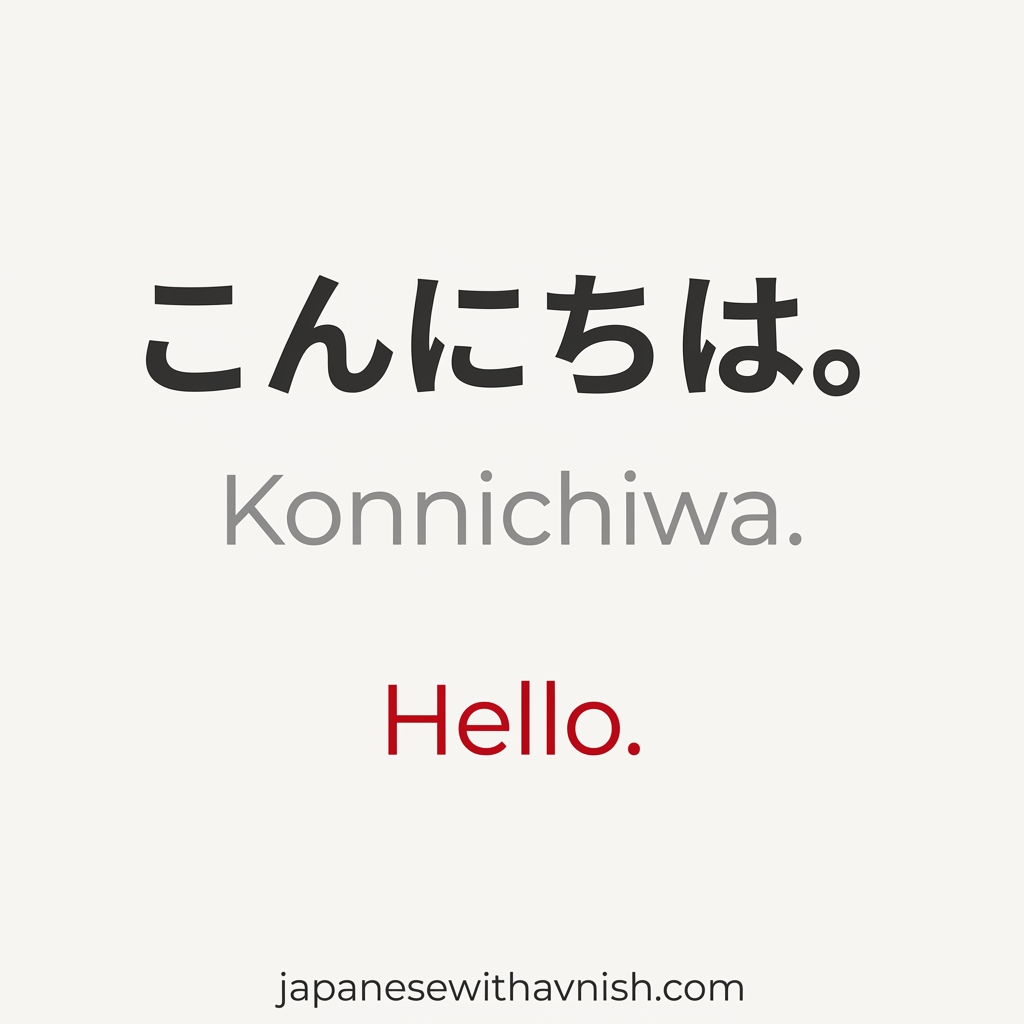
Japanese:
こんにちは。
Romaji:
Konnichiwa.
English:
Hello.
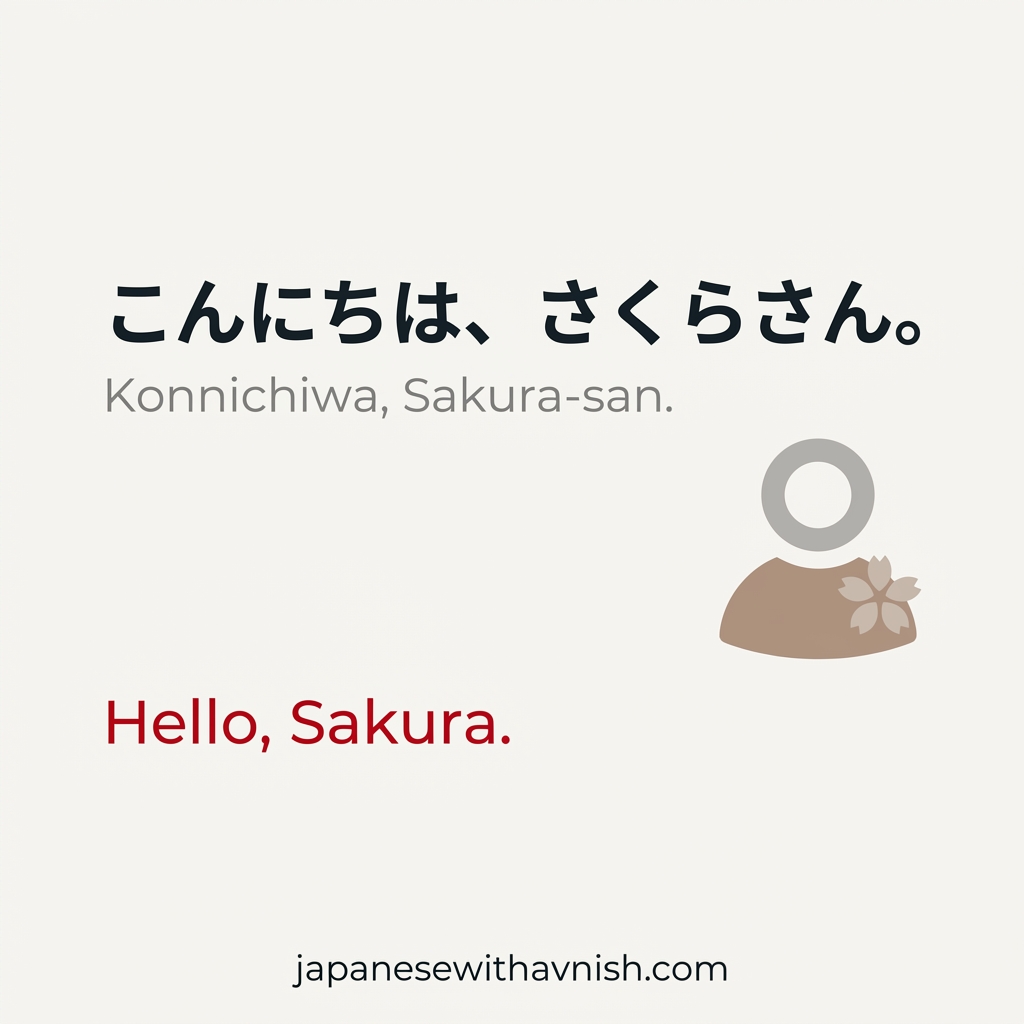
Japanese:
こんにちは、さくらさん。
Romaji:
Konnichiwa, Sakura-san.
English:
Hello, Sakura.
Japanese:
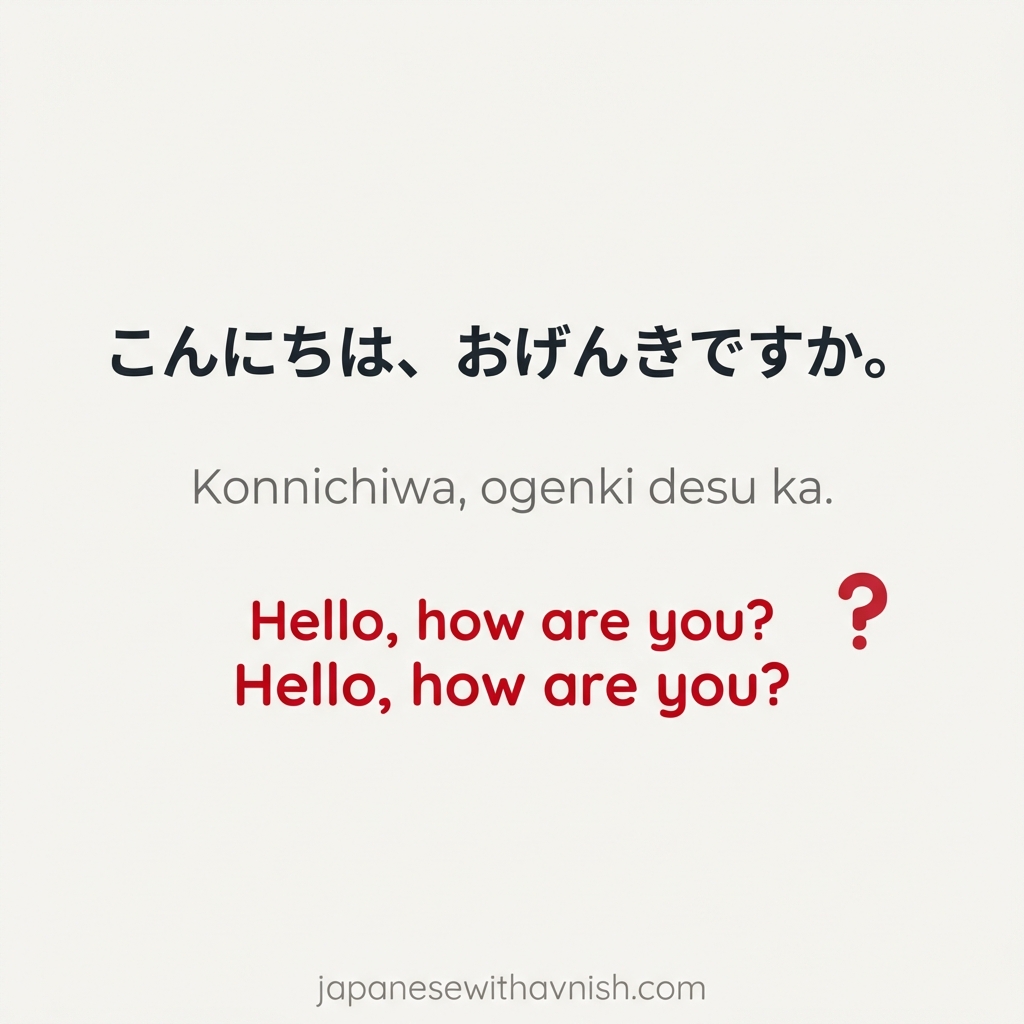
こんにちは、おげんきですか。
Romaji:
Konnichiwa, ogenki desu ka.
English:
Hello, how are you?
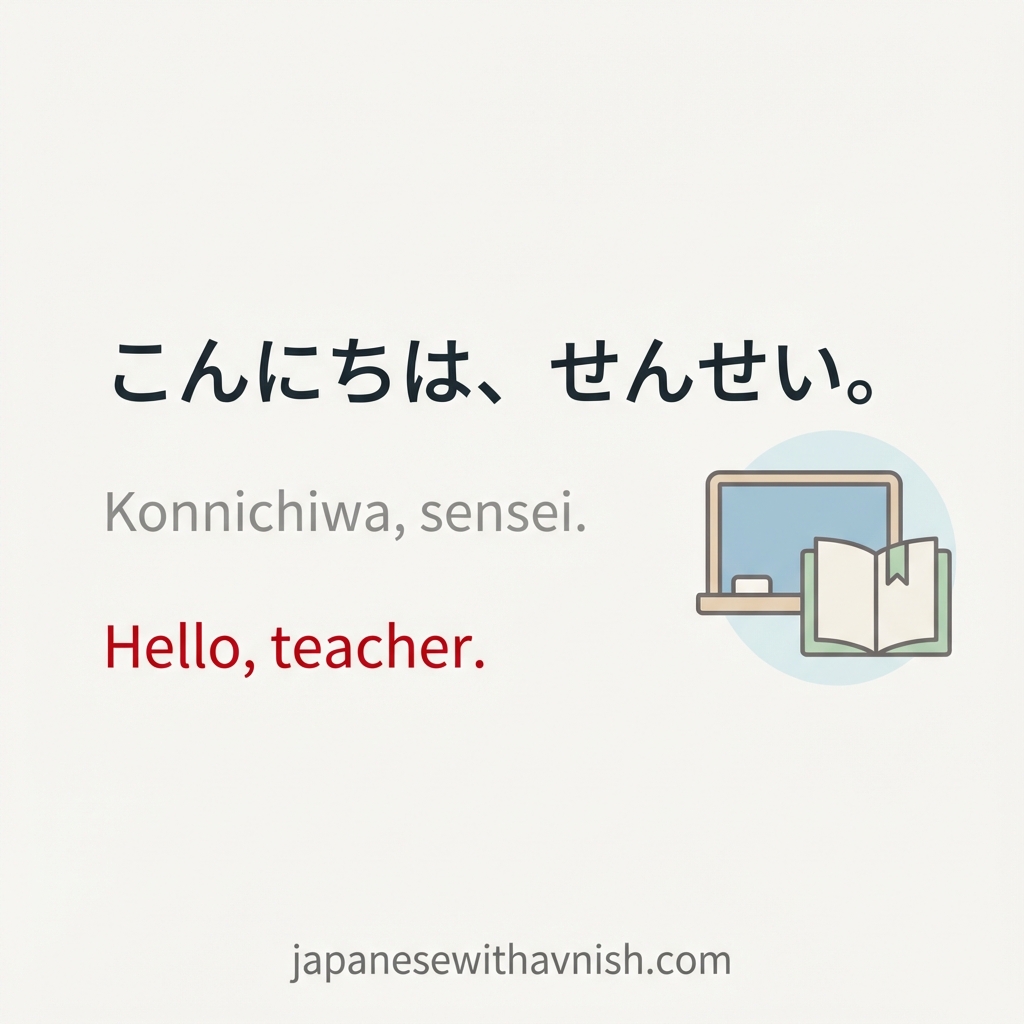
Japanese:
こんにちは、せんせい。
Romaji:
Konnichiwa, sensei.
English:
Hello, teacher.
Examples
What should you do next?
Recommended next lessons
苦労 (くろう)
# 苦労 - Reading: くろう - Meaning: hardship; struggle - JLPT level: N1 Use this word as an anchor for the related N1 grammar…
Read →唯一 (ゆいいつ)
# 唯一 - Reading: ゆいいつ - Meaning: only; sole - JLPT level: N1 Use this word as an anchor for the related N1 grammar lesson…
Read →成功 (せいこう)
# 成功 - Reading: せいこう - Meaning: success - JLPT level: N1 Use this word as an anchor for the related N1 grammar lesson.
Read →状況 (じょうきょう)
# 状況 - Reading: じょうきょう - Meaning: situation; circumstances - JLPT level: N1 Use this word as an anchor for the related N…
Read →専門家 (せんもんか)
# 専門家 - Reading: せんもんか - Meaning: specialist; expert - JLPT level: N1 Use this word as an anchor for the related N1 gram…
Read →革新 (かくしん)
# 革新 - Reading: かくしん - Meaning: innovation - JLPT level: N1 Use this word as an anchor for the related N1 grammar lesson…
Read →Comments
Add a comment
Recommended bundles for you
Structured study materials to accelerate your JLPT journey.