Best Books for JLPT N3: A Structured Guide for Your Foundation
Best Books for JLPT N3: A Structured Guide for Your Foundation
Reaching the JLPT N3 level signifies a pivotal transition in your Japanese language journey. You are moving beyond the foundational grammar and vocabulary of N5 and N4 and stepping into the realm of intermediate proficiency. This level demands a more nuanced understanding of the language, the ability to comprehend longer passages, and the skill to express more complex ideas. A common challenge at this stage is the overwhelming number of available resources. This guide provides a calm, structured, and strategic overview of the best books for JLPT N3, helping you build a solid and efficient study foundation without confusion.
Table of Contents
- Understanding the JLPT N3 Exam Structure
- The Core Philosophy: A Balanced Study Approach
- Essential Grammar Textbooks
- Comprehensive Vocabulary & Kanji Resources
- Mastering Reading Comprehension
- Sharpening Listening Skills
- The Power of Practice Tests & Mock Exams
- Creating Your Personalized N3 Study Plan
- Conclusion & Next Steps
Understanding the JLPT N3 Exam Structure
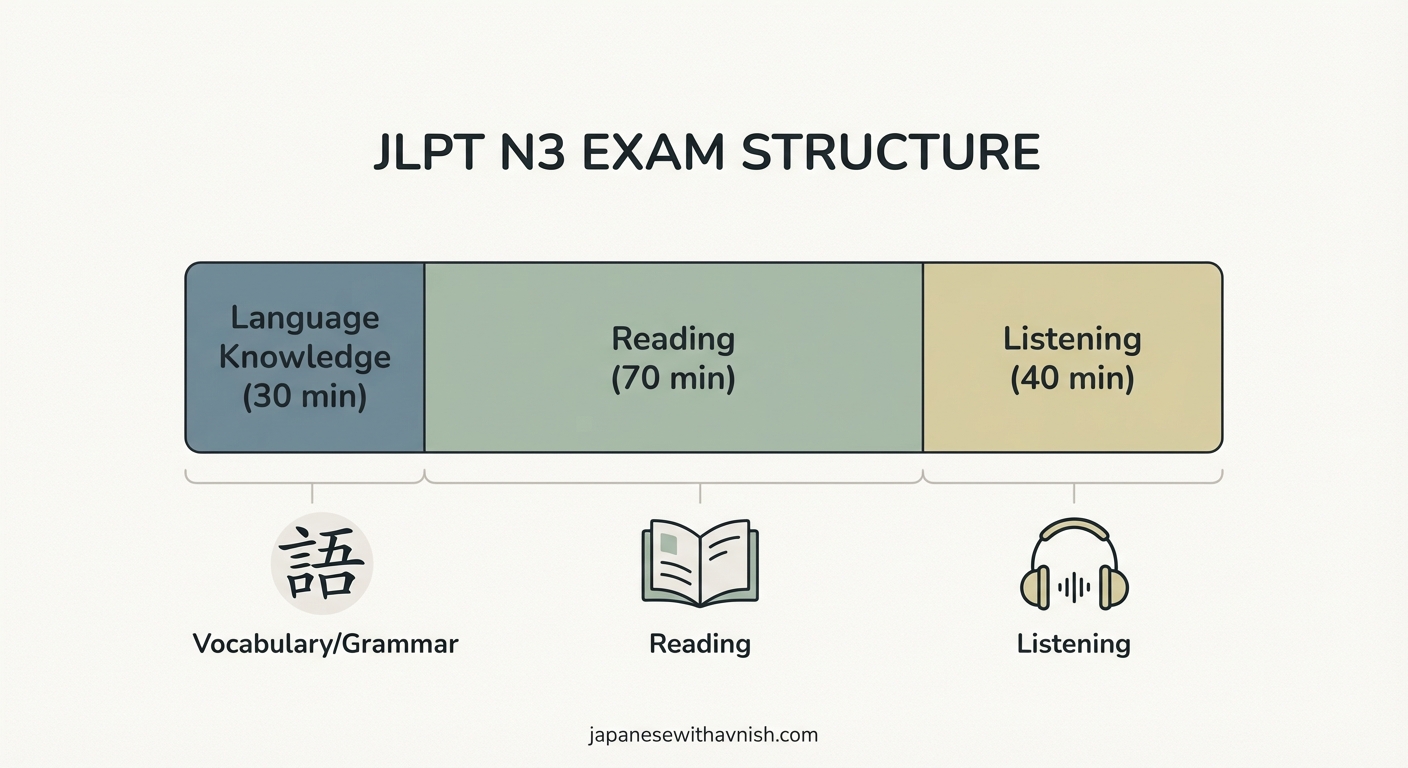 A strategic approach to resource selection begins with a clear understanding of the battlefield. The JLPT N3 exam is divided into three main sections, each testing a different but interconnected skill set. Knowing the format, time limits, and question types is crucial for choosing books that provide targeted practice.
Language Knowledge (Vocabulary & Grammar) - 30 minutes: This section tests your grasp of intermediate vocabulary, kanji readings and meanings, and the appropriate use of grammar points in context. Questions range from selecting the correct kanji for a given hiragana word to choosing the right grammar structure to complete a sentence.
Reading Comprehension - 70 minutes: This is often the most demanding section. You will encounter various text types, including short informational passages, opinion pieces, advertisements, and longer essays. The challenge lies not just in understanding individual sentences but in grasping the overall logic, the writer's intent, and specific details within a limited time.
Listening Comprehension - 40 minutes: The listening section requires you to process spoken Japanese at a natural conversational speed. You will answer questions based on short dialogues, longer conversations, and monologues (like news summaries or instructions). Key skills include identifying specific information, understanding the main point, and inferring the speakers' attitudes or the subsequent action.
The Core Philosophy: A Balanced Study Approach
Before diving into specific titles, it is essential to adopt a balanced study philosophy. Relying on a single "all-in-one" book is rarely sufficient for N3 success. Instead, consider a multi-pronged approach using dedicated resources for each core skill: Grammar, Vocabulary/Kanji, Reading, and Listening. This ensures comprehensive coverage and allows you to strengthen your weaknesses systematically.
Essential Grammar Textbooks
Grammar forms the skeleton of your language ability. For N3, you must move beyond simple sentence patterns and learn to express conditions, concessions, indirect speech, and more complex relationships between ideas.
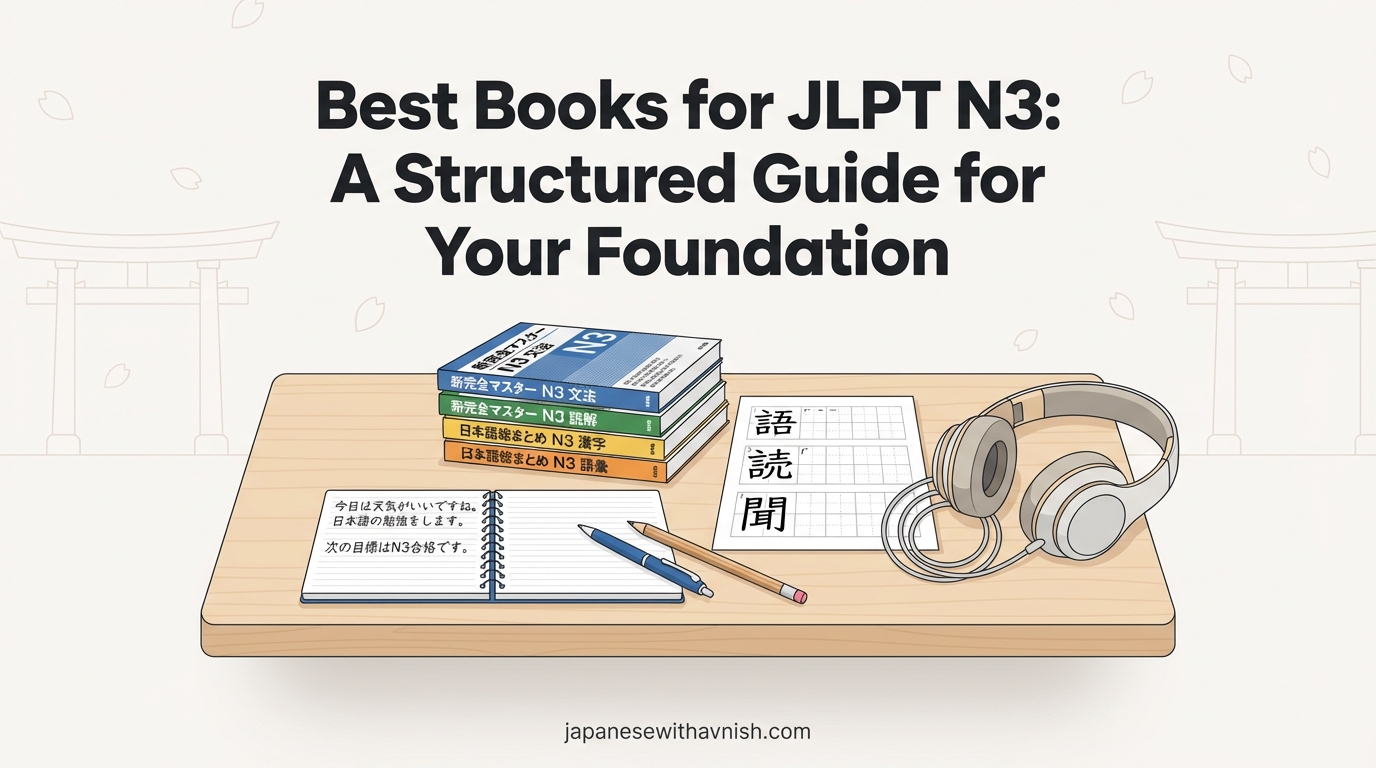
1. Shin Kanzen Master N3: Grammar (新完全マスター文法 N3) This is widely regarded as the gold standard. It meticulously breaks down each grammar point with clear explanations in Japanese (with English, Chinese, and Korean translations), numerous example sentences, and extensive practice questions that mirror the exam format. Its strength is in teaching you not just the meaning, but the nuance, context, and conjugation patterns.
- Example: The grammar point "〜ばかりか" (bakari ka - not only... but also). The book provides examples like:
- 彼は日本語が話せるばかりか、日本の歴史にも詳しい。
- Kare wa nihongo ga hanaseru bakari ka, nihon no rekishi ni mo kuwashii.
- (Not only can he speak Japanese, but he is also knowledgeable about Japanese history.)
2. So-matome N3: Grammar (日本語総まとめ N3 文法) The So-matome series is excellent for structured, paced learning. It organizes grammar points into 6-week schedules, with daily lessons that are manageable (about 2 pages per day). It's less dense than Shin Kanzen Master, making it a good choice for self-learners who want a clear roadmap. It's ideal for initial exposure and review, which can then be solidified with the more rigorous practice in Shin Kanzen Master.
Comprehensive Vocabulary & Kanji Resources
Building a robust lexicon is non-negotiable. N3 requires knowledge of approximately 600 new kanji and 3,750 words.
1. Shin Kanzen Master N3: Vocabulary (新完全マスター語彙 N3) & Kanji (新完全マスター漢字 N3) Following the same high-quality approach as the grammar book, these volumes group vocabulary and kanji thematically and by usage. They provide context, collocations (words that commonly go together), and practice questions that help you move from passive recognition to active usage.
2. Nihongo So-matome N3: Vocabulary (語彙) & Kanji (漢字) Again, the So-matome format shines here for building consistent daily habits. The vocabulary book groups words by topic (e.g., Health, Business, Society), which aids memorization. The kanji book teaches kanji in related clusters, often with helpful mnemonics or stories.
Study Tip: Use flashcards (digital apps like Anki or physical cards) in conjunction with these books. Create cards with the word/kanji on one side and the reading, meaning, and an example sentence on the other. Regular, spaced repetition is key to moving this knowledge into long-term memory.
Mastering Reading Comprehension
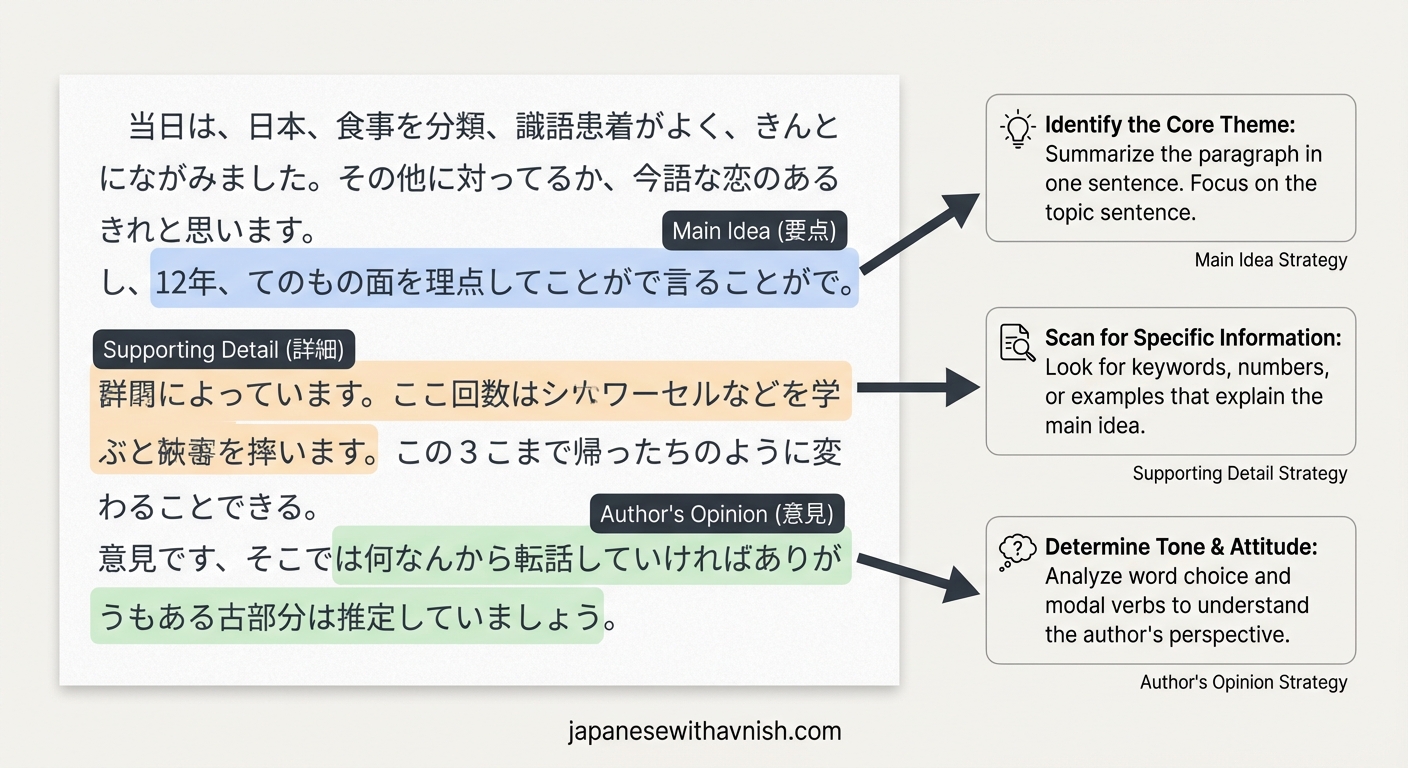 Reading for N3 is about speed and strategy as much as understanding.
1. Shin Kanzen Master N3: Reading (新完全マスター読解 N3) This book is exceptional. It doesn't just throw passages at you; it teaches you how to read. It breaks down different reading strategies for different text types (e.g., finding the main idea, comparing information, understanding logical flow). The exercises gradually increase in difficulty and closely resemble the actual exam questions.
2. Tadoku (Extensive Reading) Graded Readers While not exam-specific, incorporating Tadoku (多読) – reading easy, level-appropriate books for pleasure – is a powerful supplement. It builds reading stamina, improves fluency, and reinforces vocabulary and grammar in a natural context. Look for graded readers labeled for N3 or N4 level.
Sharpening Listening Skills
Listening requires dedicated, active practice. Passive listening (like background music) has limited benefit for exam preparation.
1. Shin Kanzen Master N3: Listening (新完全マスター聴解 N3) This book provides a systematic approach to listening. It includes practice for every question type found on the exam, with transcripts and explanations. The accompanying audio features natural speeds and a variety of speakers, which is critical for acclimatizing your ear.
2. Speed Master N3: Listening (日本語能力試験問題集 N3聴解スピードマスター) This is another excellent option, known for its clear structure and practical tips. It often includes "pointers" before each exercise, alerting you to what to listen for (e.g., time, reason, speaker's opinion).
Practice Method: Don't just listen once. Use a three-step method: 1) Listen and answer questions under timed conditions. 2) Listen again while reading the transcript, noting unfamiliar words or phrases. 3) Listen a final time without the transcript, focusing on catching every word.
The Power of Practice Tests & Mock Exams
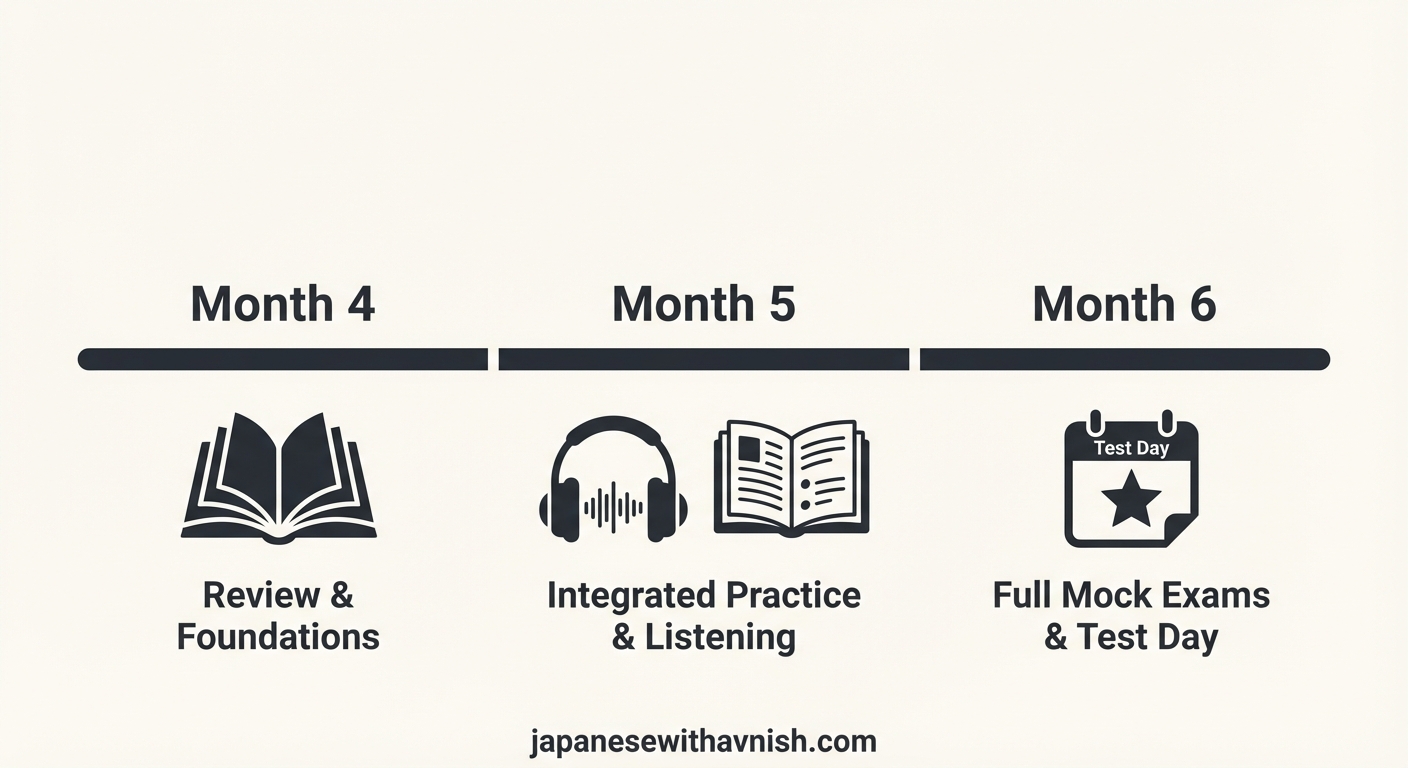 In the final 2-3 months of your preparation, practice tests become your most important resource. They serve three vital purposes: familiarizing you with the exam format, testing your knowledge under timed conditions, and identifying your remaining weak spots.
Official JLPT Practice Workbooks: Published by the Japan Foundation, these are the most authentic resources available. They contain one full-length practice test based on old exam papers. The questions, format, and difficulty level are exactly what you will encounter.
Unofficial Mock Exam Collections: Publishers like Try! and Moshi to Taisaku offer books containing 2-3 full mock exams. While the quality is high, remember they are simulations. Use them primarily for stamina building and time management practice.
Creating Your Personalized N3 Study Plan
A collection of excellent books is useless without a plan. Here is a suggested framework for a 6-month study schedule, adaptable to your pace.
Months 1-3: Foundation Building
- Focus: Complete your core textbooks (e.g., So-matome series for Grammar, Vocab, Kanji).
- Weekly Routine: Dedicate days to specific skills (e.g., Monday Grammar, Tuesday Vocabulary, Wednesday Reading, etc.).
- Daily: 1.5-2 hours of focused study, including flashcard review.
Months 4-5: Skill Integration & Strengthening
- Focus: Shift to the more advanced Shin Kanzen Master series for deeper practice. Begin weekly listening and reading practice sessions.
- Action: Start a journal or write short paragraphs using new grammar and vocabulary.
Month 6: Exam Simulation & Review
- Focus: Take one full-length practice test every other weekend under strict exam conditions.
- Action: Analyze every mistake. Spend the intervening weeks intensely reviewing the grammar, vocabulary, or question types you got wrong. Reduce new material intake.
For learners who prefer a fully integrated, structured system that combines these elements into a coherent study path, our Japanese N3 Power Bundle is designed to provide this comprehensive foundation, integrating strategic study plans with curated practice materials.
Conclusion & Next Steps
The journey to JLPT N3 is a rewarding process of building a genuine intermediate competency in Japanese. The "best" books are those that align with your learning style and are used consistently within a structured plan. We recommend starting with one series for your core study (e.g., So-matome for its schedule, or Shin Kanzen for its depth) and supplementing with targeted practice in reading and listening. Remember, consistency over intensity is the key to language acquisition.
As you solidify your N3 foundation, your path forward becomes clearer. The structured approach you develop here—balancing grammar, vocabulary, reading, and listening with strategic practice—is the same methodology required for success at the advanced N2 and N1 levels. If you seek a guided, all-in-one system to navigate this intermediate stage efficiently, explore our structured Japanese N3 Power Bundle, which is designed to provide the clarity, comprehensive materials, and strategic practice needed to approach the exam with confidence.
Summary
Reaching the JLPT N3 level marks a crucial step into intermediate Japanese, requiring a more nuanced understanding of grammar, longer texts, and natural spoken dialogue. With countless resources available, this guide offers a clear, strategic framework for selecting the best study materials to build a solid foundation. Success requires a balanced, multi-pronged approach across all core skills. For grammar, the **Shin Kanzen Master N3: Grammar** book is considered the gold standard for its detailed explanations and rigorous practice, while **So-matome N3: Grammar** provides a more paced, structured schedule ideal for initial learning. Building a robust vocabulary and kanji knowledge is essential; the **Shin Kanzen Master** and **So-matome** series for vocabulary and kanji are highly recommended, with the advice to supplement them with digital flashcards and spaced repetition for effective memorization. Mastering reading comprehension involves both strategy and practice. The **Shin Kanzen Master N3: Reading** book is exceptional for teaching specific techniques for different text types, while incorporating extensive reading with **Tadoku** graded readers can build fluency naturally. For listening skills, active practice with resources like **Shin Kanzen Master N3: Listening** or **Speed Master N3: Listening** is critical, using a method of timed practice followed by transcript review. In the final months of preparation, full-length practice tests become indispensable. Official JLPT workbooks provide the most authentic experience, while unofficial mock exams from publishers like **Try!** are valuable for building stamina and time management. The guide concludes by outlining a sample 6-month study plan, progressing from foundational study with core textbooks to skill integration and, finally, intensive exam simulation and review. The key to success is consistent, structured study using dedicated resources for each skill area, a methodology that also paves the way for advanced levels.
What should you do next?
Recommended next reads
JLPT N3 60-Day Study Plan: Your Day-by-Day Guide to Success
A complete 60-day, day-by-day study plan for JLPT N3 success. Covers vocabulary, grammar, reading, listening with a phased approach and practical schedule.
JLPT N3 Roadmap: Your Structured Guide to Success
A structured, step-by-step guide to passing the JLPT N3. Covers exam format, study schedule, vocabulary, grammar, kanji, reading, and listening strategies for intermediate learners.
Comments
Add a comment
Recommended bundles for you
Structured study materials to accelerate your JLPT journey.