JLPT N3 Roadmap: Your Structured Guide to Success
JLPT N3 Roadmap: Your Structured Guide to Success
Embarking on the journey from the foundational levels of Japanese to the intermediate stage is a significant and rewarding step. The JLPT N3 represents a crucial bridge, connecting basic conversational ability to a more practical and nuanced understanding of the language. For many learners, this level signifies the transition from textbook Japanese to engaging with real-world media and conversations. While the scope of N3 is broader than N5 and N4, a calm, structured, and methodical approach makes this milestone entirely achievable. This guide provides a clear roadmap, breaking down the N3 curriculum into manageable components and offering a strategic study plan to guide you to success with confidence and clarity.
Table of Contents
- Understanding the JLPT N3 Exam Structure
- The N3 Bridge: Key Differences from N4
- Core Study Pillar 1: Vocabulary Mastery
- Core Study Pillar 2: Grammar and Sentence Patterns
- Core Study Pillar 3: Kanji Proficiency
- Core Study Pillar 4: Reading Comprehension
- Core Study Pillar 5: Listening Acuity
- Creating Your 3-6 Month N3 Study Schedule
- Recommended Resources and Practice Strategies
- Final Preparation and Mindset
Understanding the JLPT N3 Exam Structure
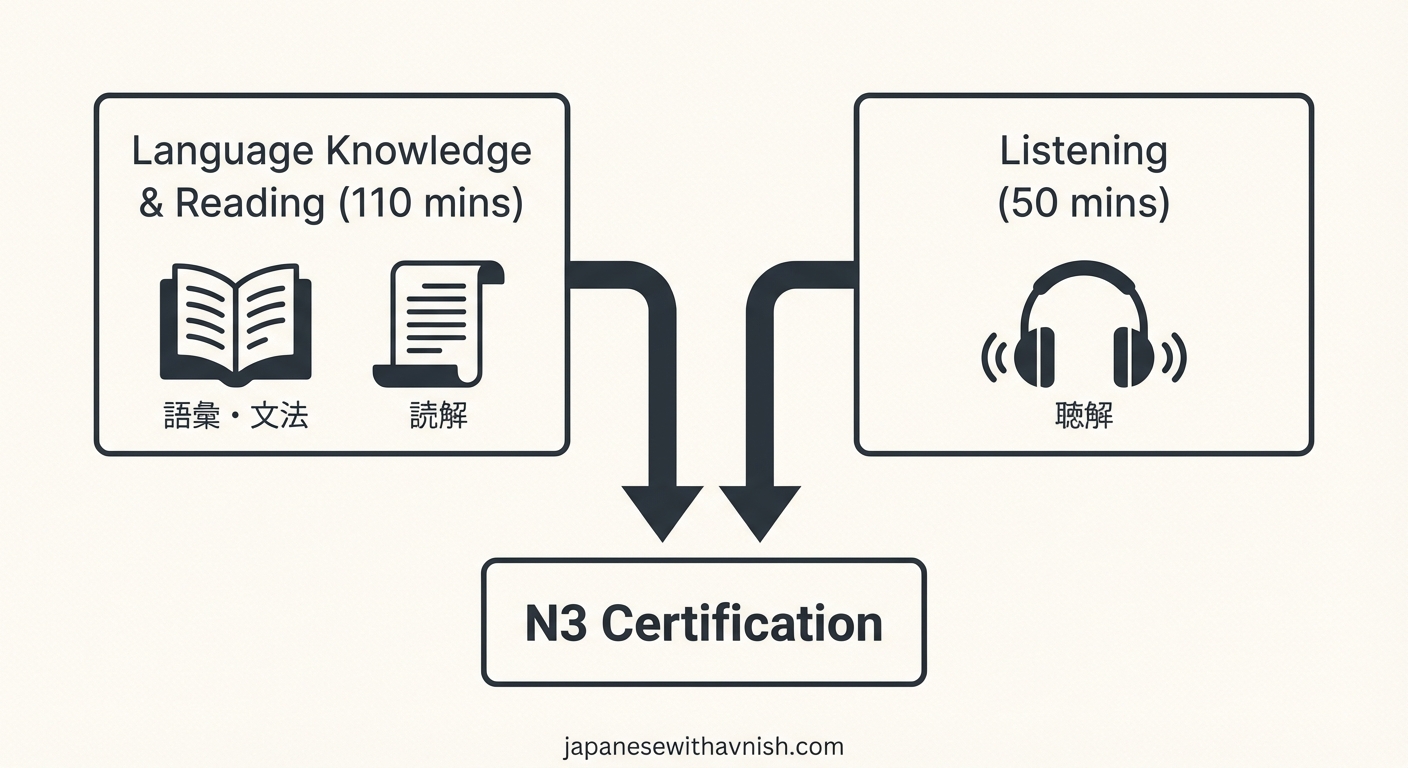 A clear understanding of the test format is the first step in any successful preparation. The JLPT N3 is divided into three sections, with a total test time of 140 minutes. Unlike N5 and N4, the sections are more integrated, testing your ability to apply knowledge in context.
Language Knowledge (Vocabulary & Grammar) & Reading (110 minutes): This combined section tests your grasp of vocabulary, kanji, grammar, and your ability to comprehend written passages. You will encounter short, medium, and long-form reading questions that require inference and understanding of context, not just direct translation.
Listening (50 minutes): The listening section presents a variety of audio stimuli, including short conversations, longer dialogues, and monologues where you must quickly grasp the main point, specific details, and the speakers' intentions or attitudes.
The N3 Bridge: Key Differences from N4
The N3 level is often described as a "bridge." While N4 focuses on understanding basic Japanese encountered in daily life, N3 requires you to comprehend Japanese used in everyday situations to a certain degree. The key shifts are:
- From Concrete to Abstract: You will encounter more abstract vocabulary and expressions of opinion, reason, and consequence.
- Longer Contexts: Sentences and paragraphs are longer, requiring sustained focus and the ability to follow logical flow.
- Implied Meaning: Questions will test your understanding of what is suggested or implied, not just what is directly stated.
- Compound Sentences: Grammar patterns often combine to form more complex sentence structures.
Core Study Pillar 1: Vocabulary Mastery
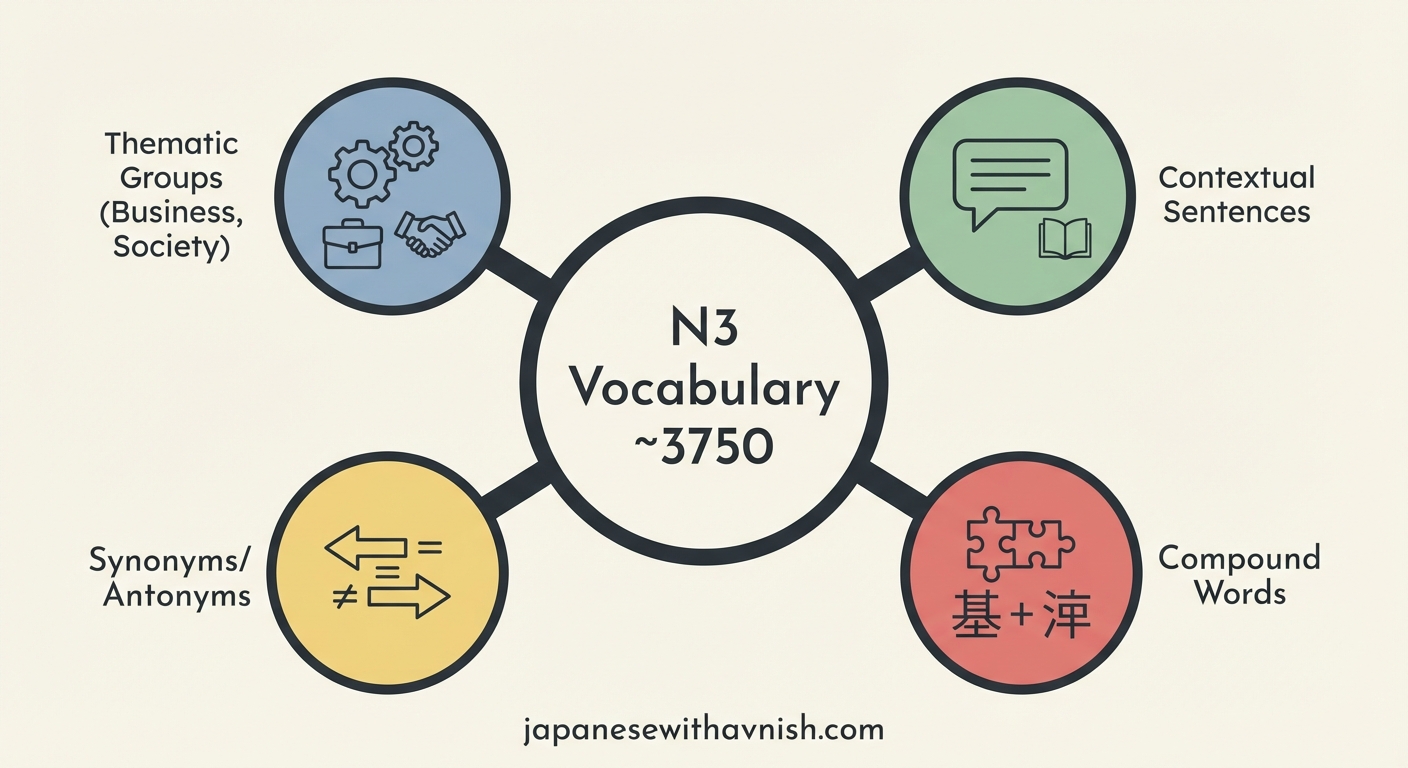 The N3 requires knowledge of approximately 3,750 vocabulary items (building upon the ~1,500 from N5/N4). Focus shifts from purely survival vocabulary to words used in news, articles, and everyday discussions.
Strategy:
- Thematic Learning: Group words by theme (e.g., business, society, environment, emotions).
- Use in Context: Never learn words in isolation. Always learn them with example sentences.
- Focus on Synonyms & Antonyms: N3 often tests nuanced differences between similar words.
Example Vocabulary & Usage:
- 影響 (えいきょう, eikyou): influence, effect
- 環境問題は経済に大きな影響を与える。 (Environmental issues have a big impact on the economy.)
- 確認 (かくにん, kakunin): confirmation, verification
- 時間を確認しておいてください。 (Please confirm the time in advance.)
Core Study Pillar 2: Grammar and Sentence Patterns
N3 grammar introduces more complex conjunctions, conditional forms, and expressions of indirect speech, obligation, and supposition. You must understand how multiple grammar points interact within a single sentence.
Key Grammar Categories:
- Cause & Effect: ~ために、~おかげで、~せいで
- Conditionals: ~ば、~たら、~なら (nuanced differences)
- Indirect Speech & Quotation: ~と言う、~と思う
- Expressions of Giving/Receiving (Advanced): ~てあげる、~てくれる、~てもらう in complex contexts
Example Sentence: 先生が丁寧に説明してくれたおかげで、難しい文法も理解できたばかりか、応用もできるようになりました。 (Thanks to the teacher explaining it carefully, I was not only able to understand the difficult grammar, but also became able to apply it.)
Core Study Pillar 3: Kanji Proficiency
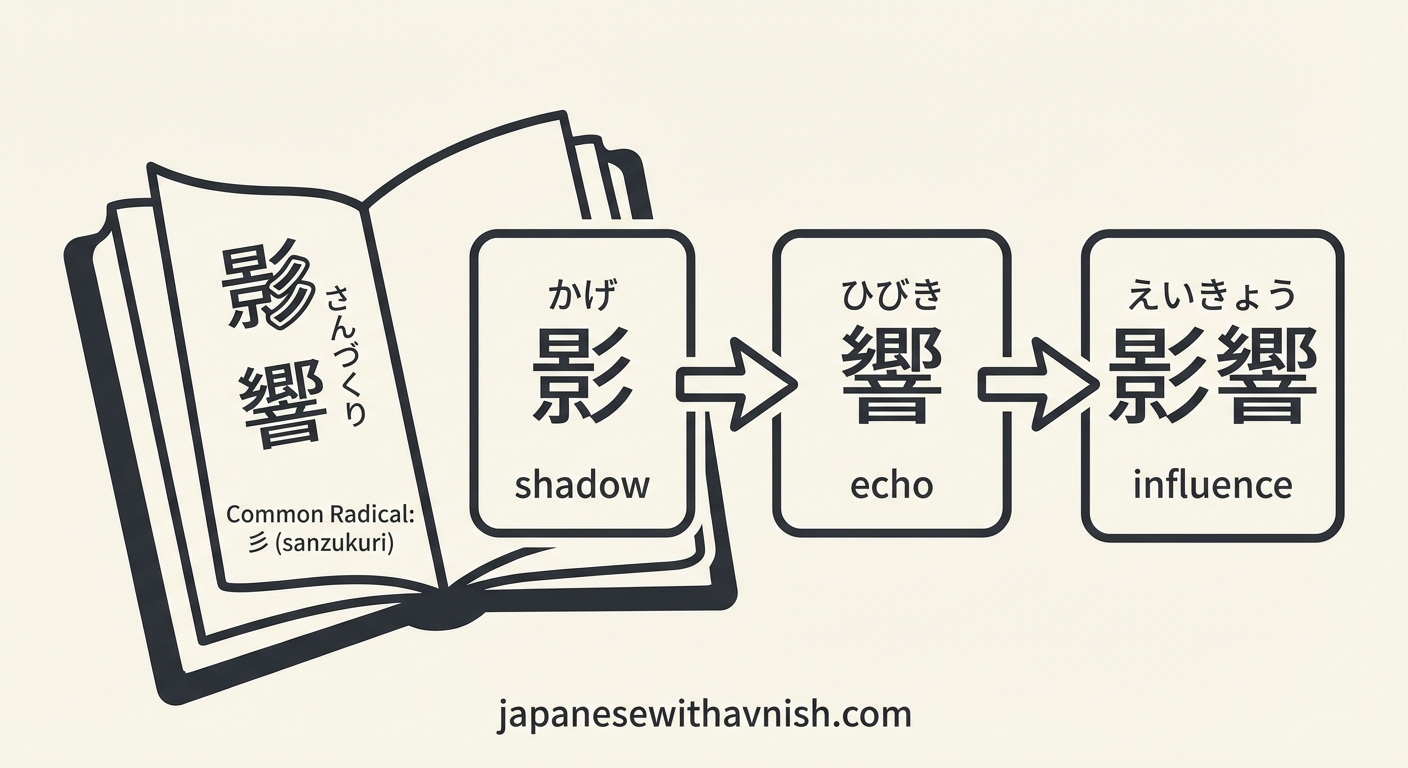 The N3 kanji list covers approximately 650 characters (from the total ~2,000 general-use 常用漢字). The focus is on reading proficiency. You are expected to read kanji in compound words (熟語) and understand their different readings (音読み and 訓読み) based on context.
Strategy:
- Learn by Radical: Understanding components makes memorization easier.
- Prioritize Common Compounds: Study kanji as part of frequent vocabulary (e.g., 発表する - はっぴょうする - to announce).
- Practice Reading: Regularly read graded readers or simple news articles to see kanji in action.
Core Study Pillar 4: Reading Comprehension
This is a major new challenge at N3. Passages are longer, and questions test comprehension, inference, and identifying the author's main point.
Question Types:
- Content Comprehension: What is stated in the passage?
- Reason Comprehension: Why did something happen?
- Information Retrieval: Finding specific details.
- Integrated Understanding: Grasping the overall flow and purpose.
Practice Tip: Don't translate word-for-word. Read a paragraph, then summarize the main idea in your own words (in Japanese or your native language).
Core Study Pillar 5: Listening Acuity
The N3 listening section requires quick processing. Conversations are faster, involve more than two people, and include elliptical speech (where parts of sentences are omitted but understood).
Key Skills:
- Identifying Speaker Intent: Is someone suggesting, complaining, or agreeing?
- Following Natural Dialogue: With filler words (あのう、ええと) and back-channeling (そうですね、はい).
- Extracting Key Info from Monologues: Such as announcements or radio clips.
Daily Practice: Incorporate 15-20 minutes of passive listening daily using Japanese podcasts, news (NHK News Web Easy), or drama audio tracks.
Creating Your 3-6 Month N3 Study Schedule
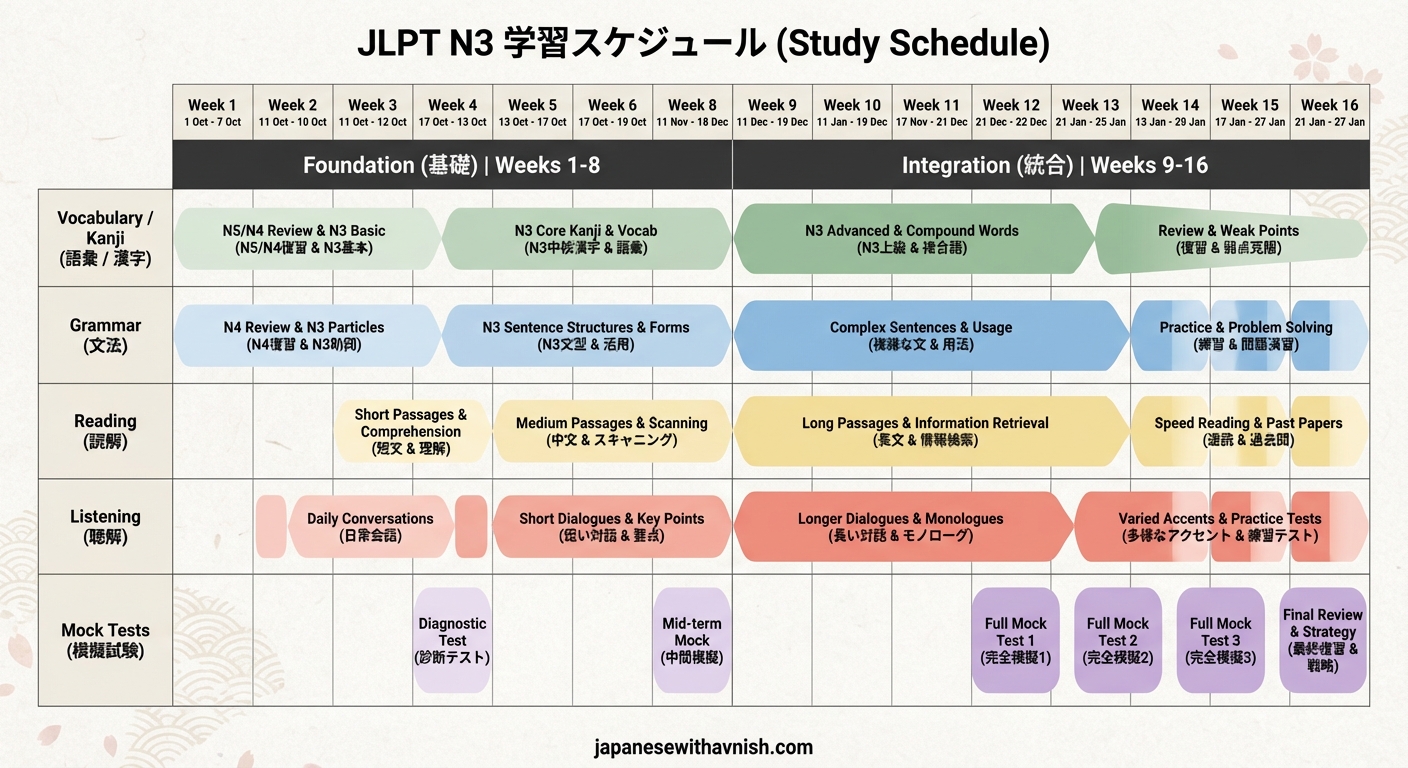 A structured timeline prevents overwhelm. Below is a sample 4-month plan for dedicated learners.
Phase 1: Foundation Review & New Material Introduction (Months 1-2)
- Weeks 1-4: Review key N4 grammar and vocabulary. Begin learning 20 new N3 vocabulary words and 10 new kanji daily.
- Weeks 5-8: Start studying N3 grammar points (2-3 per day). Begin simple N3-level reading practice.
Phase 2: Integration & Application (Months 3-4)
- Weeks 9-12: Intensify reading comprehension drills. Start full-length listening practice for each question type.
- Weeks 13-16: Take full, timed practice tests bi-weekly. Analyze all mistakes thoroughly. Focus on weak areas.
Weekly Time Commitment: Aim for 10-15 hours per week, distributed across all skills.
Recommended Resources and Practice Strategies
Consistency with quality materials is key. A structured course can provide the comprehensive curriculum and practice you need. For a systematic approach that integrates all N3 study pillars—grammar, vocabulary, kanji, reading, and listening—with clear explanations and progressive drills, consider our Japanese N3 Power Bundle. It is designed to guide intermediate learners through this pivotal bridge level with clarity and depth.
Additional Strategy:
- Shadowing: Repeat audio clips immediately after hearing them to improve pronunciation and rhythm.
- Flashcard Systems: Use digital SRS (Spaced Repetition Systems) like Anki for vocabulary and kanji retention.
- Active Output: Try writing short paragraphs or diary entries using new grammar and vocabulary.
Final Preparation and Mindset
In the final 4-6 weeks before the exam, your focus should shift entirely to mock exams and review. Simulate real test conditions: time yourself strictly, use only an HB pencil, and take breaks as per the actual schedule.
Mindset for Success:
- Accept Ambiguity: You may not understand every word. Focus on grasping the overall meaning.
- Manage Time: In the Language Knowledge/Reading section, don't get stuck on one question. Move on and return later if time permits.
- Stay Calm: The listening section plays only once. If you miss an answer, let it go and focus completely on the next question.
The journey to JLPT N3 is a process of building deeper connections with the Japanese language. By breaking down the challenge into these structured pillars and adhering to a consistent plan, you will develop not just test-taking ability, but genuine, practical language skill. Trust in your preparation, and approach the exam with a calm and focused mind.
For learners seeking a complete, guided path from beginner to advanced levels, our Complete Japanese N5-N1 Mega Bundle offers an integrated curriculum for sustained, long-term mastery.
Summary
The JLPT N3 represents a pivotal bridge from basic to intermediate Japanese, marking the transition from textbook learning to engaging with real-world language. This guide provides a structured roadmap to navigate this broader, more nuanced level, breaking down the journey into manageable components for confident success. A solid foundation begins with understanding the 140-minute exam structure, which integrates vocabulary, grammar, and reading into a single 110-minute section, followed by a 50-minute listening test. The key shift from N4 involves grappling with more abstract vocabulary, longer contexts, implied meanings, and complex compound sentences. Effective preparation rests on five core pillars. **Vocabulary mastery** requires learning approximately 3,750 items thematically and in context, focusing on nuanced differences between words. **Grammar proficiency** demands understanding complex conjunctions, conditionals, and indirect speech within longer sentences. **Kanji study** involves recognizing about 650 characters, prioritized through common compounds and contextual reading. **Reading comprehension** introduces longer passages where inference and grasping the author's intent are crucial, moving beyond direct translation. **Listening acuity** requires processing faster, natural dialogues and monologues to identify speaker intent and key details. A practical study schedule spans 3-6 months, divided into foundational review and intensive application phases, recommending 10-15 hours of weekly study. Consistent practice using quality resources—such as structured courses, SRS flashcards, shadowing exercises, and active writing—is essential. In the final weeks, focus shifts to timed mock exams under realistic conditions. Ultimately, success on the N3 involves cultivating a calm test-day mindset: accepting ambiguity, managing time wisely, and maintaining focus, especially during the one-chance listening section. By following this structured approach, learners build not only test-taking skill but also genuine, practical language ability.
What should you do next?
Recommended next reads
JLPT N3 60-Day Study Plan: Your Day-by-Day Guide to Success
A complete 60-day, day-by-day study plan for JLPT N3 success. Covers vocabulary, grammar, reading, listening with a phased approach and practical schedule.
Best Books for JLPT N3: A Structured Guide for Your Foundation
A calm, structured guide to the best textbooks for JLPT N3. Compare Shin Kanzen Master, So-matome, and more for grammar, vocabulary, reading, and listening success.
Comments
Add a comment
Recommended bundles for you
Structured study materials to accelerate your JLPT journey.