Best Books for JLPT N4: A Structured Guide for Your Foundation
Best Books for JLPT N4: A Structured Guide for Your Foundation
Reaching the JLPT N4 level is a significant milestone in your Japanese language journey. It represents the solidification of your foundational skills and the bridge to intermediate comprehension. For many learners, this stage can feel overwhelming, with an expanded vocabulary, more complex grammar, and the introduction of essential kanji. The key to navigating this transition successfully lies not just in hard work, but in selecting the right tools for the job. This guide provides a calm, structured analysis of the best books for JLPT N4 preparation, helping you build a reliable and effective study system that turns challenge into achievement.
Table of Contents
- Understanding the JLPT N4 Exam Structure
- Core Philosophy for N4 Book Selection
- Category 1: Comprehensive Textbooks & Study Guides
- Category 2: Specialized Skill-Builders
- Category 3: Practice & Mock Tests
- Creating Your Integrated Study Plan
- Conclusion & Next Steps
Understanding the JLPT N4 Exam Structure
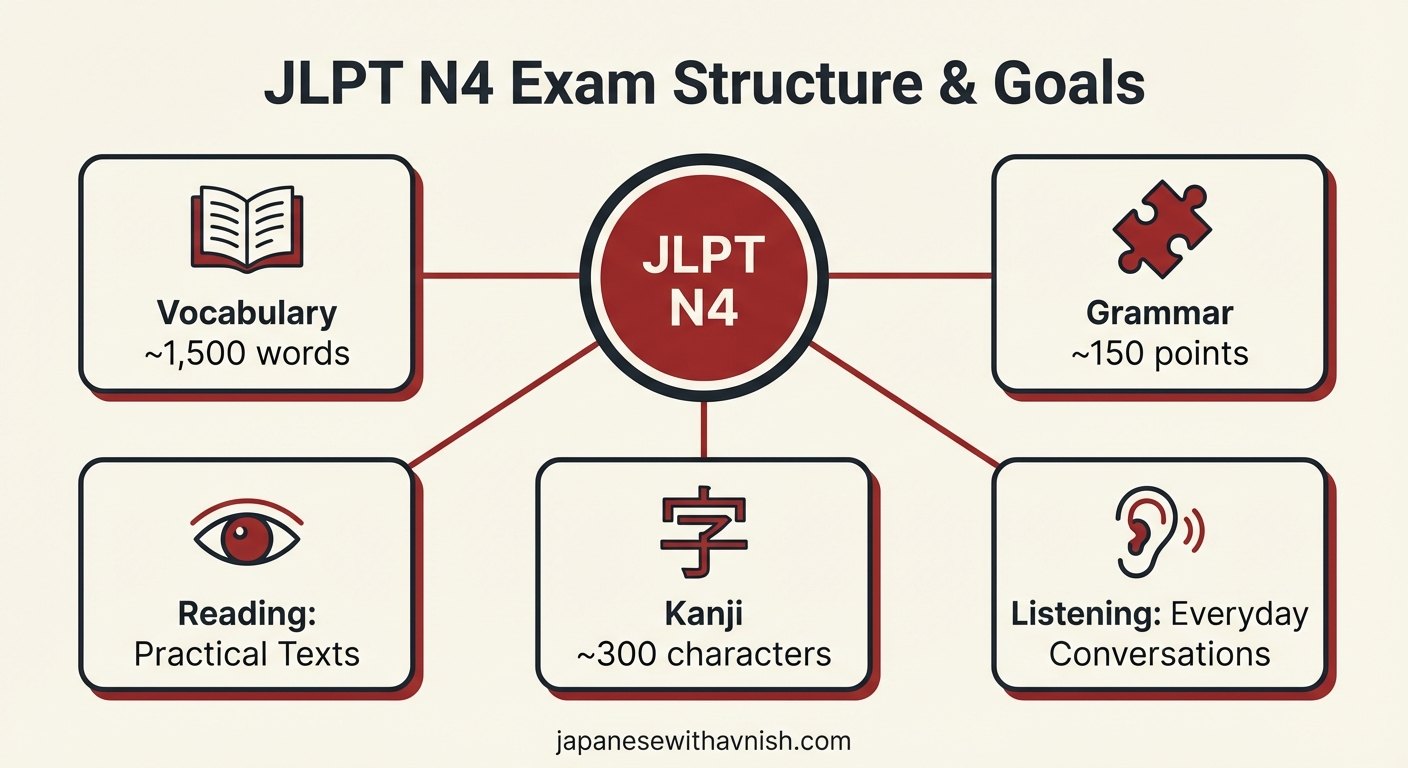 A strategic approach to book selection begins with a clear understanding of the test you are preparing for. The JLPT N4 assesses language knowledge (vocabulary, grammar) and reading/ listening comprehension. Compared to N5, the volume and complexity increase noticeably.
- Vocabulary: You are expected to know approximately 1,500 words (up from 800 for N5).
- Grammar: Around 150 new grammar points, building on N5 foundations with more conjunctions, conditionals, and polite/plain form contrasts.
- Kanji: Knowledge of about 300 characters (the 100 from N5, plus 200 new ones).
- Reading: Longer passages and the ability to grasp the main intent of short, practical texts.
- Listening: Conversations and monologues based on everyday situations, requiring comprehension of key points and speaker intent. Your book choices should collectively address all these areas. No single book is perfect for everything; a curated library is ideal.
Core Philosophy for N4 Book Selection
Your goal is to build a complementary set of resources. Think in terms of three pillars:
- A Core Textbook/Guide: For structured learning of new material.
- Specialized Drill Books: For targeted practice and memorization.
- Practice Tests: For application, timing, and identifying weaknesses. Prioritize books with clear explanations, logical progression, and ample practice exercises. Look for those that include audio components for listening practice, a non-negotiable for the exam.
Category 1: Comprehensive Textbooks & Study Guides
These books provide the roadmap for your studies. They introduce new grammar, vocabulary, and kanji in a pedagogical sequence.
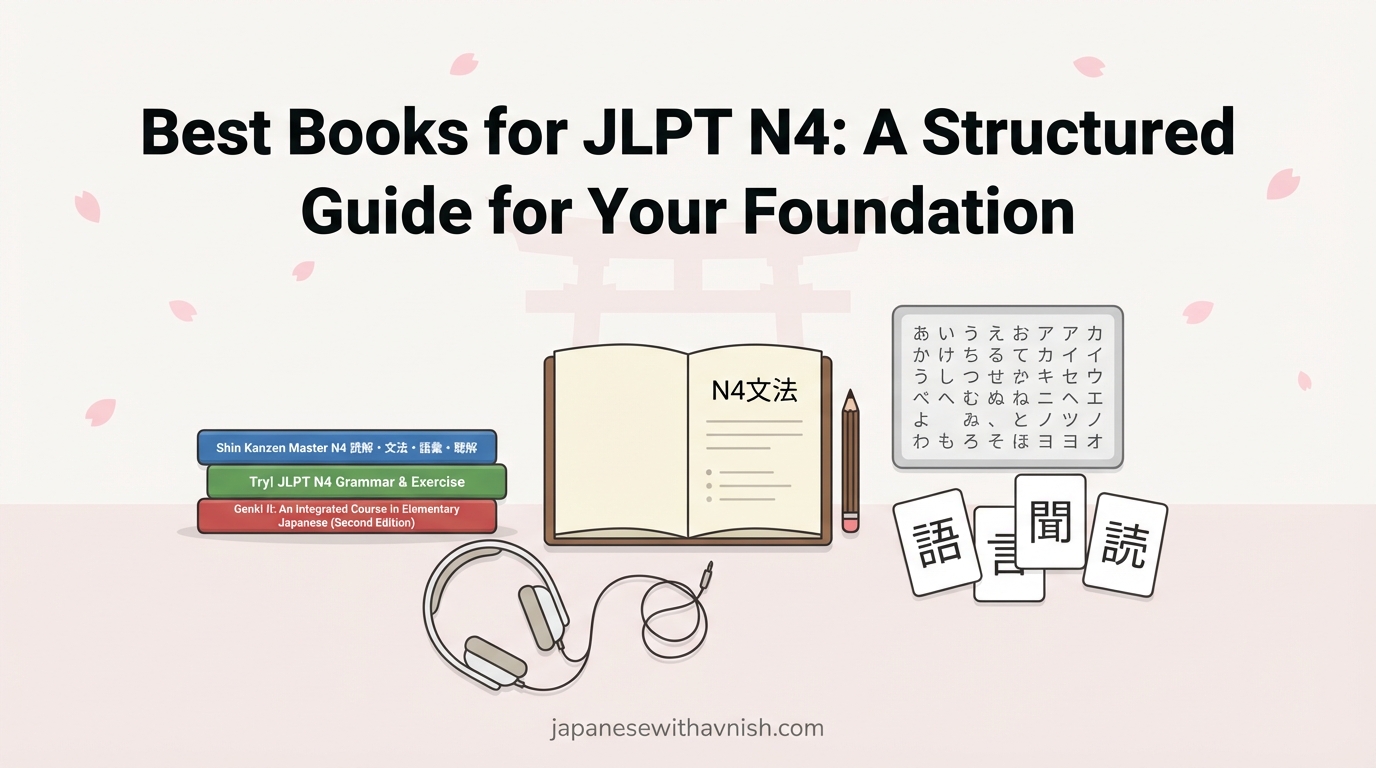
- "Shin Kanzen Master JLPT N4: Grammar" (新完全マスター): Often considered the gold standard. Its explanations are detailed, with example sentences that clearly show usage. The practice questions are exam-style and rigorous. It is best used as a primary grammar reference.
- "Try! JLPT N4" (トライ!): This series takes a "grammar in context" approach. Each lesson is built around a short passage, introducing grammar points as they appear. This is excellent for learners who prefer to see grammar functioning in real sentences rather than in isolated lists. Example: このレストランはやすいです。そして、おいしいです。 (This restaurant is cheap. And, it's tasty.) The conjunction そして is learned within its natural context.
- "Genki II" or "Minna no Nihongo Shokyu II" (みんなの日本語 初級II): These popular textbook series complete the beginner level, covering all N4 and some N3 material. They offer a balanced, classroom-tested approach with dialogues, vocabulary, grammar, and exercises. If you used Genki I for N5, continuing with Genki II provides seamless progression.
Category 2: Specialized Skill-Builders
Once you've learned a concept, you must drill it into memory. These books focus on specific skills.
- Vocabulary: "Nihongo So-Matome N4: Vocabulary" (日本語総まとめ) or "Shin Kanzen Master N4: Vocabulary." The So-Matome series is structured for 6-week preparation, with daily chunks. Shin Kanzen Master offers deeper lists and more challenging exercises.
- Kanji: "Basic Kanji Book Vol. 2" or "Kanji Master N4." These books teach kanji through themes and radicals, not just rote memorization. For example, learning 校 (school) alongside 学 (study) and 生 (life/student) creates meaningful connections.
- Listening: "Shin Kanzen Master N4: Listening" or "Sou Matome N4: Listening." Consistent practice is crucial. These books provide scripted dialogues and quizzes that mimic the exam's format, training your ear for speed and context.
- Reading: "Shin Kanzen Master N4: Reading." It starts with short sentence comprehension and builds to paragraph-length texts, teaching you how to identify key information quickly.
Category 3: Practice & Mock Tests
This is where knowledge becomes performance. Familiarity with the test format is a major component of success.
- Official JLPT Practice Workbooks: Published by the Japan Foundation, these contain past exam questions and are the most accurate representation of the test's style and difficulty.
- "JLPT N4 Official Mock Test" (Unofficial Collections): Publishers like ASK and 3A Corporation compile full-length mock tests. Aim to complete at least 2-3 under timed conditions before the actual exam.
- Drill Books: "Pattern-Betsu Tettei Drill N4" offers hundreds of questions categorized by grammar point, perfect for final review and weakness targeting.
Creating Your Integrated Study Plan
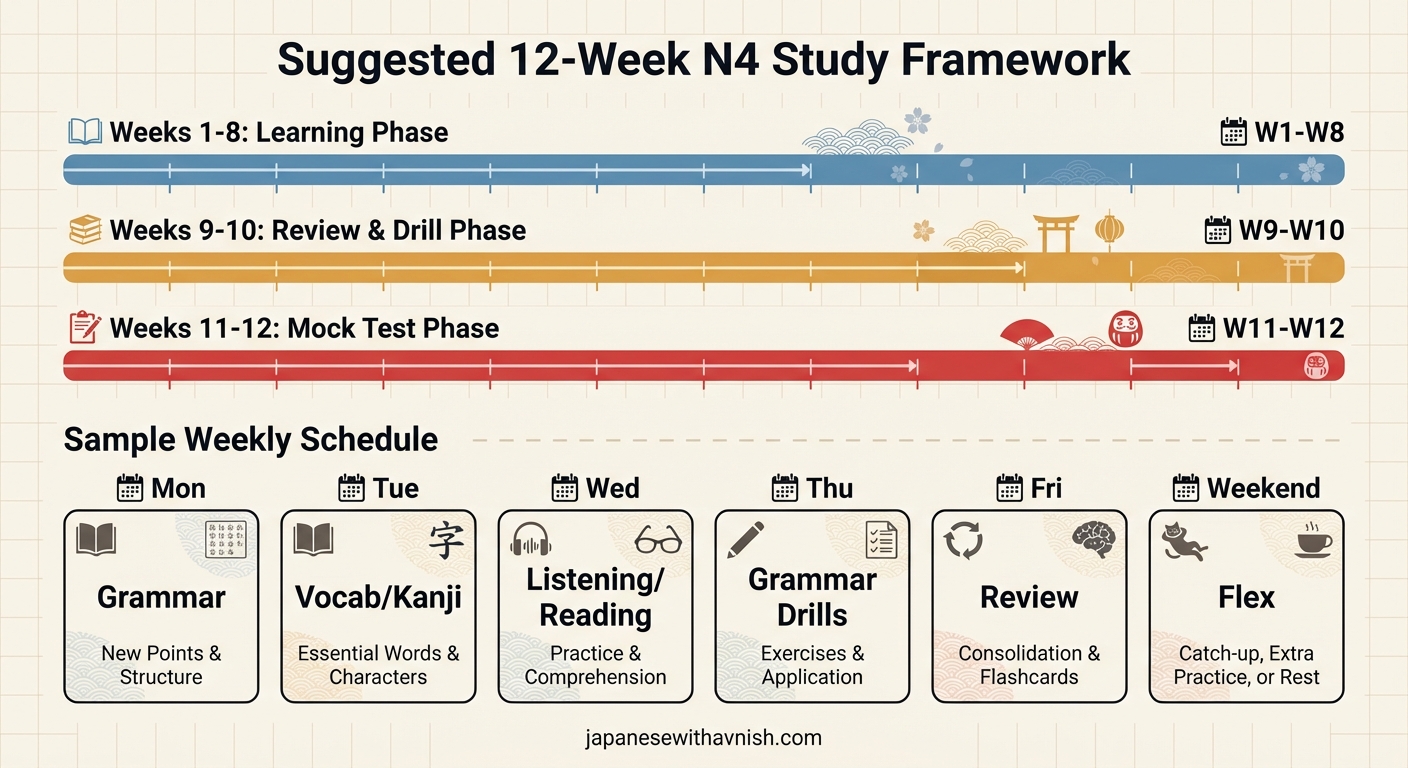 A stack of books is useless without a plan. Here is a suggested 12-week framework:
- Weeks 1-8 (Learning Phase): Dedicate days to different skills. Example: Monday-Grammar (Core Textbook), Tuesday-Vocab/Kanji, Wednesday-Listening/Reading, Thursday-Grammar Drills, Friday-Review. Use weekends for catch-up or preview.
- Weeks 9-10 (Review & Drill Phase): Revisit difficult grammar points. Use specialized drill books. Increase listening practice to daily 20-minute sessions.
- Weeks 11-12 (Mock Test Phase): Take one full mock test per weekend. Use the intervening days to meticulously review every mistake. Why was the answer wrong? Was it a vocabulary gap, a grammar misunderstanding, or a listening oversight? For learners seeking a pre-structured system that integrates all these elements—grammar, vocabulary, kanji, and audio drills—our platform offers a streamlined solution. You can explore our structured Japanese N4 Upgrade Bundle, designed to provide a coherent and comprehensive study path.
Conclusion & Next Steps
Selecting the right books for JLPT N4 is an investment in your language foundation. A balanced approach using a core guide, specialized practice books, and official mock tests will build both your knowledge and your test-taking confidence. Remember, consistency with quality materials is far more effective than sporadic efforts. Begin by choosing one core textbook, then gradually add skill-builders as your study plan progresses. Methodical, calm preparation is the true secret to passing the JLPT N4 and building a robust platform for advancing to N3 and beyond. If you prefer a fully integrated, structured study system that removes the guesswork from resource selection and planning, consider exploring our Japanese N4 Upgrade Bundle. It is designed to provide serious learners with a clear, sequential, and comprehensive path to mastering the JLPT N4 level.
Summary
Reaching the JLPT N4 level is a crucial step in building a solid Japanese foundation, marking the transition from beginner to intermediate skills. This stage introduces a significant increase in vocabulary, grammar, and kanji, making the choice of study materials essential for effective preparation. A strategic approach involves selecting complementary resources that address all exam areas: language knowledge, reading, and listening comprehension. The guide recommends building a study system around three core pillars. First, a comprehensive textbook or study guide, such as "Shin Kanzen Master JLPT N4: Grammar" or "Try! JLPT N4," provides structured lessons and clear explanations of new material. These resources introduce approximately 150 grammar points, 1,500 vocabulary words, and 300 kanji in a logical sequence. Second, specialized skill-builders are necessary for targeted practice. Books like "Nihongo So-Matome N4: Vocabulary" or "Shin Kanzen Master N4: Listening" offer focused drills to reinforce memory and comprehension in specific areas. Third, practice tests and mock exams, including official JLPT workbooks, are critical for applying knowledge under timed conditions and familiarizing yourself with the test format. To integrate these resources, a suggested 12-week study plan divides preparation into distinct phases: an initial learning period, a focused review and drill stage, and a final mock test phase for assessment and refinement. Consistency with high-quality materials is emphasized as more effective than sporadic study. For learners seeking a streamlined solution, the guide references an integrated "Japanese N4 Upgrade Bundle" designed to provide a coherent study path. Ultimately, methodical preparation with the right books builds both the knowledge and confidence needed to pass the JLPT N4 and advance successfully to higher levels.
What should you do next?
Recommended next reads
JLPT N4 Roadmap: Your Structured Guide to Success
A structured, step-by-step guide for JLPT N4 learners. Covers exam format, grammar, vocabulary, kanji, a 4-month study schedule, and test strategies for success.
45 Day Plan for JLPT N4: A Day-by-Day Study Guide
A complete 45-day structured study guide for JLPT N4 success. Covers grammar, vocabulary, kanji, listening, and includes a daily schedule, resources, and final week strategy.
Comments
Add a comment
Recommended bundles for you
Structured study materials to accelerate your JLPT journey.