JLPT N2 Roadmap: Your Structured Guide to Success
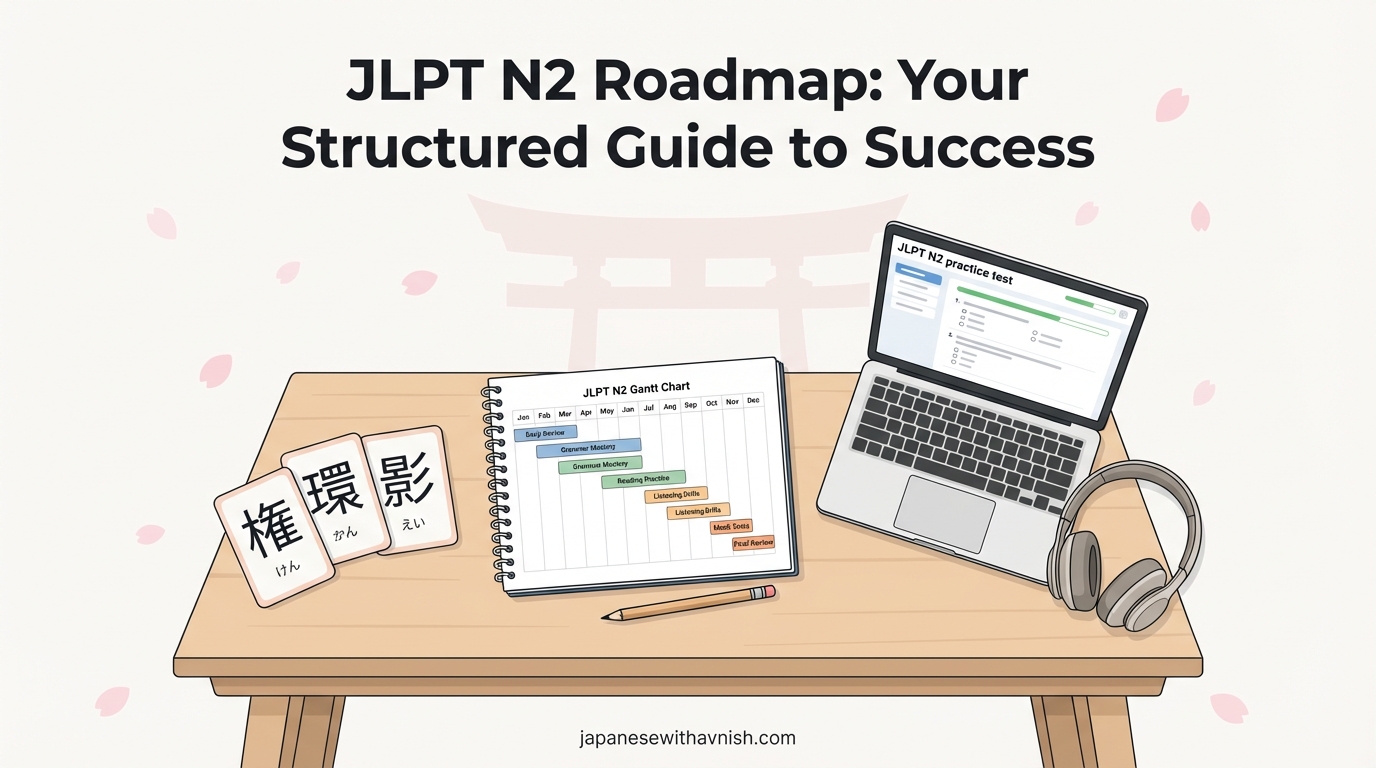
JLPT N2 Roadmap: Your Structured Guide to Success
Reaching the JLPT N2 level is a significant milestone that signifies a transition from intermediate to advanced Japanese proficiency. It is the gateway to professional opportunities, academic pursuits, and a deeper, more nuanced understanding of Japanese culture and media. For many learners, the scope of N2 can feel daunting—a vast ocean of complex grammar, thousands of vocabulary items, and reading passages that demand true comprehension, not just translation. The key to navigating this challenge is not merely studying harder, but studying smarter with a clear, structured plan. This roadmap is designed to transform that daunting journey into a manageable, step-by-step process, providing you with the clarity and direction needed for success.
Table of Contents
- Understanding the JLPT N2 Exam Structure
- The Four Pillars of N2 Mastery
- Phase 1: Foundation Assessment & Goal Setting (Months 1-2)
- Phase 2: Core Knowledge Building (Months 3-6)
- Phase 3: Integration & Application (Months 7-9)
- Phase 4: Final Review & Test Simulation (Months 10-12)
- Recommended Resources & Study Tools
- Maintaining Motivation and Mindset
Understanding the JLPT N2 Exam Structure
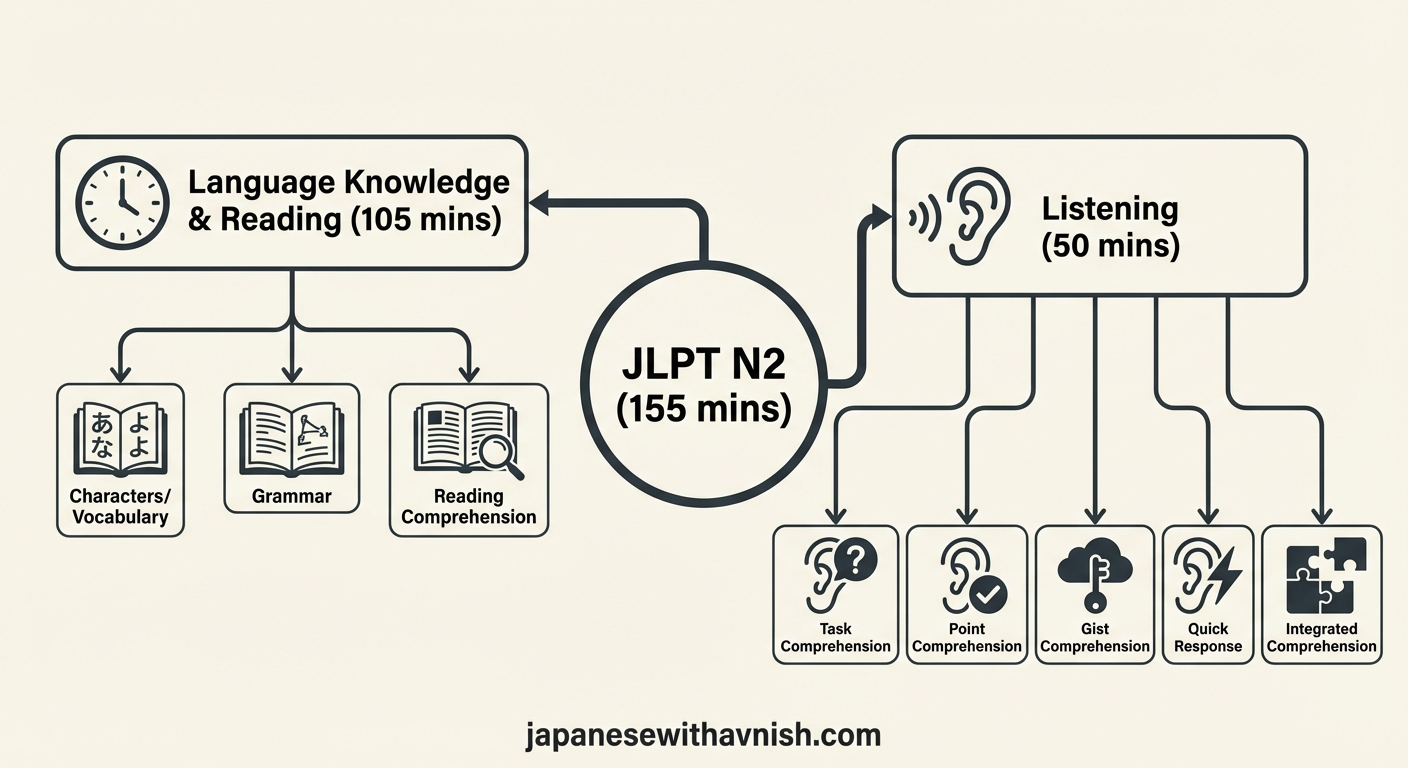 A strategic approach begins with knowing exactly what you are facing. The JLPT N2 exam is divided into three sections, testing language knowledge, reading, and listening in an integrated manner. You have 105 minutes for the first two sections combined, and 50 minutes for listening.
-
言語知識 (Gengo Chishiki - Language Knowledge) & 読解 (Dokkai - Reading) (105 minutes)
- 文字・語彙 (Moji・Goi - Characters/Vocabulary): Tests knowledge of kanji readings, word formation, and context-appropriate word usage.
- 文法 (Bunpou - Grammar): Assesses understanding of advanced sentence patterns, particle usage, and conjunctive forms.
- 読解 (Dokkai - Reading): Includes several medium-length passages, comparative reading, and information retrieval tasks. This section evaluates your ability to grasp arguments, infer meaning, and understand logical flow.
-
聴解 (Choukai - Listening) (50 minutes)
- 課題理解 (Kadai Rikai - Task Comprehension): Understanding the necessary action based on a short dialogue.
- ポイント理解 (Pointo Rikai - Point Comprehension): Focusing on specific details within a longer dialogue.
- 概要理解 (Gaiyou Rikai - Gist Comprehension): Understanding the main idea or speaker's intent.
- 即時応答 (Sokuji Outou - Quick Response): Choosing the most natural response to a short utterance.
- 統合理解 (Tougou Rikai - Integrated Comprehension): Processing information from longer, more complex dialogues or monologues.
Understanding this breakdown allows you to allocate your study time proportionally to the challenges each section presents.
The Four Pillars of N2 Mastery
Success at N2 rests on the balanced development of four core competencies:
- Advanced Vocabulary (約 6,000 words): Moving beyond daily life terms to abstract concepts, business jargon, and formal expressions. Example: 実施する (jisshi suru - to implement), 顕著な (kenchona - remarkable), 妥当な (datou na - reasonable).
- Complex Kanji (約 1,000 characters): Mastery of readings (onyomi/kunyomi) and the ability to deduce meaning in compound words. Example: 権利 (kenri - rights), 環境 (kankyou - environment), 影響 (eikyou - influence).
- Nuanced Grammar: Understanding subtle differences in meaning, formality, and speaker's attitude. This includes conditionals (~ば・~たら・~なら・~と), causative/passive forms, and advanced conjunctive phrases. Example: ~に限らず (~ ni kagirazu - not limited to), ~にもかかわらず (~ ni mo kakawarazu - in spite of).
- Integrated Comprehension Skills: The ability to read and listen for gist, inference, and detail simultaneously, connecting ideas across sentences and paragraphs.
Phase 1: Foundation Assessment & Goal Setting (Months 1-2)
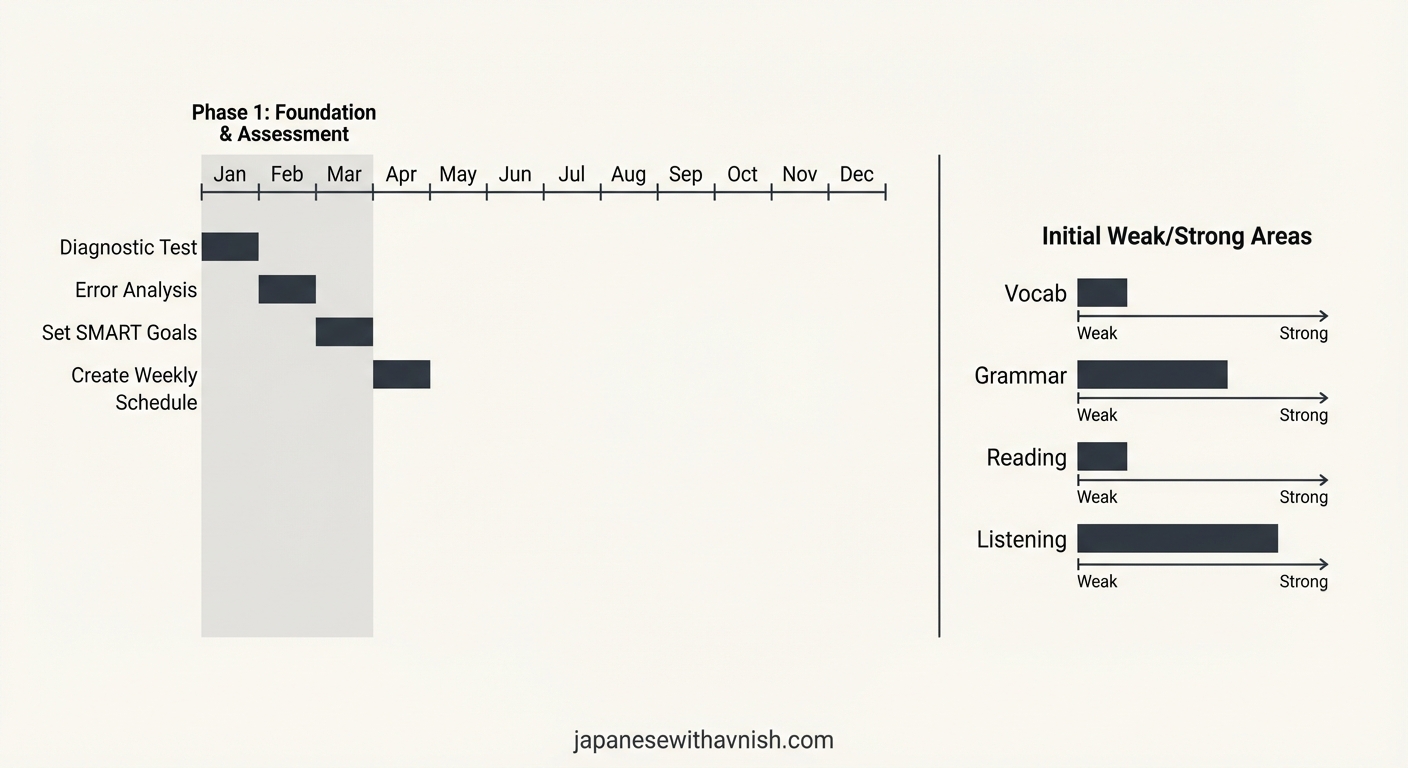 Begin by diagnosing your current level. Take one full N2 practice test under timed conditions. Analyze the results meticulously:
- Which section was weakest?
- Within vocabulary, are kanji or word usage the problem?
- In listening, which question type caused the most errors?
Based on this analysis, set specific, measurable goals. Instead of "improve reading," aim for "increase reading practice to 3 articles per week and improve practice test scores in 概要理解 by 15% in 3 months." Establish a consistent weekly study schedule of 10-15 hours, blocking time for each pillar.
Phase 2: Core Knowledge Building (Months 3-6)
This is the intensive learning phase. Dedicate focused blocks of time to each pillar.
- Vocabulary & Kanji: Use spaced repetition systems (SRS) like Anki. Aim to learn 15-20 new words daily, focusing on example sentences, not just isolated meanings. Study kanji in context through vocabulary.
- Grammar: Work through a structured N2 grammar textbook (e.g., Shin Kanzen Master, Sou Matome). Learn one to two new points daily, but crucially, create your own original sentences. Example: Learning ~わけにはいかない (~ wake ni wa ikanai - cannot, must not).
- Incorrect: 彼の意見を聞くわけにはいかない。 (Kare no iken o kiku wake ni wa ikanai.)
- Correct: 明日は重要な会議があるので、今日は遅くまで働くわけにはいかない。 (Ashita wa juuyou na kaigi ga aru node, kyou wa osoku made hataraku wake ni wa ikanai.)
- Reading: Start with NHK News Web Easy, then graduate to regular NHK articles or editorials. Read one piece every other day, summarizing the main points in Japanese.
- Listening: Immerse yourself daily. Use podcasts like "Nihongo con Teppei (for intermediates)" or "YUYUの日本語Podcast." Practice active listening by shadowing (repeating aloud immediately after the speaker).
A structured resource can streamline this phase immensely. Our Japanese N2 Pro Bundle is designed specifically for this systematic knowledge acquisition, integrating grammar, vocabulary, and targeted practice.
Phase 3: Integration & Application (Months 7-9)
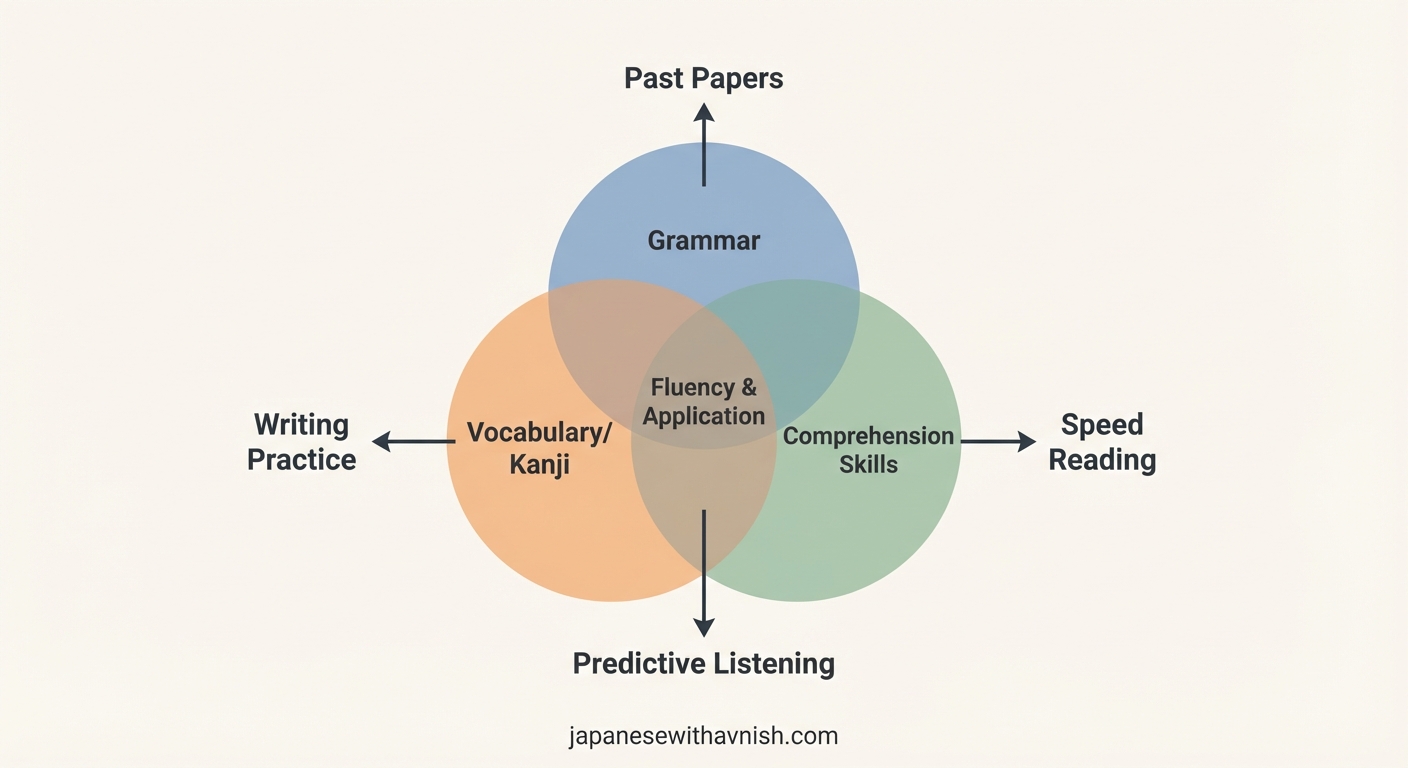 Shift from learning discrete points to applying them together. This phase is about building fluency and speed.
- Integrated Practice: Use past papers and question banks. Practice completing combined Language Knowledge and Reading sections within the 105-minute time limit.
- Output Practice: Write short paragraphs or diary entries using new N2 grammar and vocabulary. Find a language partner or tutor to practice speaking on N2-level topics (e.g., environmental issues, technology trends).
- Advanced Listening: Move beyond comprehension to prediction. Pause audio and predict what the speaker will say next. Transcribe short, challenging clips from dramas or news reports.
- Reading for Speed: Practice skimming articles to find the main idea, then scanning for specific details—a critical skill for the information retrieval questions.
Phase 4: Final Review & Test Simulation (Months 10-12)
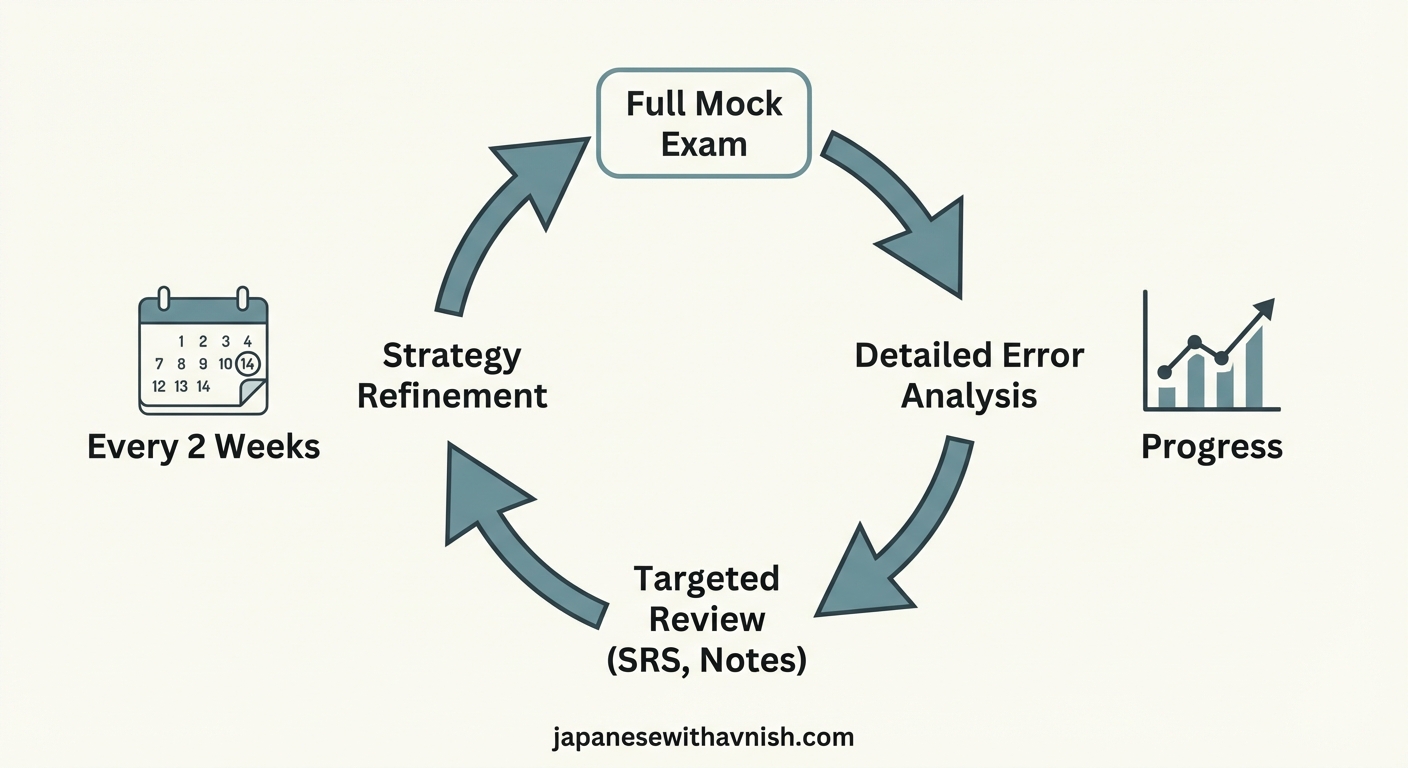 Consolidate knowledge and build exam endurance.
- Comprehensive Review: Cycle back through your SRS decks, grammar notes, and error logs from previous practice tests.
- Full-Length Simulations: In the final 8 weeks, take one full, timed practice exam every two weeks. Recreate exam conditions: no breaks, no phone, use an answer sheet.
- Error Analysis: After each simulation, spend more time reviewing mistakes than taking the test. Understand why you chose the wrong answer and solidify the correct logic.
- Test-Day Strategy: Plan your test-day approach. Decide the order you will tackle reading questions (many recommend starting with information retrieval). Practice managing time and stress.
Recommended Resources & Study Tools
- Primary Textbooks: "Shin Kanzen Master" series (comprehensive), "Sou Matome" series (condensed, good for daily routines).
- Vocabulary/Kanji: "Nihongo So-Matome N2 Goi/Kanji," "N2 Tango Speed Master."
- Practice Tests: Official JLPT "過去問" (kakomon - past papers) are essential. "Shin Kanzen Master" also offers excellent mock tests.
- Digital Tools: Anki (SRS), Jisho.org (dictionary), HiNative (Q&A platform).
- Immersive Content: NHK News, Terrace House (for natural conversation), podcasts like "Hikibiki" (designed for JLPT prep).
For learners seeking an all-in-one, structured system that covers these resources in a coordinated plan, our Complete Japanese N5-N1 Mega Bundle provides a seamless progression from foundational to advanced mastery.
Maintaining Motivation and Mindset
The N2 journey is a marathon. Celebrate small victories—mastering a difficult grammar point, understanding a full news article. Connect your study to your ultimate goal, whether it's watching a film without subtitles, working in a Japanese company, or reading literature. Join a study community for accountability. Remember that plateaus are normal; consistent, structured effort is what leads to breakthrough.
Conclusion
Passing the JLPT N2 is an achievable goal with a deliberate, phased approach. This roadmap—from assessment and core building to integration and simulation—provides the framework. Your dedication supplies the effort. By breaking down the monumental task into daily, weekly, and monthly actions, you transform anxiety into progress. Trust in the process, focus on balanced skill development, and engage consistently with the language.
If you prefer a structured, ready-made study system that encapsulates this roadmap, explore our Japanese N2 Pro Bundle. It is designed specifically for serious N2 aspirants, integrating comprehensive grammar guides, vocabulary modules, listening drills, and practice tests into a coherent, efficient study plan.
Summary
Achieving JLPT N2 proficiency is a major step toward advanced Japanese, unlocking professional, academic, and cultural opportunities. This structured roadmap transforms the daunting challenge into a manageable 12-month plan, emphasizing strategic study over sheer effort. The journey begins with understanding the exam's three sections: Language Knowledge & Reading (105 minutes) and Listening (50 minutes). Success hinges on mastering four pillars: advanced vocabulary (~6,000 words), complex kanji (~1,000 characters), nuanced grammar, and integrated comprehension skills. The plan unfolds in four phases. **Phase 1 (Months 1-2)** involves assessing your current level with a practice test, analyzing weaknesses, and setting specific, measurable goals alongside a consistent weekly schedule. **Phase 2 (Months 3-6)** is dedicated to core knowledge building: using spaced repetition for vocabulary, studying grammar with original sentence creation, and engaging with reading and listening materials like NHK News and Japanese podcasts. **Phase 3 (Months 7-9)** shifts to integration and application. Learners practice with past papers under time limits, use new grammar in writing and speaking, and advance listening skills through prediction and transcription. **Phase 4 (Months 10-12)** focuses on final review and test simulation, including full-length timed exams, thorough error analysis, and developing test-day strategies. Recommended resources include textbook series like Shin Kanzen Master and Sou Matome, official past papers, and digital tools such as Anki. Maintaining motivation is crucial; celebrating small victories and connecting studies to personal goals help sustain progress through this marathon. By following this structured approach, learners can systematically build the skills needed to pass the JLPT N2.
What should you do next?
Recommended next reads
JLPT N2 75-Day Study Plan: Day-by-Day Guide
Ace the JLPT N2 with our detailed 75-day study plan! Get a structured, day-by-day guide to conquer grammar, vocabulary, reading, and listening.
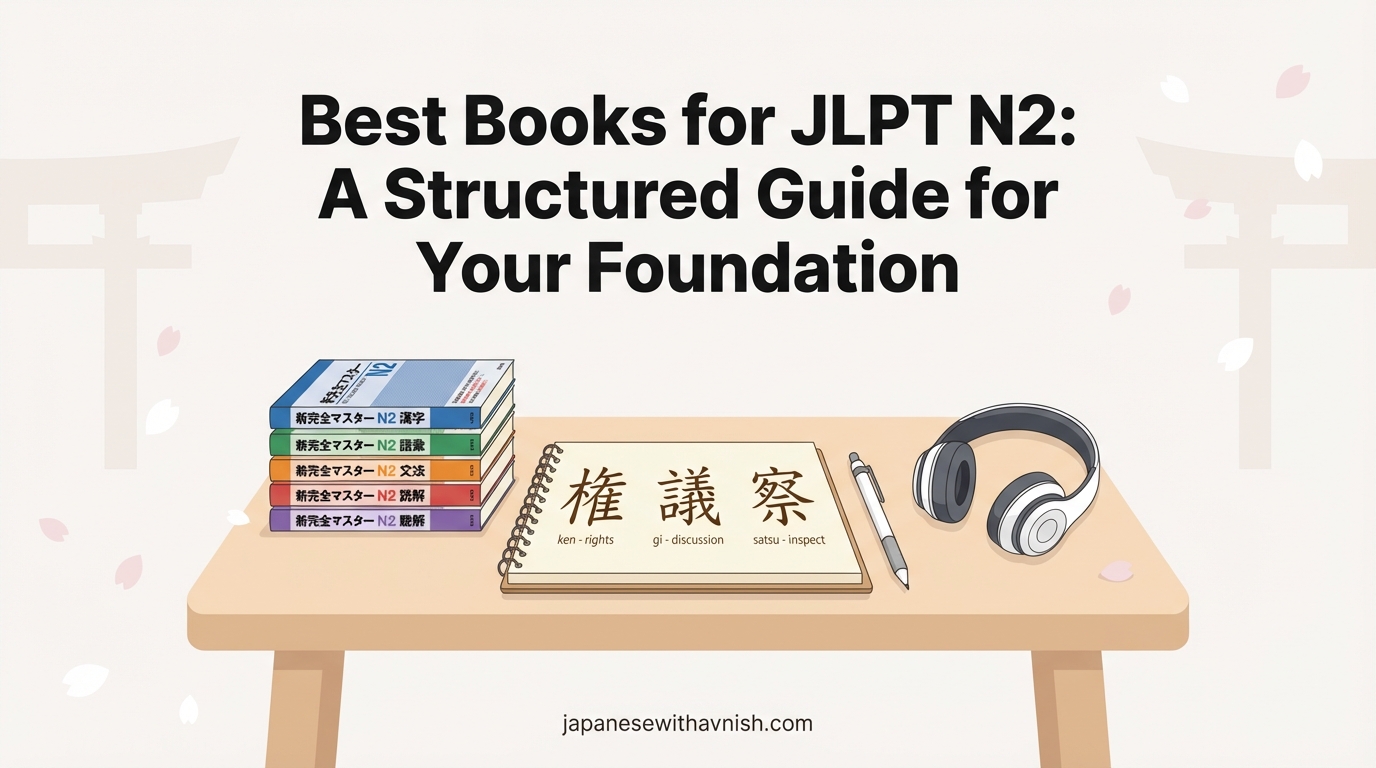
Best Books for JLPT N2: A Structured Guide for Your Foundation
A systematic guide to the best books for JLPT N2 preparation. Learn how to use Shin Kanzen Master, So-Matome, and more to build a strong foundation in kanji, grammar, and vocabulary.
Comments
Add a comment
Recommended bundles for you
Structured study materials to accelerate your JLPT journey.