JLPT N3 60-Day Study Plan: Your Day-by-Day Guide to Success
60 Day Plan for JLPT N3: A Day-by-Day Study Guide
Preparing for the Japanese Language Proficiency Test N3 level can feel like a significant undertaking. It represents the crucial bridge from basic to intermediate Japanese, requiring a solid grasp of approximately 600 kanji, 3,750 vocabulary words, and a wide range of grammar points that enable more complex communication. The prospect of mastering this material can be daunting without a clear path. However, with a structured, day-by-day plan, the journey becomes not only manageable but also deeply rewarding. This guide is designed to provide that structure, breaking down the vast N3 syllabus into focused, daily tasks that build consistency, reinforce learning, and systematically prepare you for all sections of the exam. By committing to this 60-day roadmap, you transform an overwhelming goal into a series of achievable daily victories, steadily building the confidence and competence needed to succeed.
Table of Contents
- Understanding the JLPT N3 Exam Structure
- The Philosophy of the 60-Day Intensive Plan
- Phase 1: Foundation Review & Core Building (Days 1-20)
- Phase 2: Skill Integration & Practice (Days 21-40)
- Phase 3: Mock Tests & Final Review (Days 41-60)
- Essential Study Resources & Tools
- Adapting the Plan to Your Life
- Final Preparation and Exam Day Strategy
Understanding the JLPT N3 Exam Structure
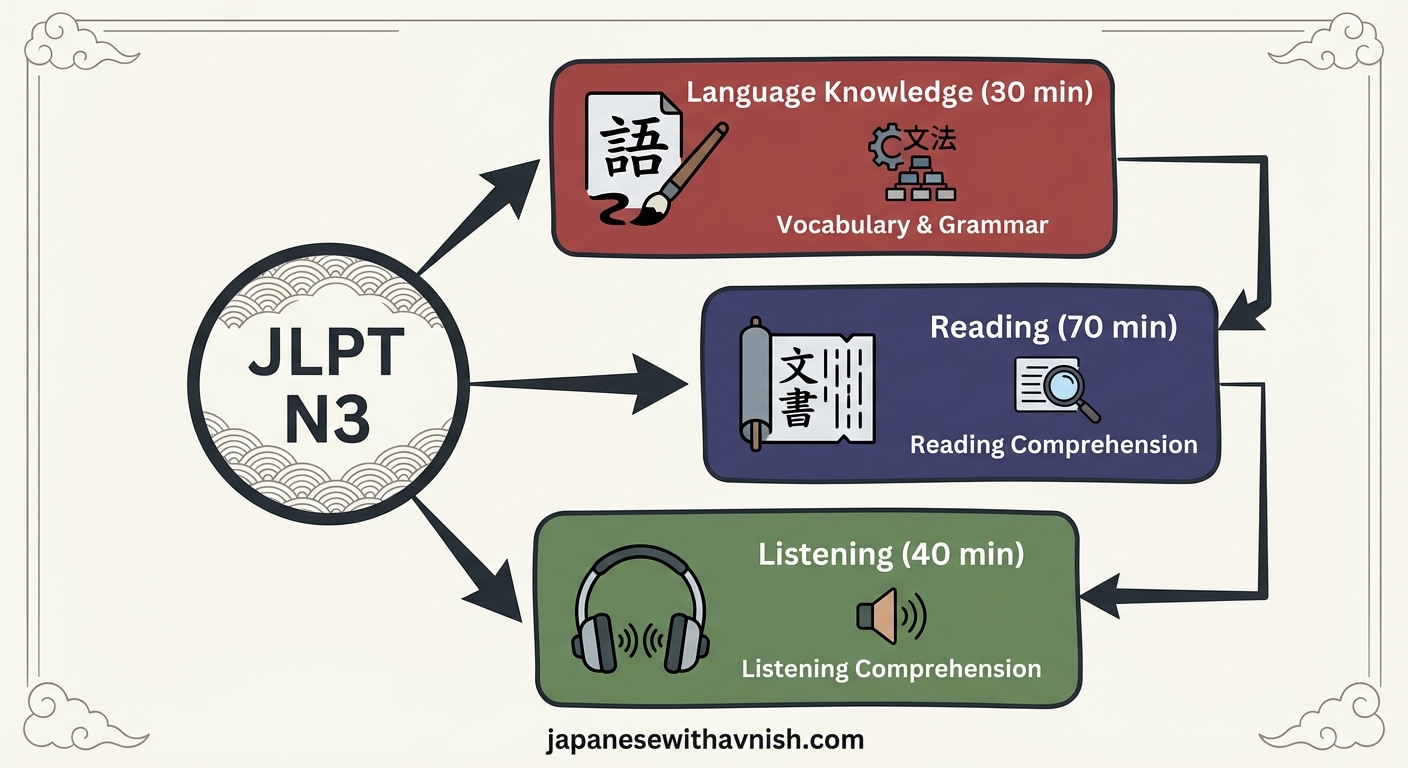 Success on the JLPT N3 begins with a clear understanding of what you will face. The exam is divided into three main sections, each testing a different language skill set within a strict time limit.
- Language Knowledge (Vocabulary & Grammar) – 30 minutes: This section tests your knowledge of N3-level vocabulary, kanji readings, and word formation. It also includes grammar questions that assess your ability to choose correct sentence structures and particle usage.
- Reading – 70 minutes: The reading section evaluates comprehension through various text types, including short passages, medium-length essays, and informational texts. Speed and accuracy in grasping main ideas, details, and author intent are crucial.
- Listening – 40 minutes: This section tests your ability to comprehend spoken Japanese in everyday situations. Question types include task-based comprehension (何をしますか), point comprehension (要点を理解する), and quick response (即時応答).
A strategic study plan must allocate time to develop skills for each of these sections in a balanced manner.
The Philosophy of the 60-Day Intensive Plan
This plan is built on principles of spaced repetition, active recall, and balanced skill development. It is not about cramming but about consistent, daily engagement with the language. Each day is designed to include:
- New Input: Learning new vocabulary, kanji, or grammar.
- Active Review: Revisiting and testing yourself on material from previous days.
- Skill Application: Using the language through reading and listening practice. Consistency is your most powerful tool. Even 90-120 focused minutes per day, following this structure, can yield remarkable results.
Phase 1: Foundation Review & Core Building (Days 1-20)
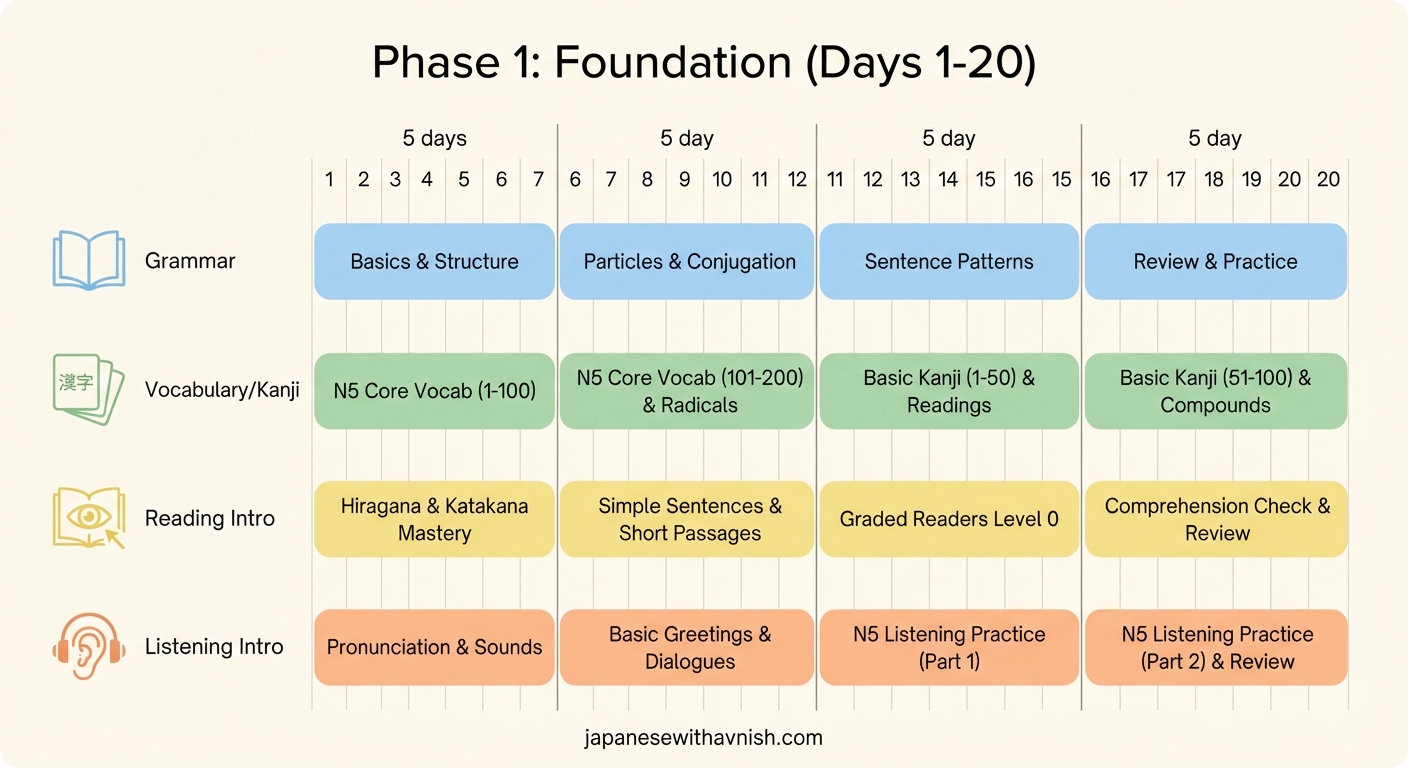 The first phase focuses on establishing a strong foundation in the core components of the N3 syllabus. The goal is to systematically cover the essential building blocks.
Weekly Structure (Sample):
- Days 1-5: Intensive grammar introduction. Study 5-7 new N3 grammar points per day. Create example sentences for each.
- Example: ~に対して (~ni taishite) – "in contrast to; toward."
- 兄は活発なに対して、弟は静かだ。 (Ani wa kappatsu na ni taishite, otōto wa shizuka da.) – "In contrast to my energetic older brother, my younger brother is quiet."
- Example: ~に対して (~ni taishite) – "in contrast to; toward."
- Days 6-10: Vocabulary and kanji focus. Aim for 30-40 new words daily, grouped by theme (e.g., business, society, nature). Study the associated kanji and their readings.
- Days 11-15: Deepen grammar understanding and begin short reading practice. Use short paragraphs or news articles to see grammar and vocabulary in context.
- Days 16-20: Introduce focused listening practice with N3-level dialogues. Listen actively, transcribe short sections, and shadow (repeat aloud) the speakers.
Daily Template (Days 1-20):
- Review (15 min): Flashcards for previous day's vocabulary/grammar.
- New Material (40 min): Study day's assigned new grammar points or vocabulary list.
- Application (35 min): Complete textbook exercises or write original sentences using new material.
Phase 2: Skill Integration & Practice (Days 21-40)
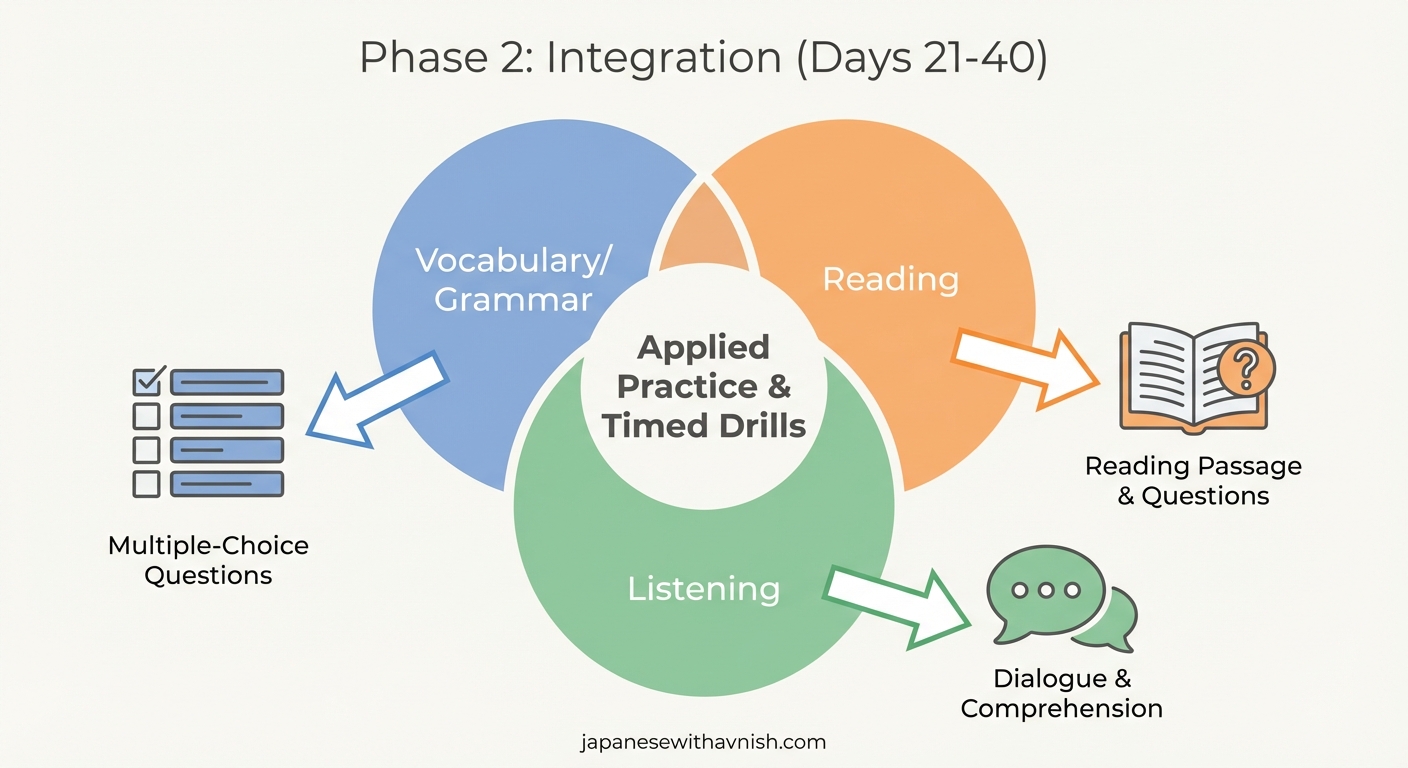 In this phase, shift from learning components in isolation to integrating them. The focus is on applying knowledge to the specific task types found in the exam.
Weekly Structure (Sample):
- Days 21-25: Targeted reading drills. Practice different question types: information retrieval, understanding cause and effect, and grasping the author's opinion.
- Days 26-30: Advanced listening practice. Work on "quick response" questions and longer monologues. Practice taking brief notes in Japanese.
- Days 31-35: Combined grammar and vocabulary review through practice questions. Identify weak areas and revisit them.
- Days 36-40: Timed section practice. Set a timer and complete a full Vocabulary/Grammar section or a Reading section under exam conditions.
Daily Template (Days 21-40):
- Review (20 min): Spaced repetition review of Phase 1 material.
- Focused Practice (50 min): Dedicated time for either reading comprehension drills or listening comprehension exercises.
- Active Output (20 min): Summarize a listened passage in Japanese or explain a grammar point's usage.
Phase 3: Mock Tests & Final Review (Days 41-60)
This final phase is about simulation, endurance, and refinement. Your goal is to familiarize yourself with the exam's flow and pressure.
Weekly Structure (Sample):
- Days 41-45: Take your first full-length mock test. Do not skip any section. Afterwards, spend 2-3 days analyzing every mistake. Why was it wrong? Was it a knowledge gap, a misreading, or a time pressure issue?
- Days 46-50: Second mock test. Focus on improving time management based on insights from the first test. Conduct another thorough error analysis.
- Days 51-55: Targeted final review. Create a "weakness list" of frequently missed kanji, vocabulary, or grammar and drill them daily.
- Days 56-60: Light review and mental preparation. Review your notes and weakness list. Listen to Japanese daily to keep your ear tuned. Avoid learning new material. Focus on confidence and rest.
Daily Template (Days 41-60 - Non-Mock Test Days):
- Error Analysis (40 min): Review incorrect answers from mock tests, research correct answers, and re-do similar questions.
- Weakness Drill (30 min): Focused study on your personal list of challenging items.
- Maintenance (20 min): Light reading or listening to maintain fluency.
Essential Study Resources & Tools
A structured plan requires quality materials. While there are many resources available, a cohesive system prevents fragmentation. You will need:
- A dedicated N3 grammar textbook (e.g., Shin Kanzen Master, Try! N3).
- N3 vocabulary and kanji flashcards or lists.
- Reading comprehension workbooks.
- Past papers or official JLPT practice workbooks.
- Audio materials for listening practice.
For learners seeking a comprehensive, all-in-one solution that aligns perfectly with a structured plan like this, our Japanese N3 Power Bundle provides a curated system of grammar guides, vocabulary modules, kanji drills, and practice tests designed for systematic mastery.
Adapting the Plan to Your Life
While the 60-day plan is intensive, it is flexible. If you have more time, you can extend each phase. If you have less, focus on the core daily template: Review, New Input, Application. The key is daily contact with Japanese. Even on busy days, commit to 30 minutes of review or listening practice to maintain momentum.
Final Preparation and Exam Day Strategy
In the final week, prioritize sleep and a healthy routine. Prepare your test materials (admission ticket, pencils, eraser, watch) the night before. On exam day, manage your time strictly: do not spend too long on any single question in the Language Knowledge section to preserve time for Reading. During the Listening test, mark your answer immediately and use the pause between questions to preview the next set of options.
Embarking on this 60-day journey requires dedication, but the structure provided here turns a monumental task into a clear, daily process. By breaking down the N3 challenge into phases of foundation, integration, and simulation, you build not just knowledge, but also the exam-taking stamina and strategic approach essential for success. Trust in your consistent effort.
If you prefer a structured, ready-made study system that integrates grammar, vocabulary, kanji, and practice into a coherent daily workflow, explore our Japanese N3 Power Bundle. It is designed to provide the comprehensive resources and guided pathway that serious learners need to approach the JLPT N3 with confidence and clarity.
Summary
A complete 60-day, day-by-day study plan for JLPT N3 success. Covers vocabulary, grammar, reading, listening with a phased approach and practical schedule.
What should you do next?
Recommended next reads

JLPT N3 Roadmap: Your Structured Guide to Success
A structured, step-by-step guide to passing the JLPT N3. Covers exam format, study schedule, vocabulary, grammar, kanji, reading, and listening strategies for intermediate learners.
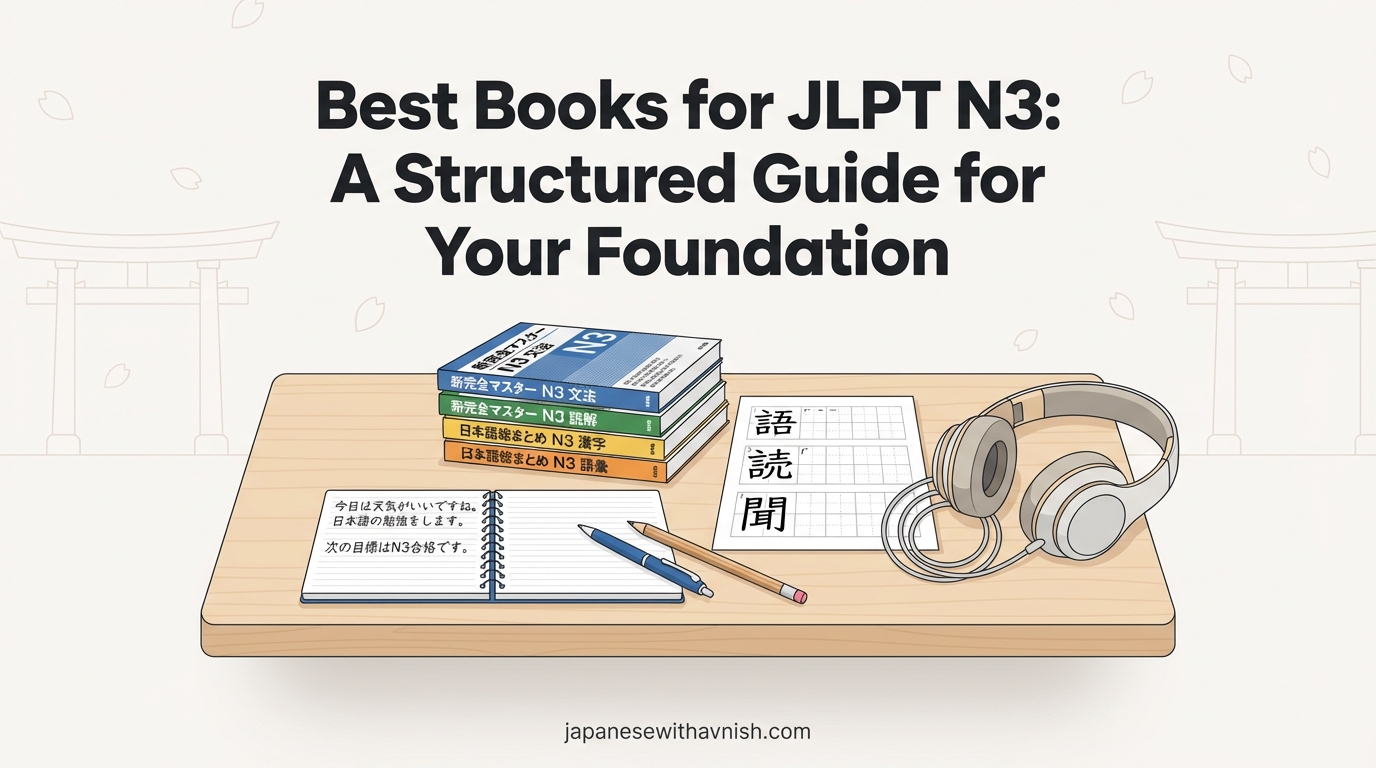
Best Books for JLPT N3: A Structured Guide for Your Foundation
A calm, structured guide to the best textbooks for JLPT N3. Compare Shin Kanzen Master, So-matome, and more for grammar, vocabulary, reading, and listening success.
Comments
Add a comment
Recommended bundles for you
Structured study materials to accelerate your JLPT journey.