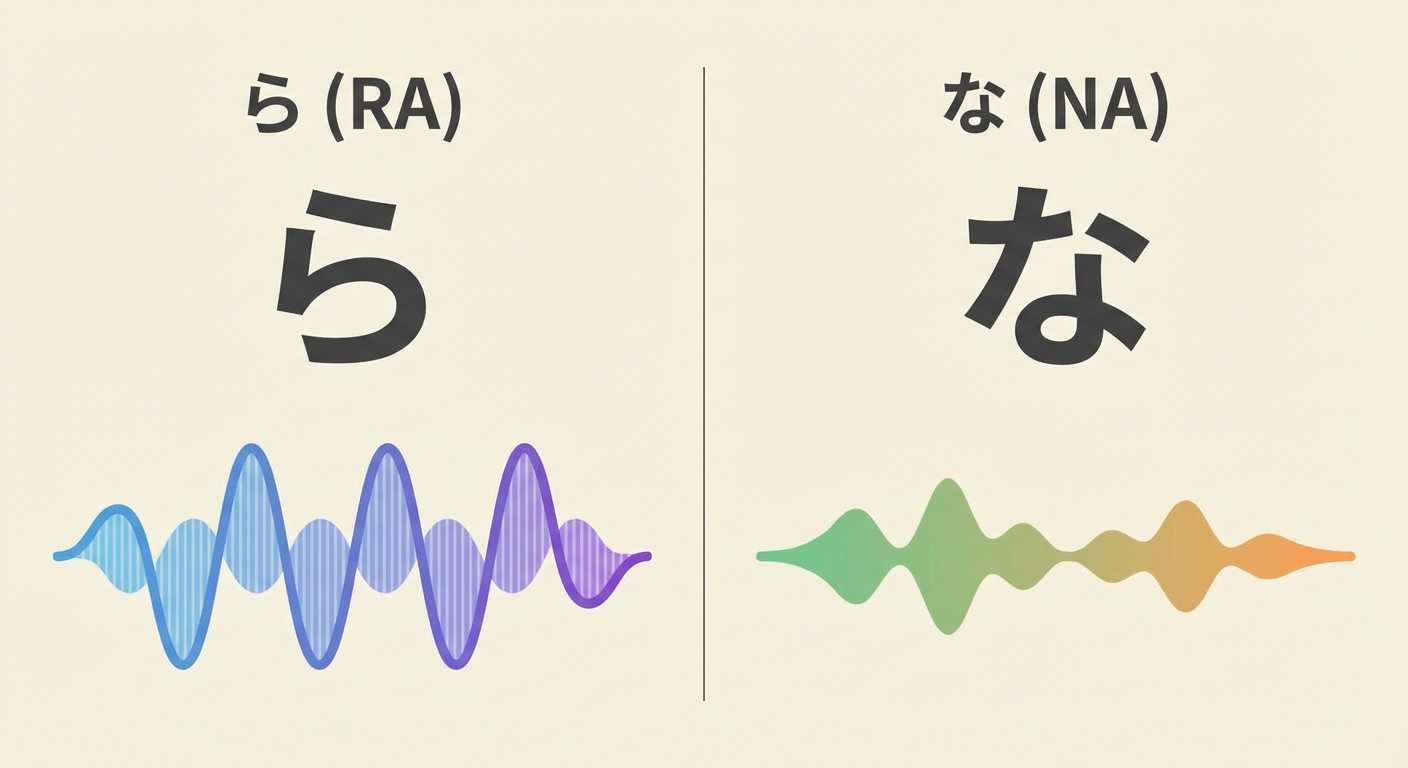
Minimal Pairs: ら vs. な (R vs. N)
Characters
| Hiragana | Katakana | Romaji | Meaning |
|---|---|---|---|
| ら | ラ | ra | gauze |
| な | ナ | na | vegetables |
| り | リ | ri | village |
| に | ニ | ni | two |
| る | ル | ru | ruby |
| ぬ | ヌ | nu | cloth |
Minimal Pairs: ら vs. な (R vs. N)
Introduction
The Japanese consonants ら (r) and な (n) can present a challenge for learners, as the Japanese "r" sound is distinct from its English counterpart. Mastering this distinction is crucial for clear pronunciation and avoiding misunderstandings, as these sounds differentiate many common words. The Japanese "r" is a single, light tap of the tongue against the alveolar ridge (the gum ridge behind the upper teeth).
Sound Comparison Table
| Kana | Romaji | Key Sound Description | Example Word (Meaning) |
|---|---|---|---|
| ら | ra | A light, flapped "r". The tongue taps the roof of the mouth once. | らいねん rainen (next year) |
| な | na | A clear "n" sound. The tongue presses against the roof of the mouth, allowing air through the nose. | ないねん nainen (non-existent concept) |
Pronunciation Guidance
- For ら (ra): Avoid rolling or trilling the "r" as in Spanish, or using the English "r" sound. Think of it as the quick "dd" sound in the American pronunciation of "ladder" or "butter." The tongue should make a swift, single tap.
- For な (na): Ensure the tongue fully contacts the alveolar ridge, momentarily stopping the airflow through the mouth and directing it through the nose. This is a standard "n" sound.
- Common Error: Substituting the English "r" for ら will make your pronunciation sound unnatural. Conversely, confusing ら and な can change word meanings entirely.
Practice: Distinguishing Minimal Pairs
Practice saying these contrasting pairs aloud, focusing on the initial consonant sound.
-
らく vs. なく
- らく raku (comfort, ease)
- なく naku (to cry, to weep)
-
りんご vs. にんご
- りんご ringo (apple)
- にんご ningo (This is not a standard word, highlighting the importance of the correct sound.)
-
れんらく vs. れんなく
- れんらく renraku (contact, get in touch)
- れんなく rennaku (This is not a standard word. The correct term is れんらく.)
Focus on the crisp, single tap for the ら-row and the clear nasal sound for the な-row. Consistent practice with these minimal pairs will solidify the distinction in both your listening and speaking.
What should you do next?
Recommended next lessons
Hiragana あ-row (Vowels)
Learn the five foundational vowel sounds of Japanese: あ, い, う, え, お.
Read →
Hiragana か-row (K-sounds)
Master the 'k' consonant sounds combined with the five vowels.
Read →
Katakana ア-row (Vowels)
Learn the katakana vowel characters used primarily for foreign words.
Read →
Katakana カ-row (K-sounds)
Master the katakana 'k' consonant sounds for transcribing foreign vocabulary.
Read →
Voiced Sounds: が-row (G-sounds)
Learn the voiced counterpart to the か-row, marked by dakuten (゛).
Read →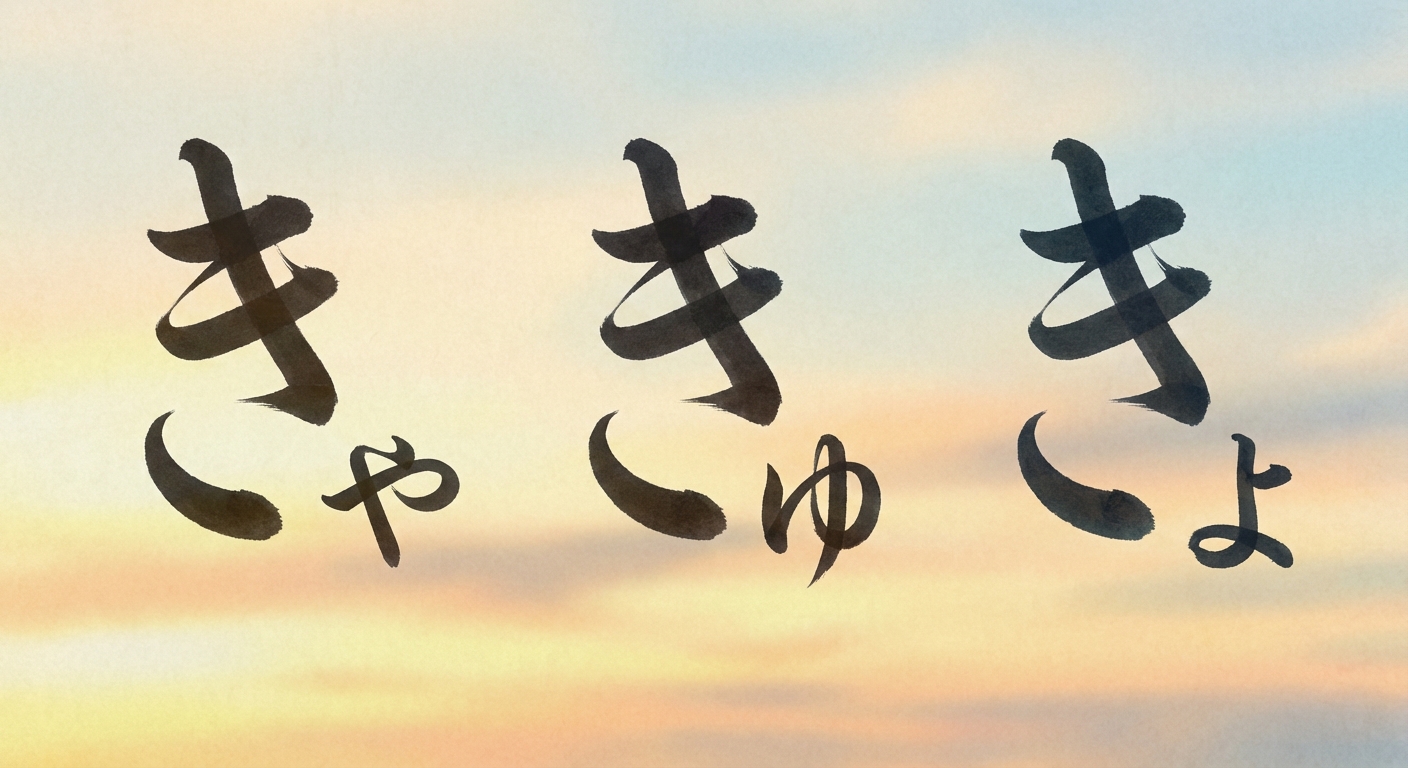
Combined Sounds: きゃ, きゅ, きょ
Master contracted sounds (yōon) starting with the 'k' consonant.
Read →Comments
Add a comment
Recommended bundles for you
Structured study materials to accelerate your JLPT journey.