Voiced Sounds: が-row (G-sounds)
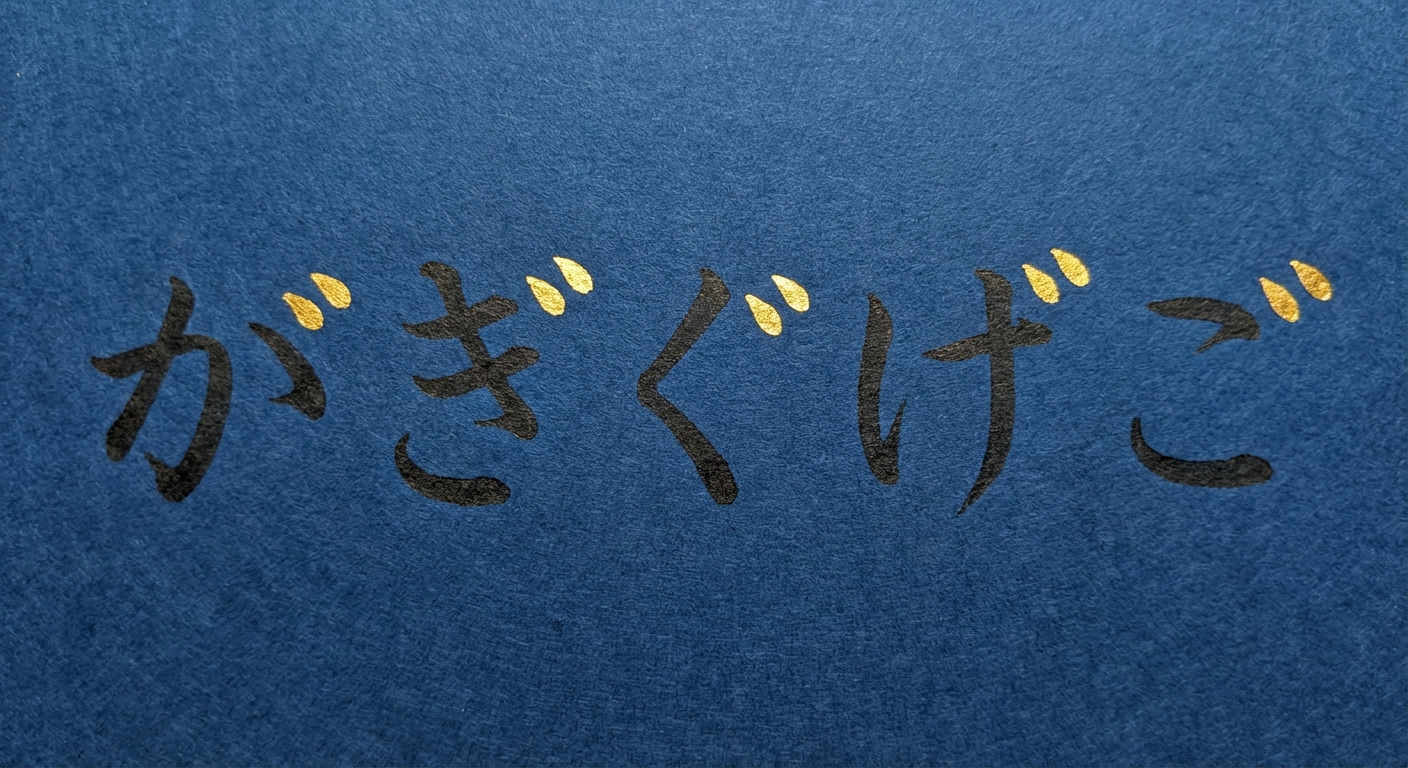
Characters
| Hiragana | Katakana | Romaji | Meaning |
|---|---|---|---|
| が | ガ | ga | moth |
| ぎ | ギ | gi | gizmo |
| ぐ | グ | gu | tool |
| げ | ゲ | ge | down |
| ご | ゴ | go | five |
Voiced Sounds: が-row (G-sounds)
Introduction
In Japanese, dakuten (゛) are two small marks added to certain kana to create their "voiced" counterparts. This lesson introduces the voiced sounds of the か-row (K-sounds). When dakuten are added to か, き, く, け, こ, they become が, ぎ, ぐ, げ, ご, shifting the pronunciation from a "k" sound to a "g" sound. Mastering these is essential for building vocabulary and accurate pronunciation from the very beginning.
The が-row Characters
The following table presents the five basic characters of the が-row in hiragana, their katakana equivalents, romaji, and a simple example to anchor your learning.
| Hiragana | Katakana | Romaji | Example Word (Hiragana) | Meaning |
|---|---|---|---|---|
| が | ガ | ga | がっこう(gakkou) | school |
| ぎ | ギ | gi | ぎんこう(ginkou) | bank |
| ぐ | グ | gu | ぐんたい(guntai) | military |
| げ | ゲ | ge | げんき(genki) | healthy, energetic |
| ご | ゴ | go | ごはん(gohan) | meal, cooked rice |
Pronunciation Tips
The sounds of the が-row are voiced velar plosives. This means the vocal cords vibrate when producing them, unlike their unvoiced か-row counterparts.
- Mouth Position: The back of your tongue should touch the soft palate (the back part of the roof of your mouth), briefly stopping the airflow before releasing it with voice.
- Common Guidance: Place your fingers lightly on your throat. You should feel a clear vibration when you say "ga," compared to no vibration for "ka."
- Note on ぎ (gi): The pronunciation is a hard "g" as in "gift," not a soft "g" as in "gem."
Practice
Read the following words and short phrase aloud, focusing on the clear, voiced quality of the が-row sounds.
- えいが (eiga) - movie
- かぎ (kagi) - key
- げんきですか。 (Genki desu ka?) - How are you? (Are you well?)
What should you do next?
Recommended next lessons
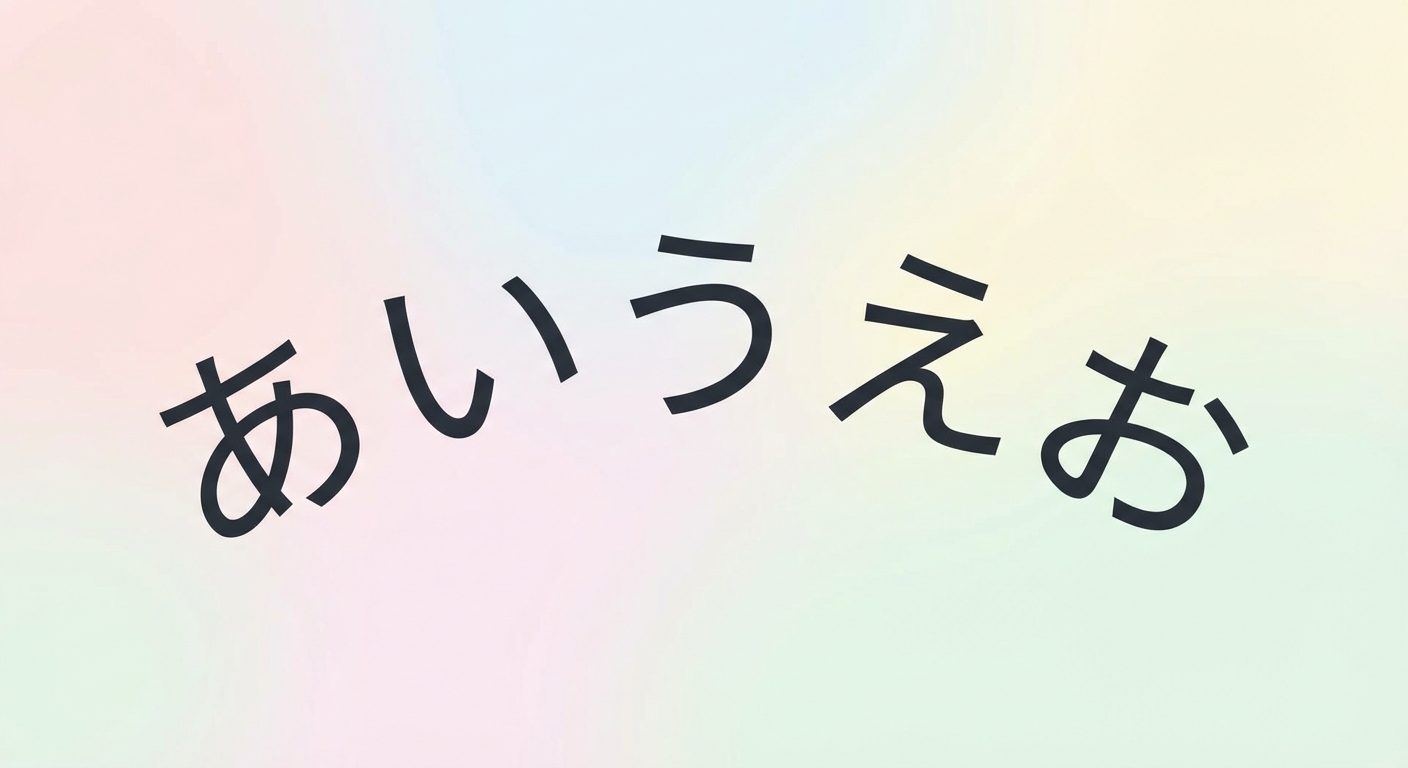
Hiragana あ-row (Vowels)
Learn the five foundational vowel sounds of Japanese: あ, い, う, え, お.
Read →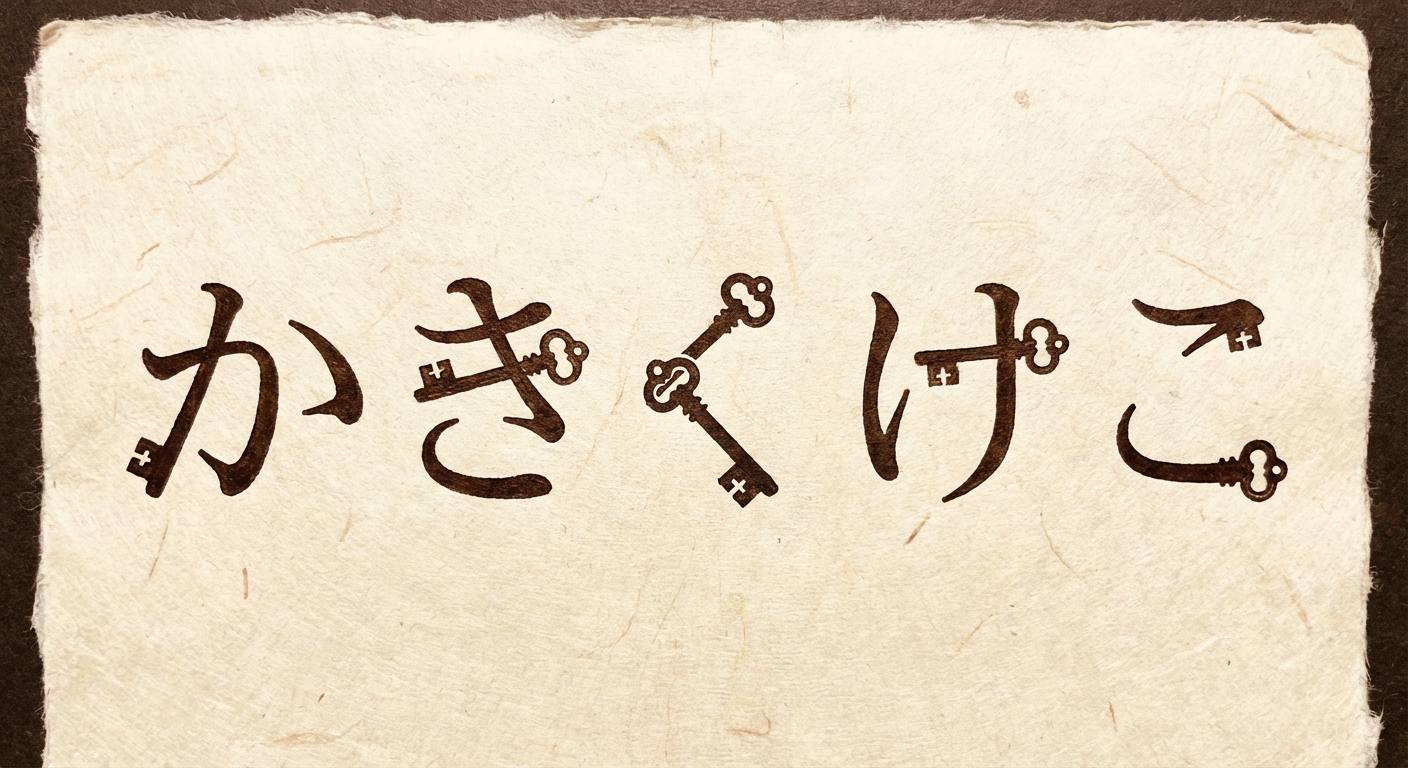
Hiragana か-row (K-sounds)
Master the 'k' consonant sounds combined with the five vowels.
Read →
Katakana ア-row (Vowels)
Learn the katakana vowel characters used primarily for foreign words.
Read →
Katakana カ-row (K-sounds)
Master the katakana 'k' consonant sounds for transcribing foreign vocabulary.
Read →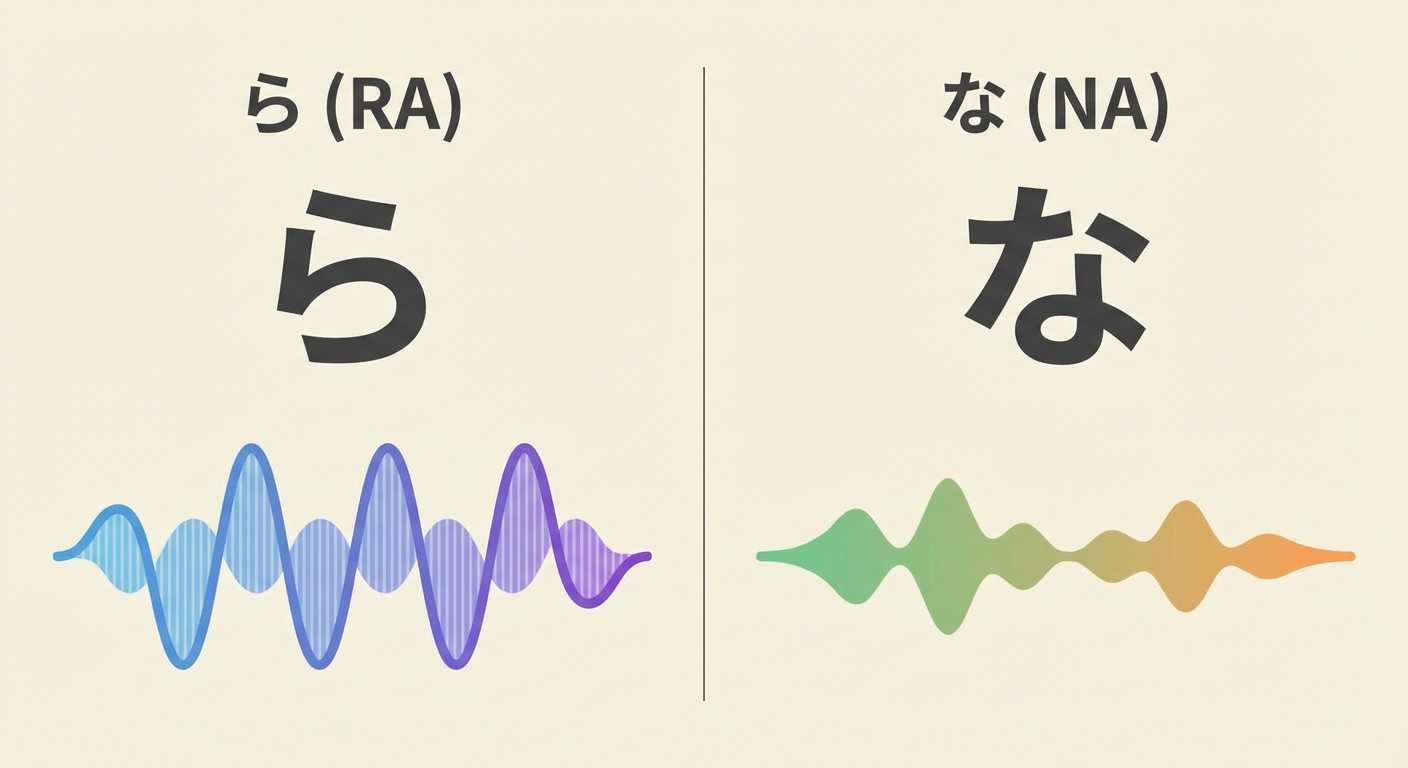
Minimal Pairs: ら vs. な (R vs. N)
Practice distinguishing and pronouncing the often-confused 'r' and 'n' sounds in Japanese.
Read →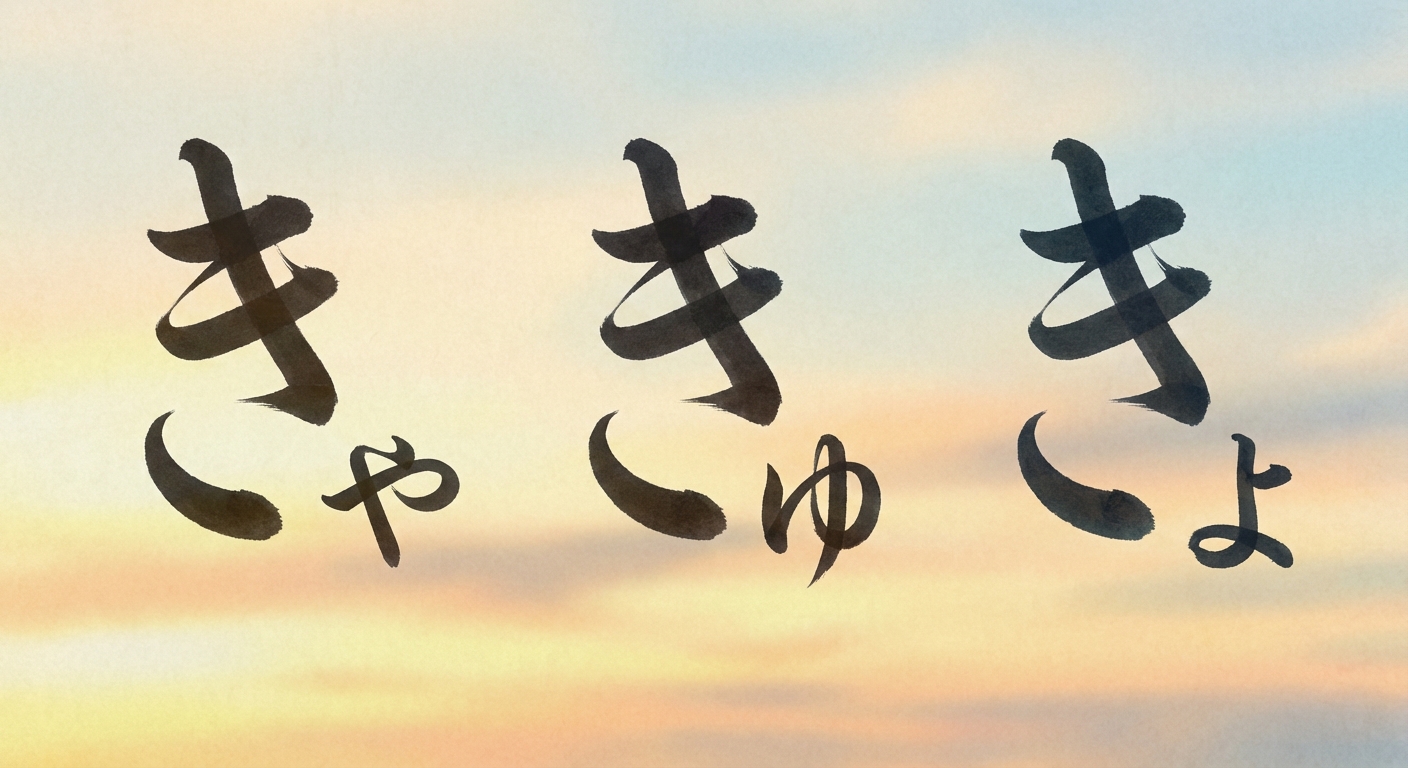
Combined Sounds: きゃ, きゅ, きょ
Master contracted sounds (yōon) starting with the 'k' consonant.
Read →Comments
Add a comment
Recommended bundles for you
Structured study materials to accelerate your JLPT journey.