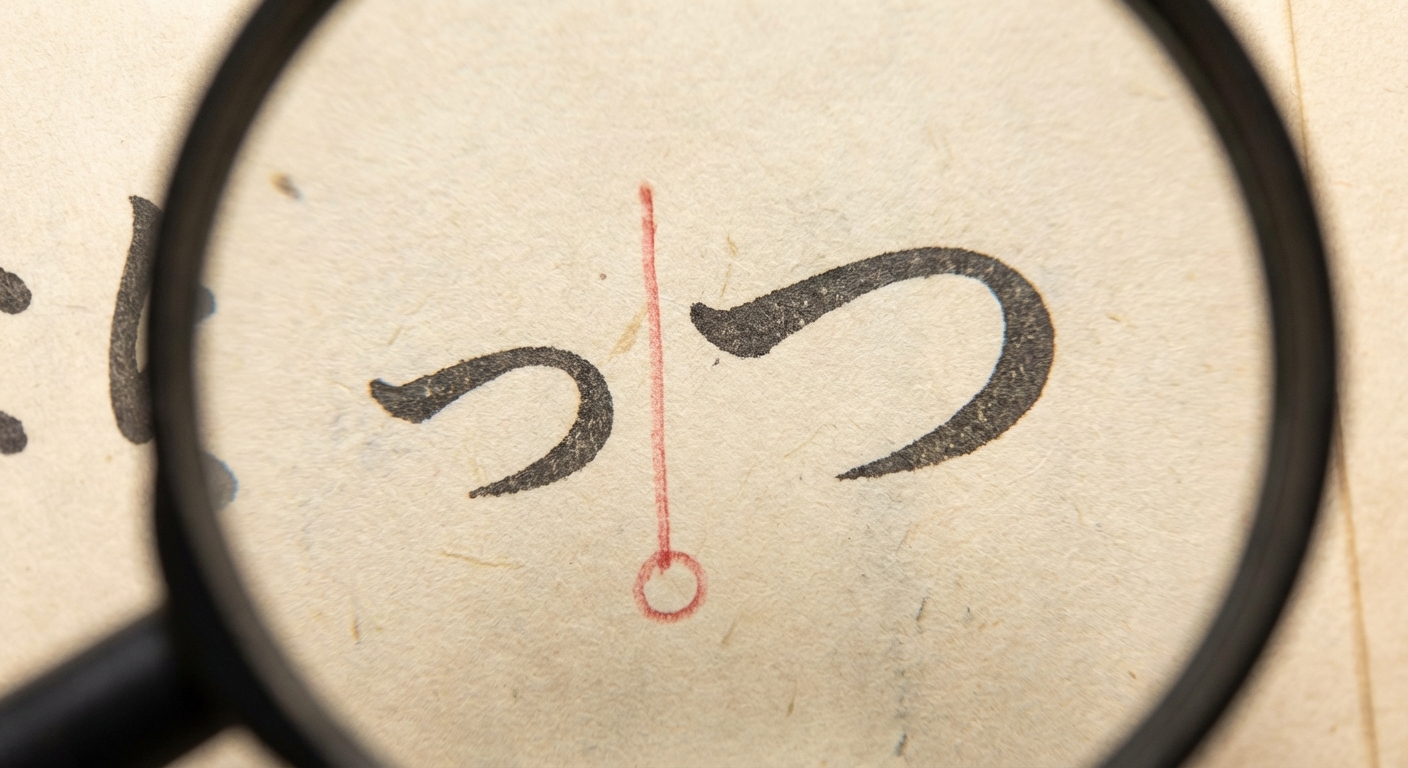
The Sokuon: Small つ (Double Consonants)
Characters
| Hiragana | Katakana | Romaji | Meaning |
|---|---|---|---|
| っ | ッ | (pause) | geminate consonant |
| かった | カッタ | katta | bought/won |
| きって | キッテ | kitte | stamp |
| にっぽん | ニッポン | nippon | Japan |
The Sokuon: Small つ (Double Consonants)
Introduction
The sokuon, represented by a small つ (in hiragana) or ッ (in katakana), is a critical element in Japanese pronunciation. It does not represent a sound itself, but indicates a brief, one-beat pause or a "gemination" of the following consonant sound. Mastering this pause is essential for distinguishing between words and achieving natural-sounding speech. Its function is consistent across both hiragana and katakana scripts.
The Sokuon Character
| Script | Character | Romaji | Function | Example Word (Hiragana) |
|---|---|---|---|---|
| Hiragana | っ | (n/a) | Marks a geminate consonant | がっこう(gakkou – school) |
| Katakana | ッ | (n/a) | Marks a geminate consonant | コップ(koppu – cup) |
Note: The romaji for the sokuon is represented by doubling the consonant letter that follows it (e.g., kk, tt, pp, ss).
Pronunciation Guide
The sokuon creates a momentary glottal stop or hold in the flow of speech. To pronounce it correctly:
- Upon encountering the small つ/ッ, complete the sound of the previous syllable.
- Hold the pronunciation for one full mora (beat) with your vocal cords tensed, as if you are about to say the next consonant but stop the air flow.
- Release into the following consonant sound.
A common mistake is to pronounce it as a full "tsu" sound or to ignore it entirely, which can change the meaning of a word (e.g., 来た kita "came" vs. 切った kitta "cut").
Practice Words
Practice these words, paying careful attention to the pause created by the sokuon.
-
にっぽん
- Romaji: nippon
- Meaning: Japan (one reading)
-
ざっし
- Romaji: zasshi
- Meaning: magazine
-
がっこう
- Romaji: gakkou
- Meaning: school
-
コーヒーをいっぱい
- Romaji: koohii o ippai
- Meaning: a cup of coffee
What should you do next?
Recommended next lessons
Hiragana あ-row (Vowels)
Learn the five foundational vowel sounds of Japanese: あ, い, う, え, お.
Read →
Hiragana か-row (K-sounds)
Master the 'k' consonant sounds combined with the five vowels.
Read →
Katakana ア-row (Vowels)
Learn the katakana vowel characters used primarily for foreign words.
Read →
Katakana カ-row (K-sounds)
Master the katakana 'k' consonant sounds for transcribing foreign vocabulary.
Read →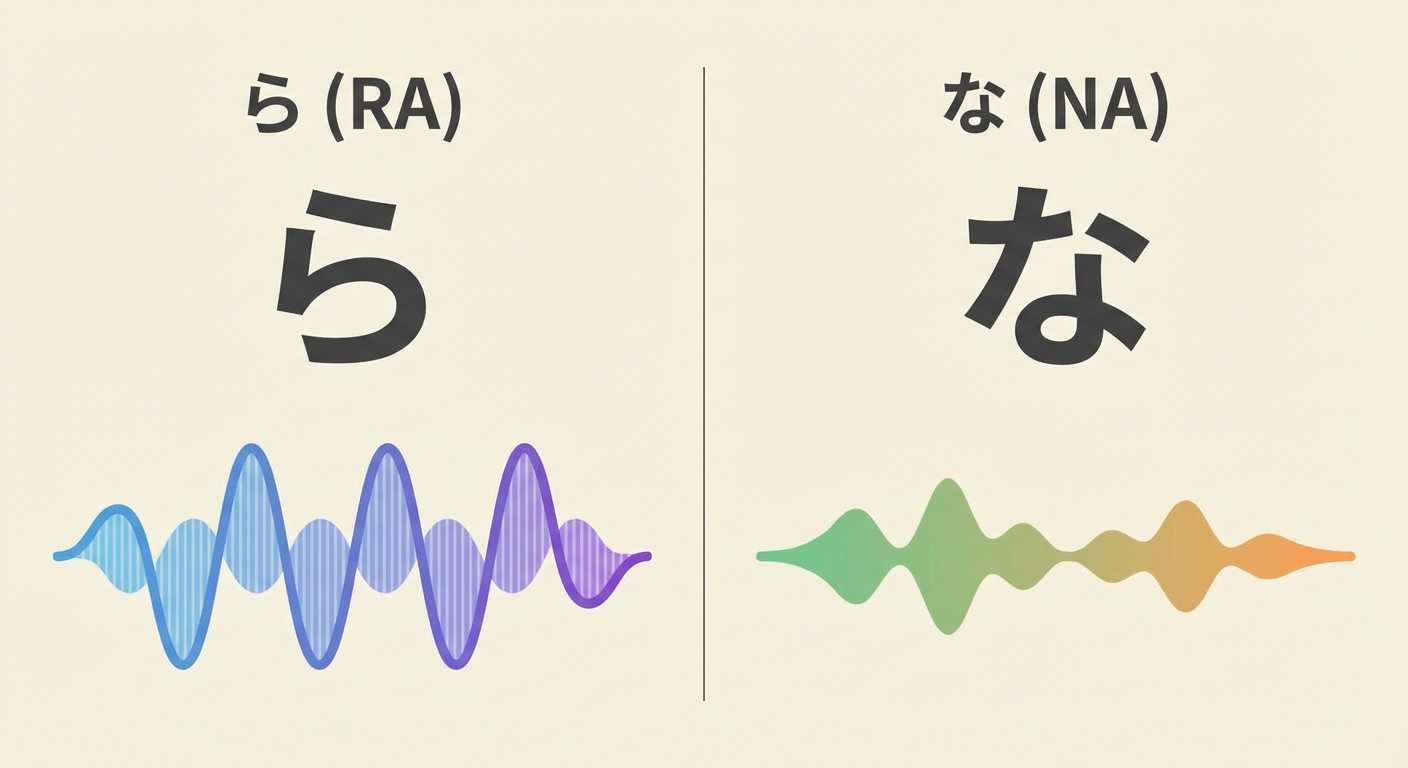
Minimal Pairs: ら vs. な (R vs. N)
Practice distinguishing and pronouncing the often-confused 'r' and 'n' sounds in Japanese.
Read →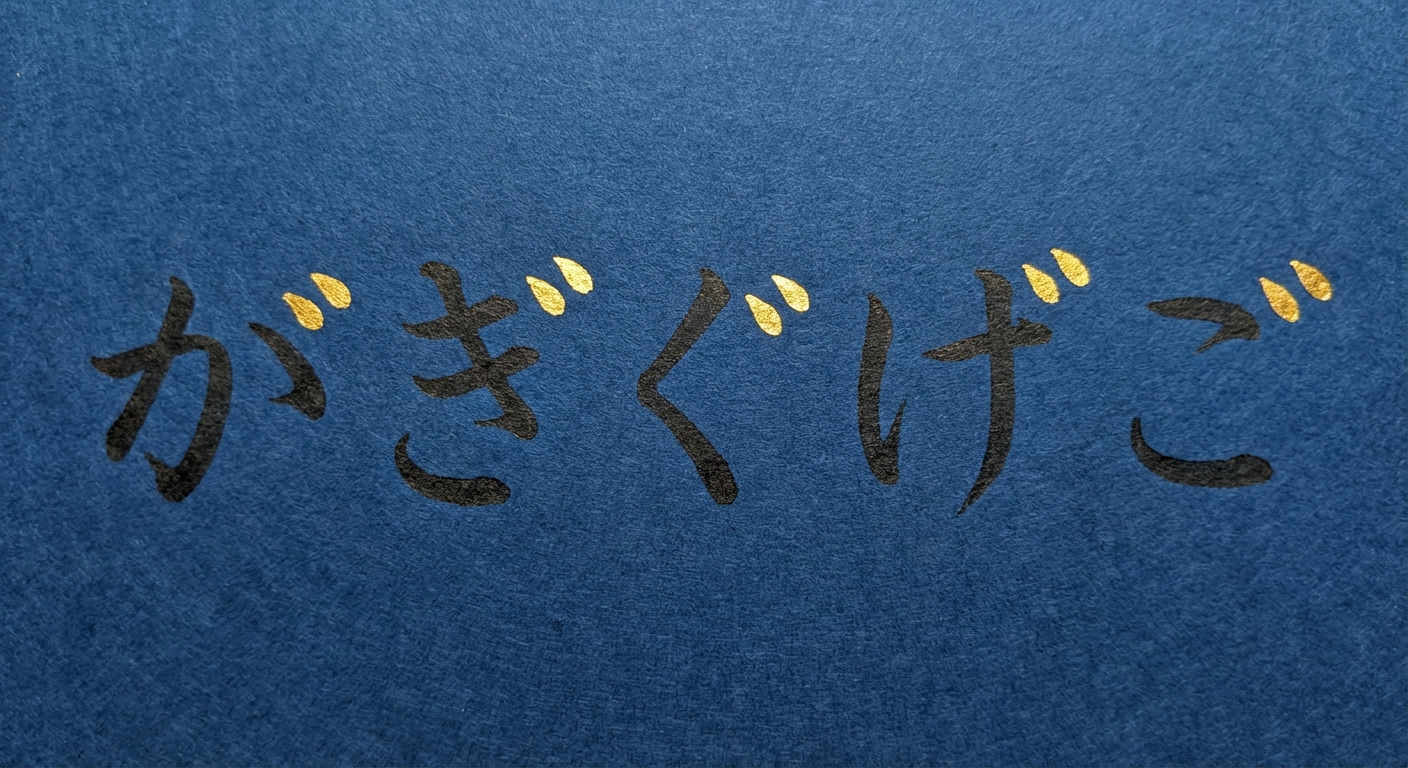
Voiced Sounds: が-row (G-sounds)
Learn the voiced counterpart to the か-row, marked by dakuten (゛).
Read →Comments
Add a comment
Recommended bundles for you
Structured study materials to accelerate your JLPT journey.